
CHINESE WRESTLING IN ASHEVILLE
Shuai Jiao Chinese Wrestling Classes in Asheville, NC
Practical Grappling, Dynamic Balance, and Throwing Skill
Dragon Phoenix offers traditional Shuai Jiao Chinese wrestling in Woodfin, just north of Asheville. Students learn gripping, balance disruption, footwork, throwing mechanics, and practical partner training through one of China’s traditional jacket-wrestling arts.
Shuai Jiao is active and physically demanding, but beginners are welcome to participate at an appropriate level. You do not need previous wrestling or martial arts experience to attend your first class.
Try a Free Shuai Jiao Class
Experience: Beginners welcome
Class: Saturdays, 4:00–5:30 PM
Format: Partner-based training
Location: Reynolds Village, Woodfin
First class: Free
Everything You Need to Get Started
Shuai Jiao is taught as part of the Dragon Phoenix curriculum and is open to complete beginners as well as experienced wrestlers, grapplers, and martial artists. Your first class is free, and a loaner jacket is available so you can experience the training before purchasing equipment.
What Is Shuai Jiao?
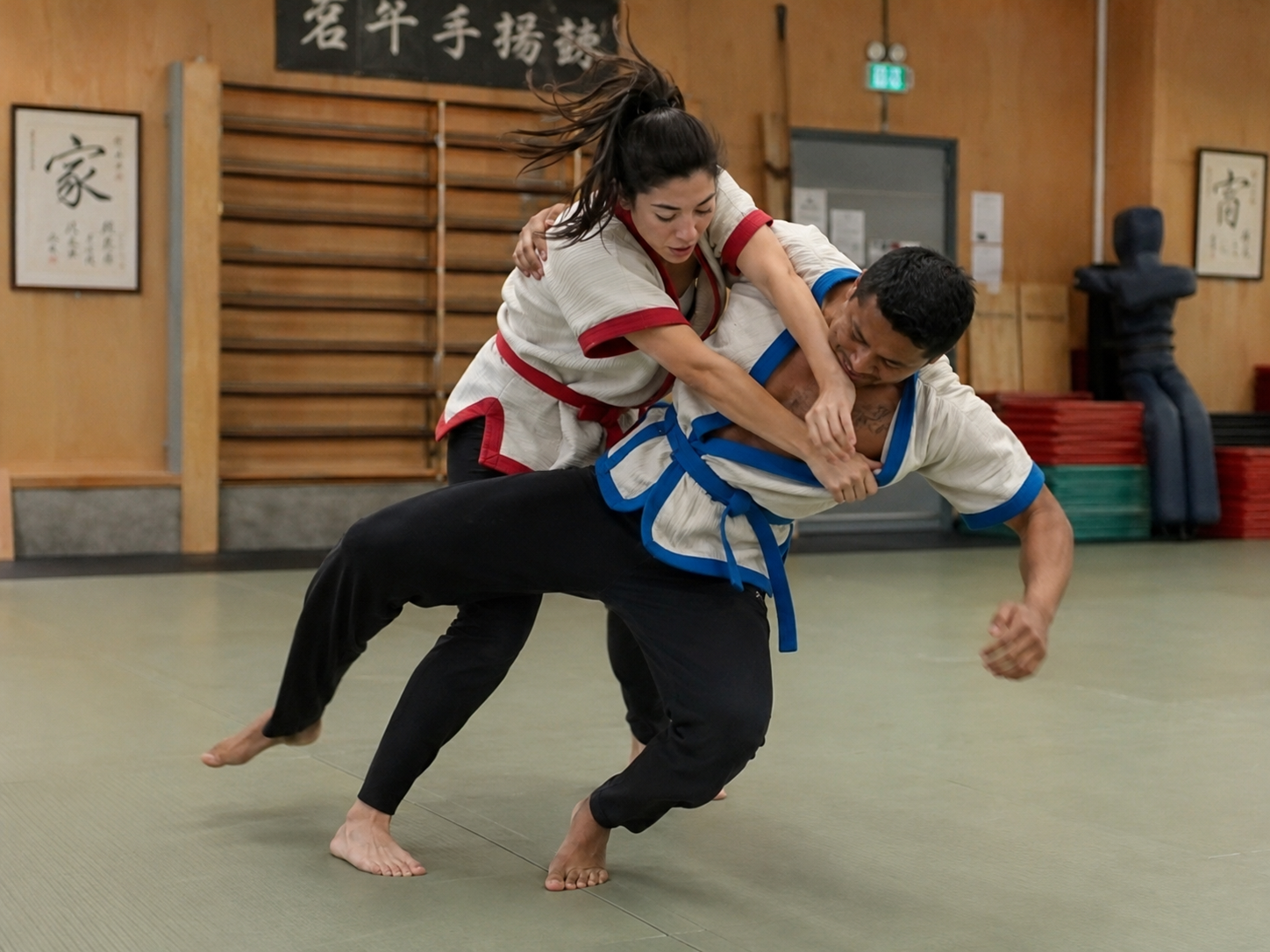
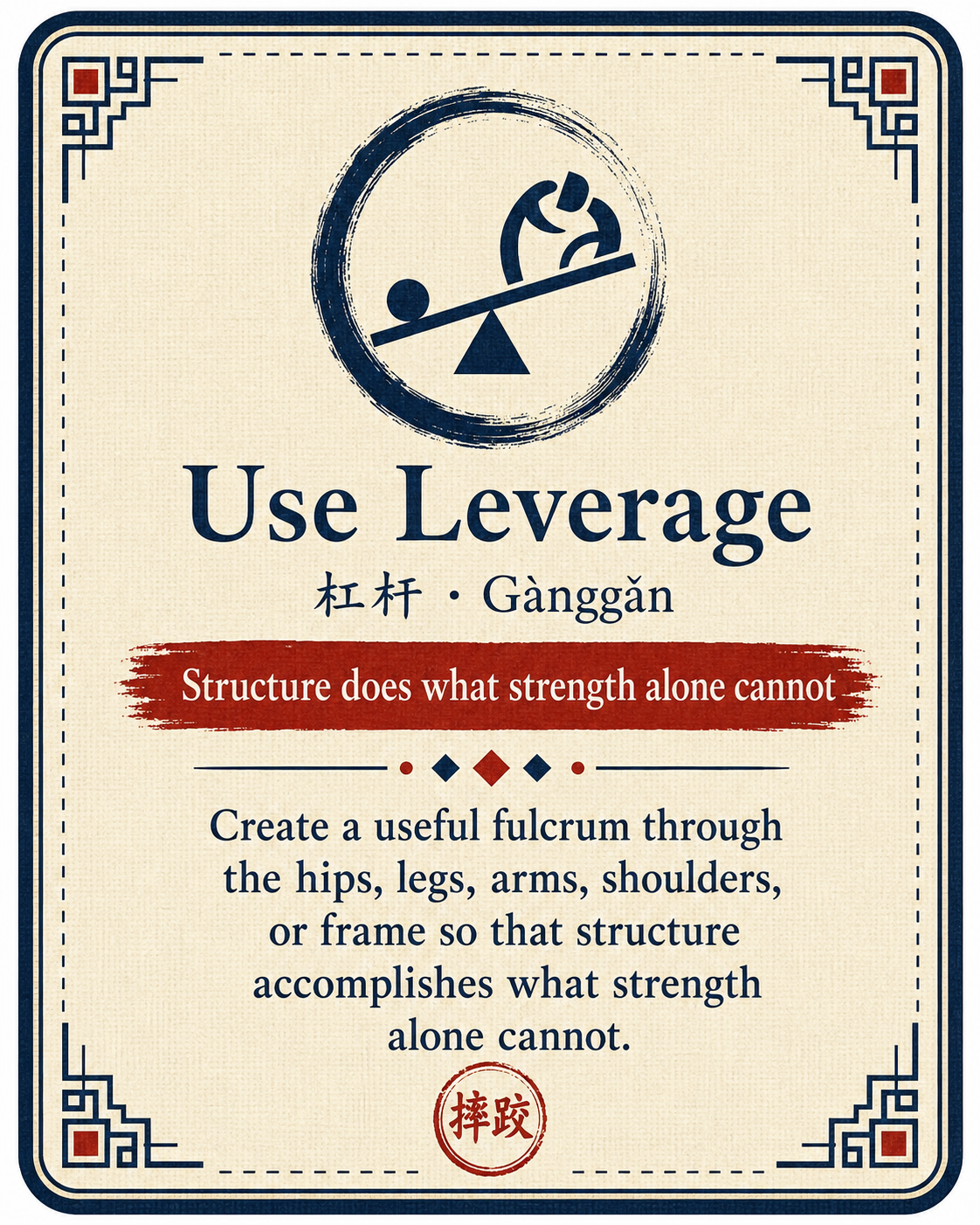
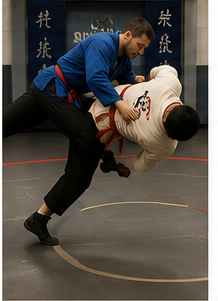
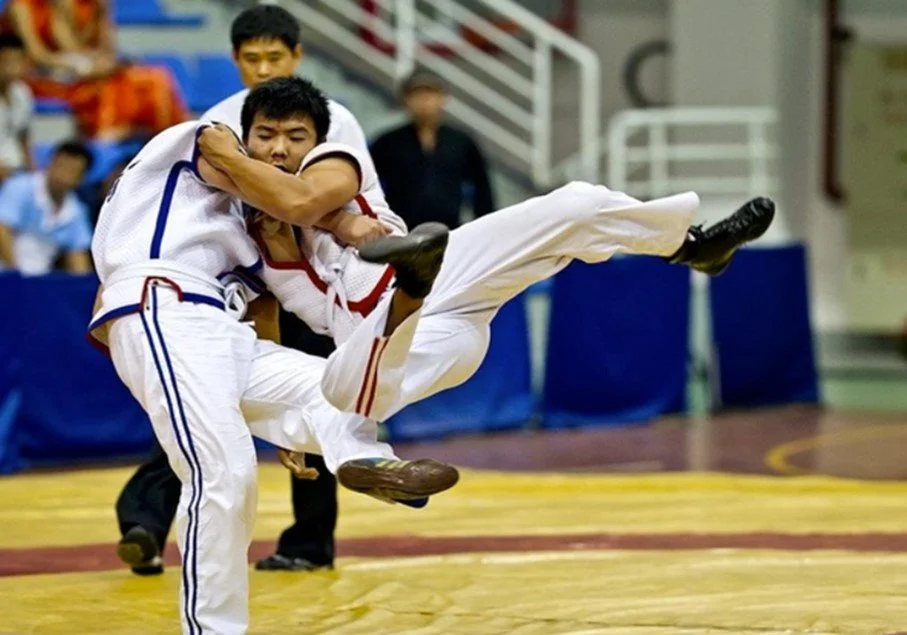
Shuai Jiao is the traditional Chinese art of wrestling and throwing. Practitioners use gripping, footwork, timing, leverage, and whole-body power to disrupt an opponent’s balance and bring them to the ground.
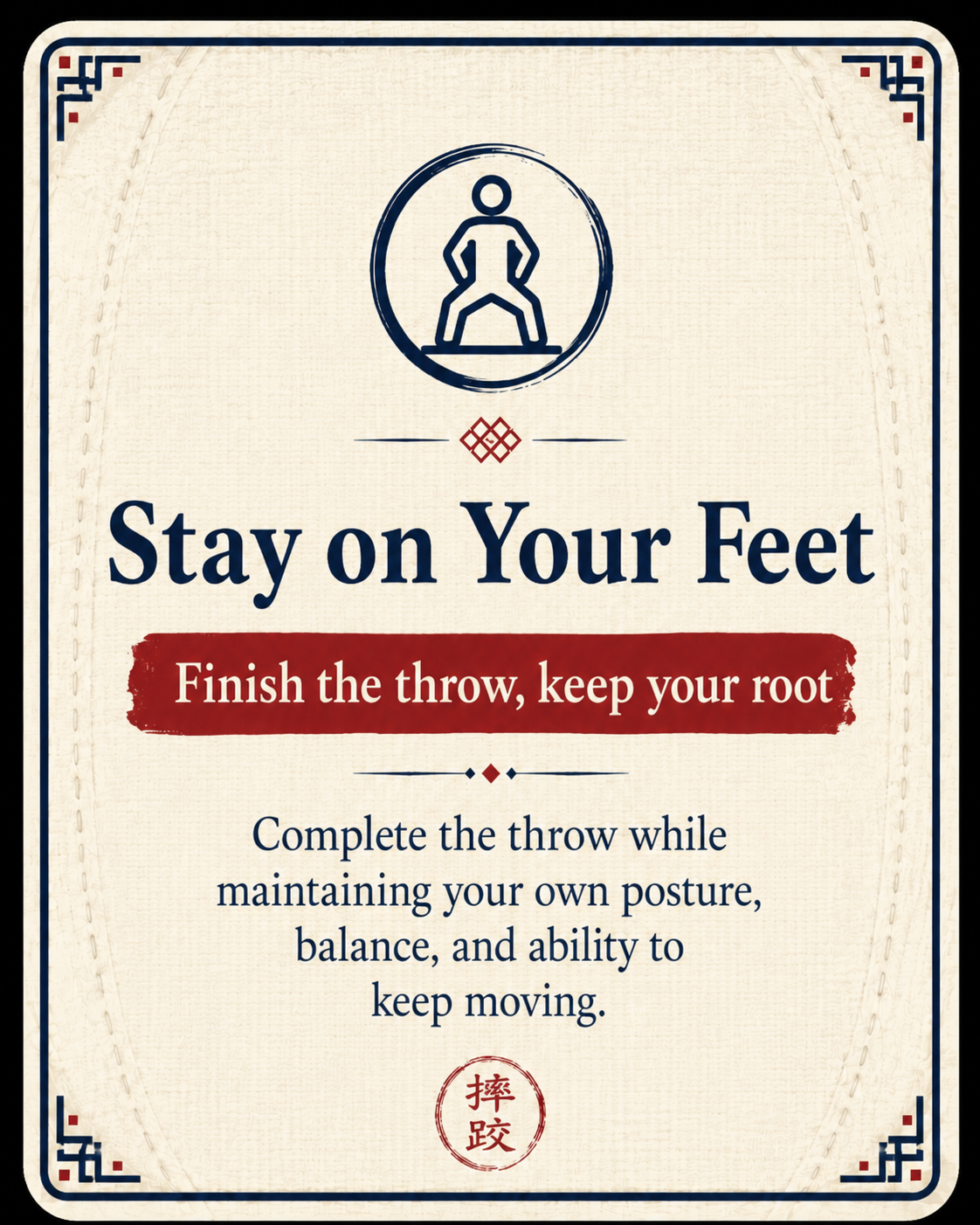
Much of the training takes place from an upright clinch. Students learn to control the jacket, redirect force, create angles, and apply sweeps, trips, hooks, hip throws, leg bridges, and body-locking methods. The goal is not simply to overpower another person. It is to recognize the moment their structure becomes vulnerable and complete the throw while preserving your own balance.
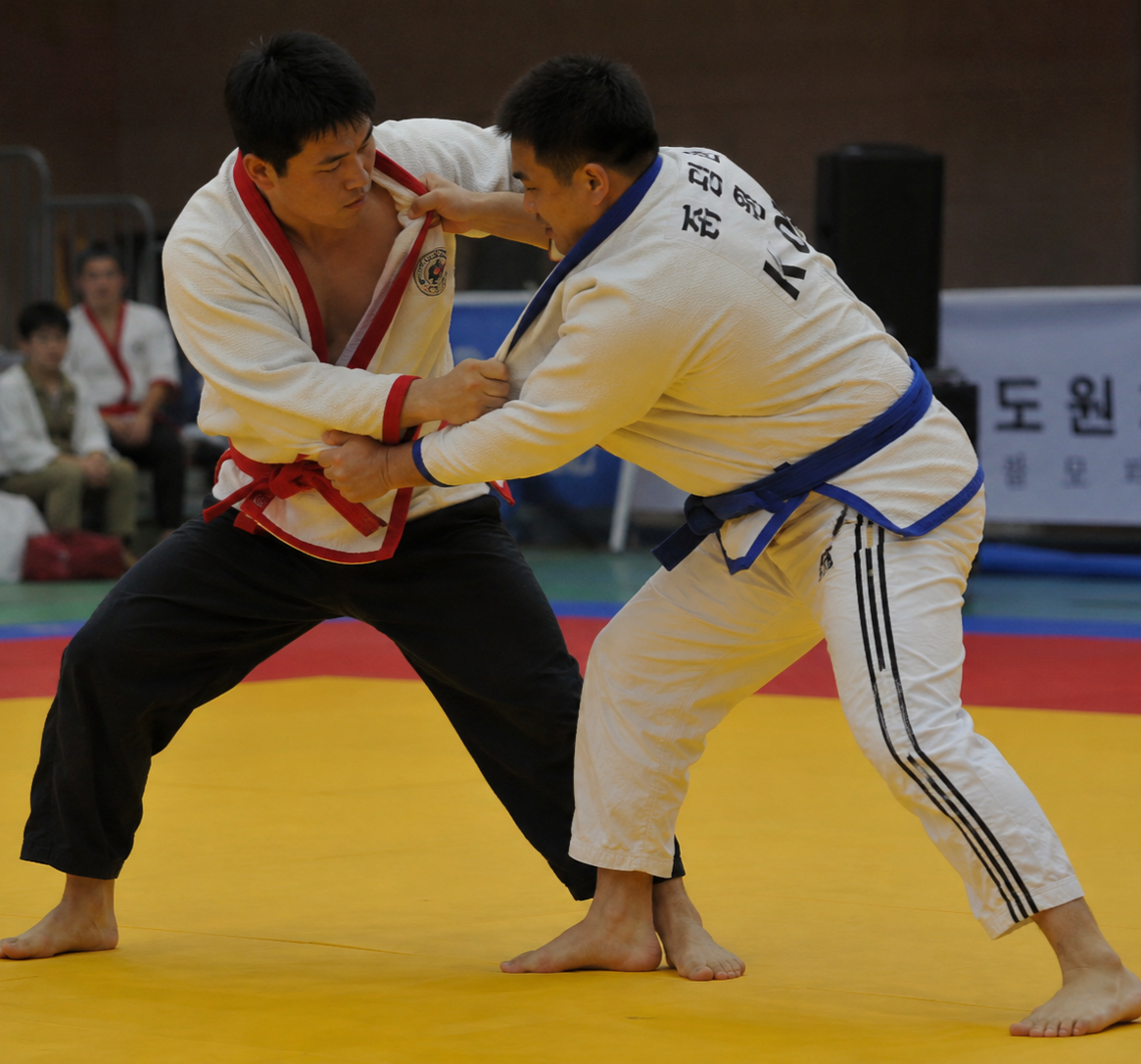
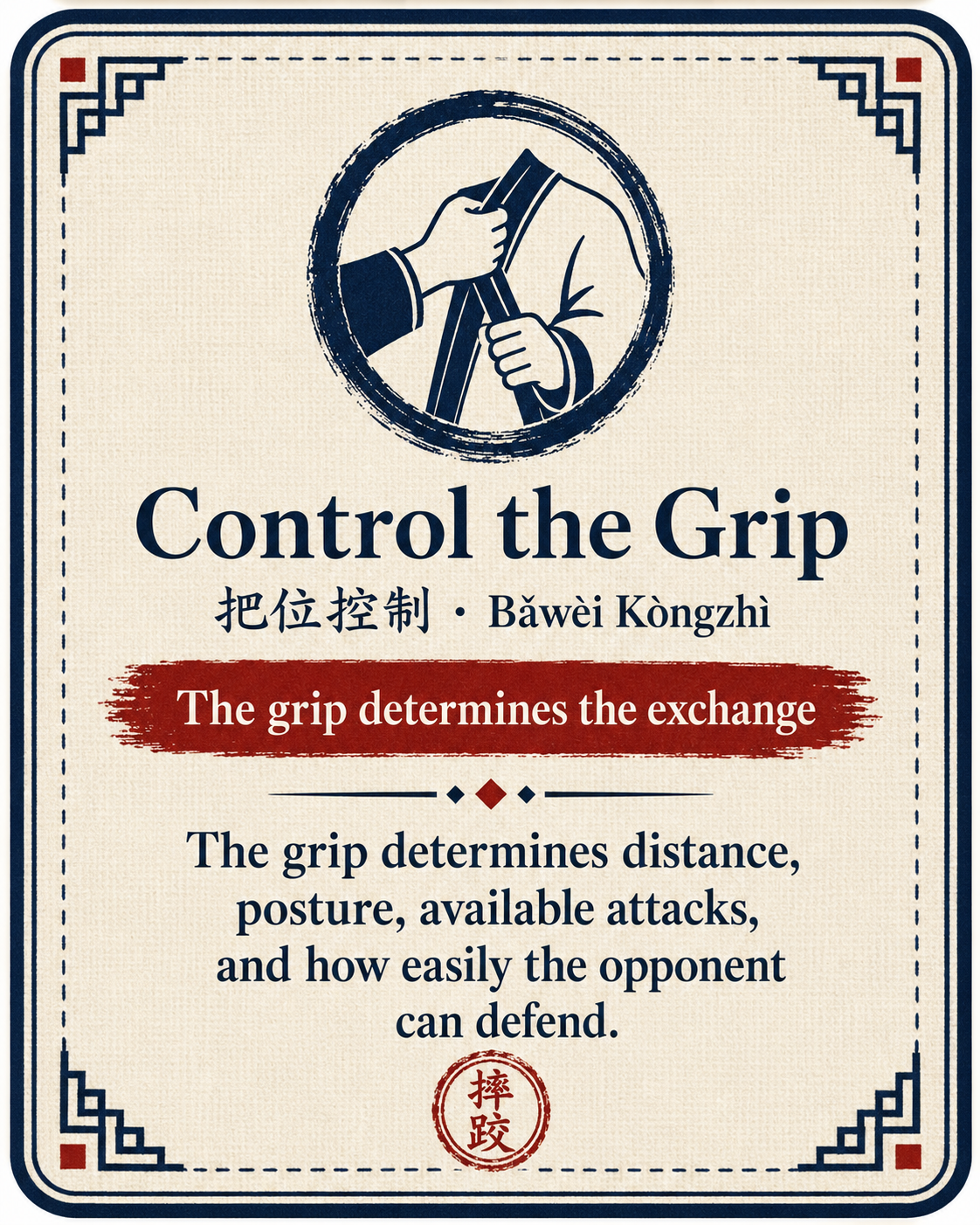
The short, heavy wrestling jacket—called a dálián—creates a distinctive gripping game. Sleeve, cuff, lapel, collar, back, underarm, and belt grips each lead to different attacks and defensive responses. In Shuai Jiao, winning the grip often determines who controls the exchange.
At Dragon Phoenix, the class draws from Baoding Shuai Jiao, a fast and highly mobile approach known for connecting grip, entry, and throw with very little delay.
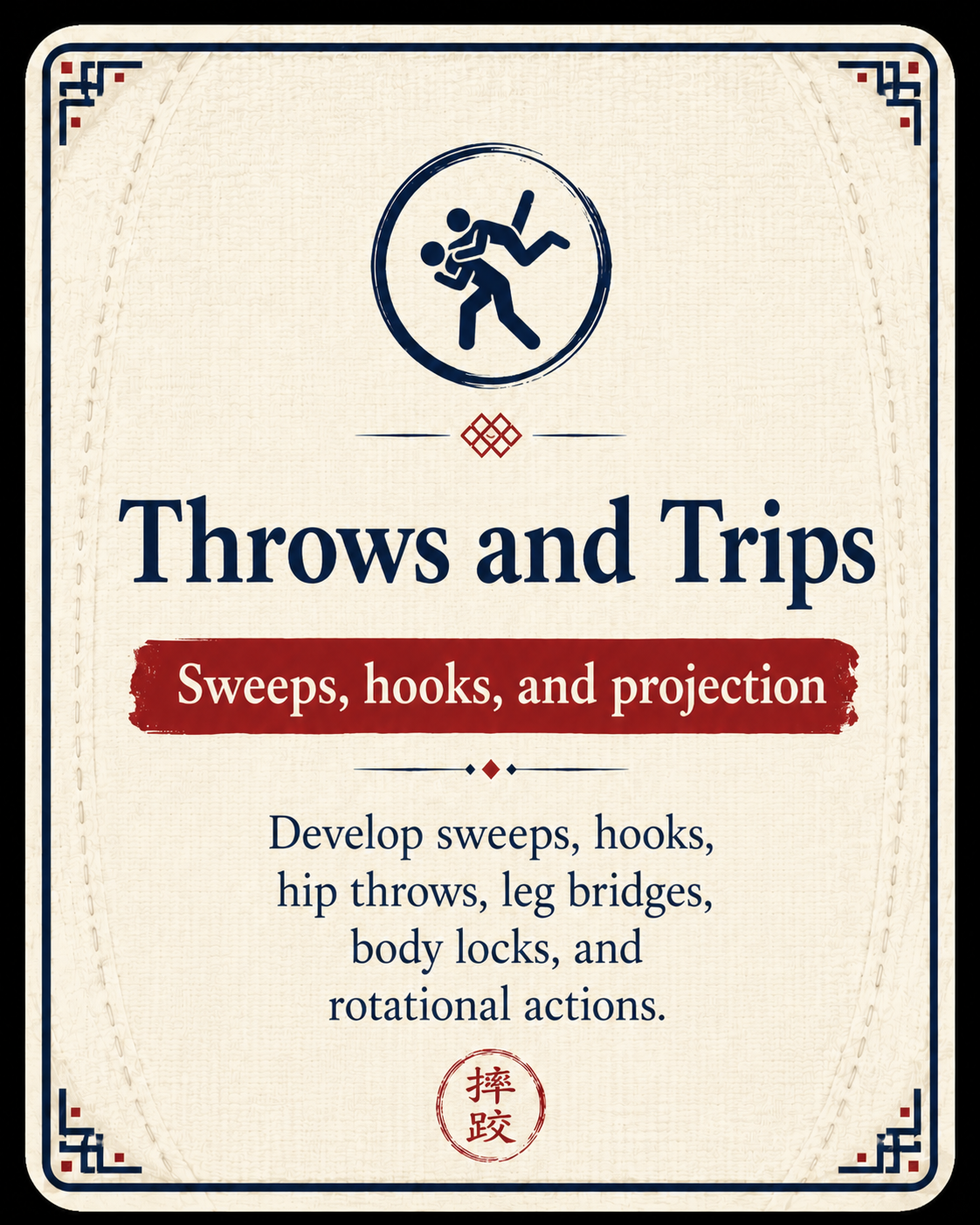
Shuai Jiao belongs to China’s long and varied wrestling tradition, shaped through military training, regional practice, public competition, and modern sport.
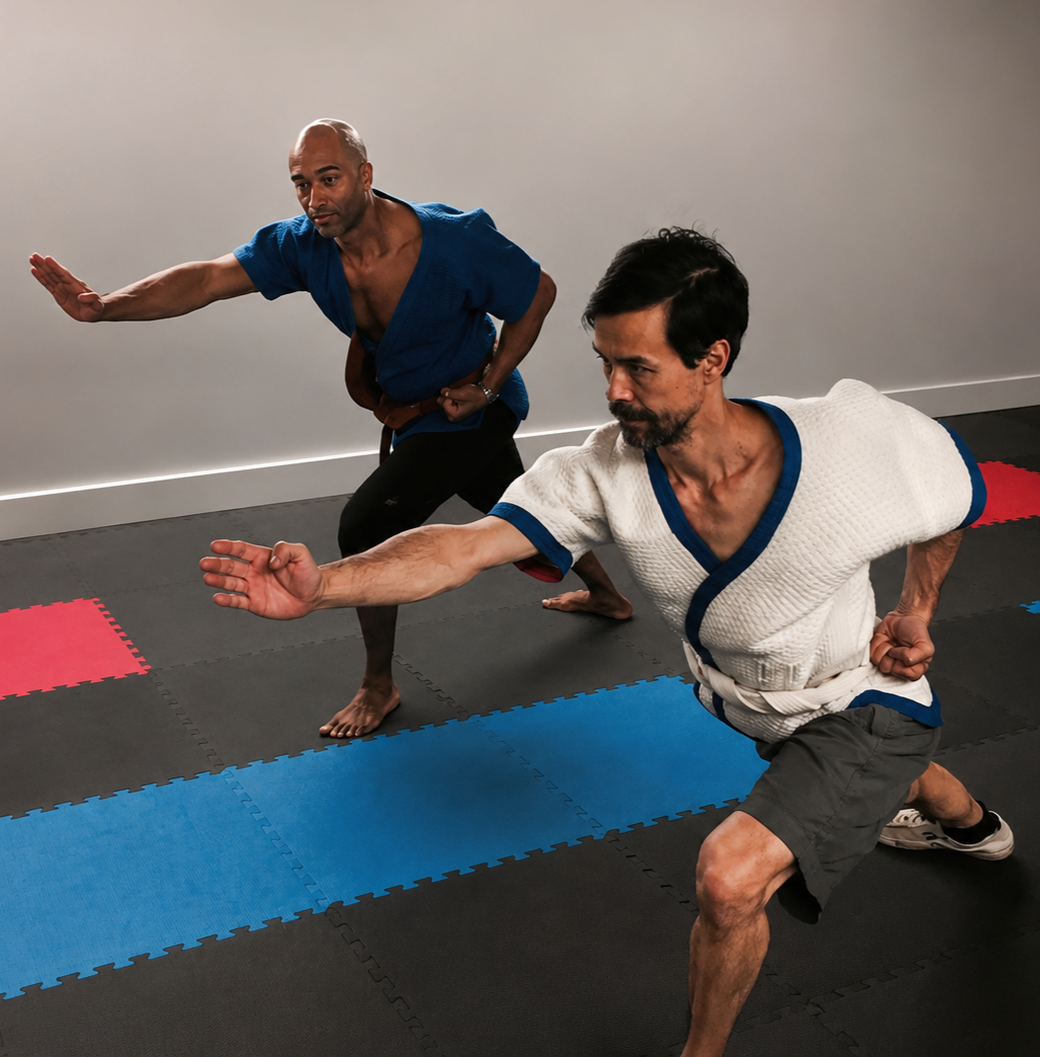
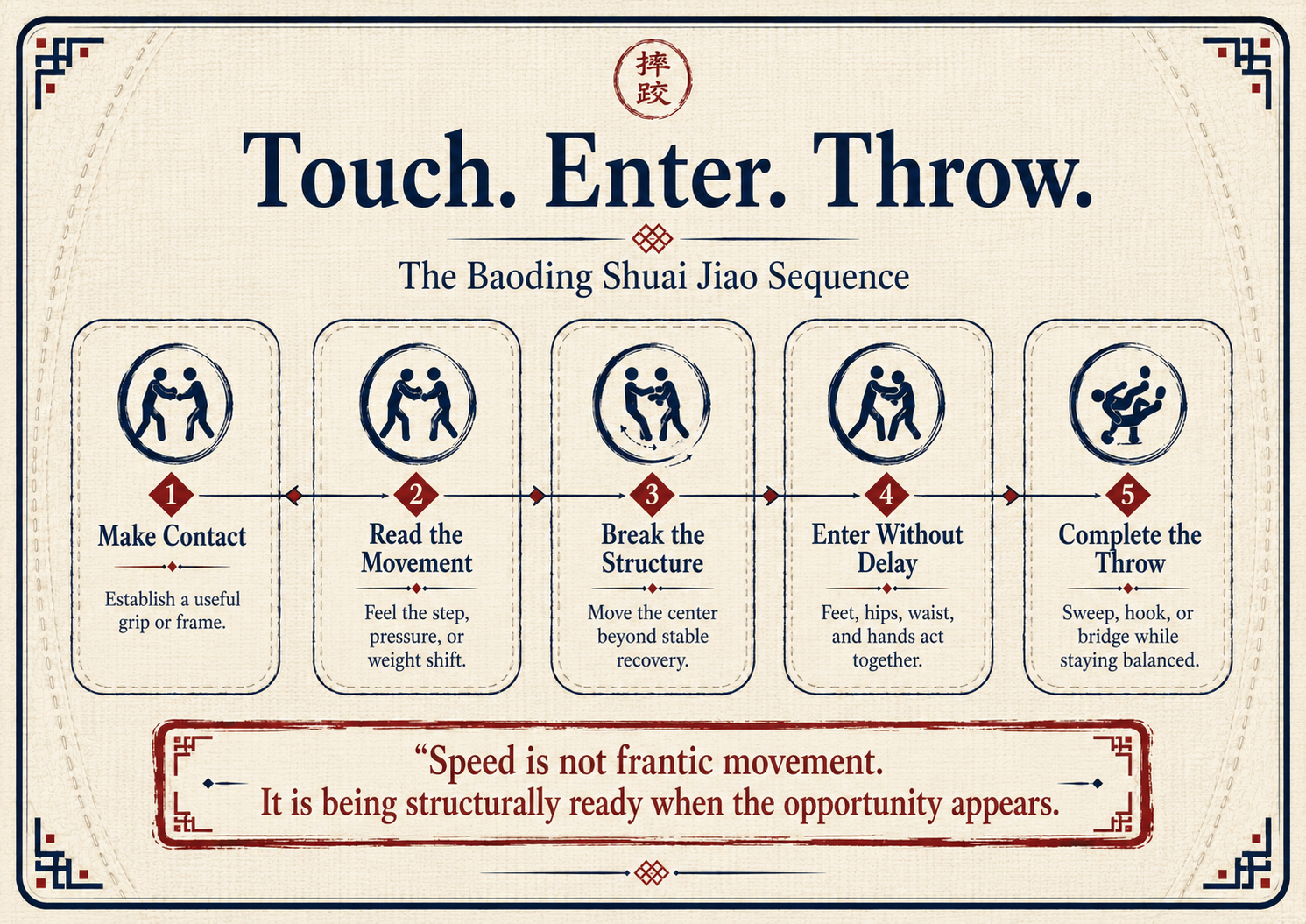
Touch. Enter. Throw.
Baoding Shuai Jiao is known for kuài shuāi—fast throwing.
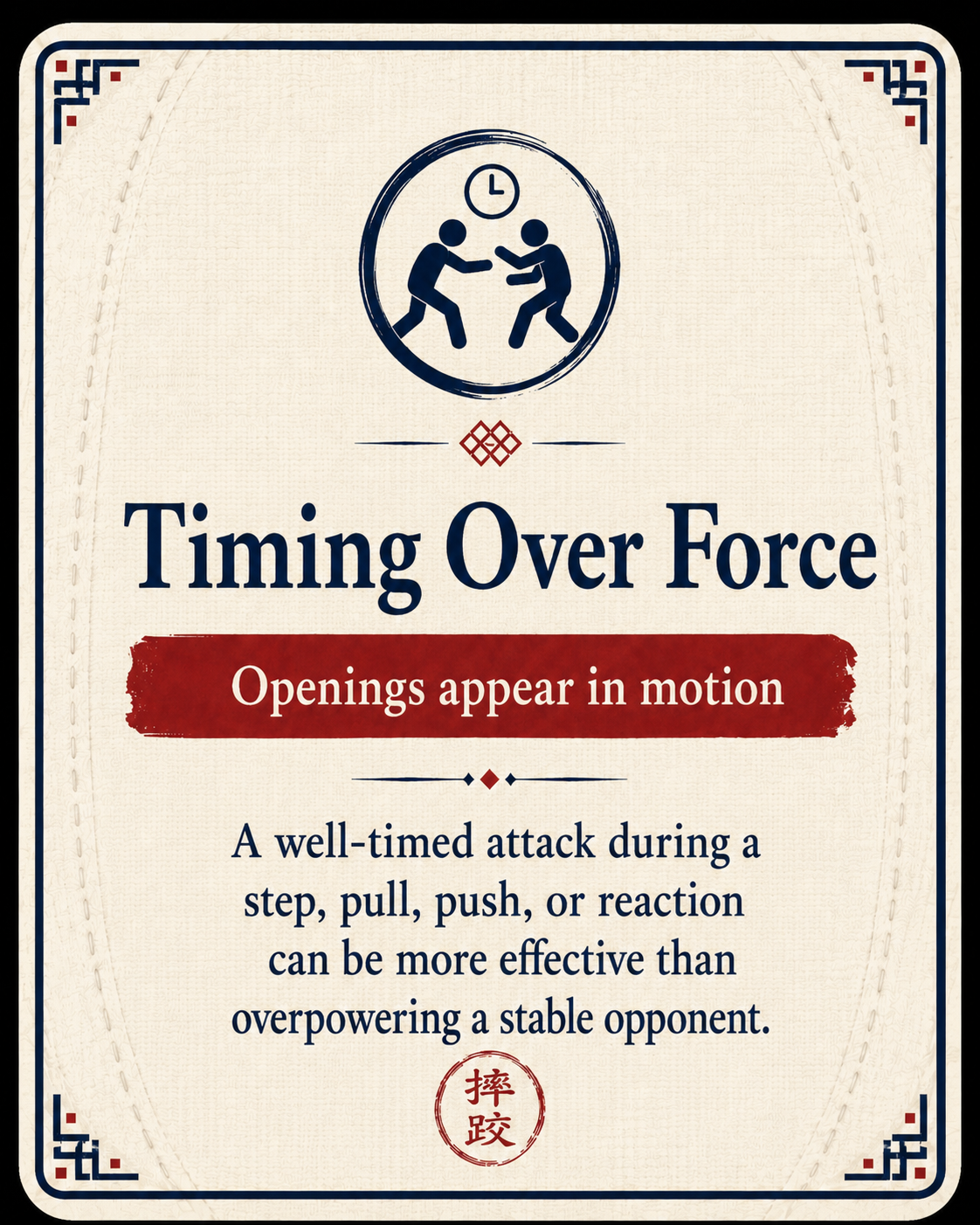
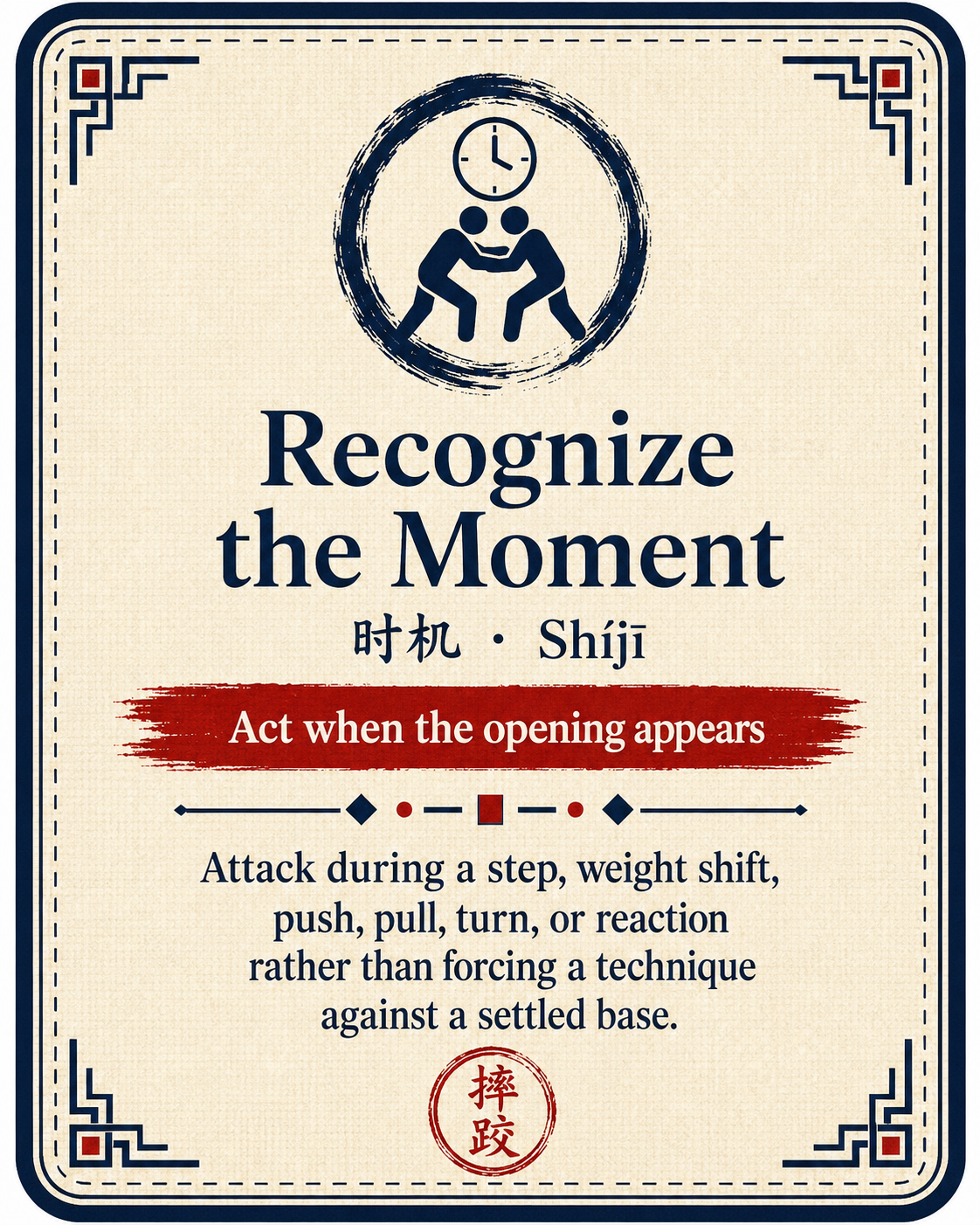
In practice, this means the grip, entry, and throw are connected with very little delay. Rather than wrestling for a long time in a fixed position, the practitioner looks for the instant when the opponent steps, pulls, pushes, turns, stiffens, or shifts weight. That moment becomes the opening.
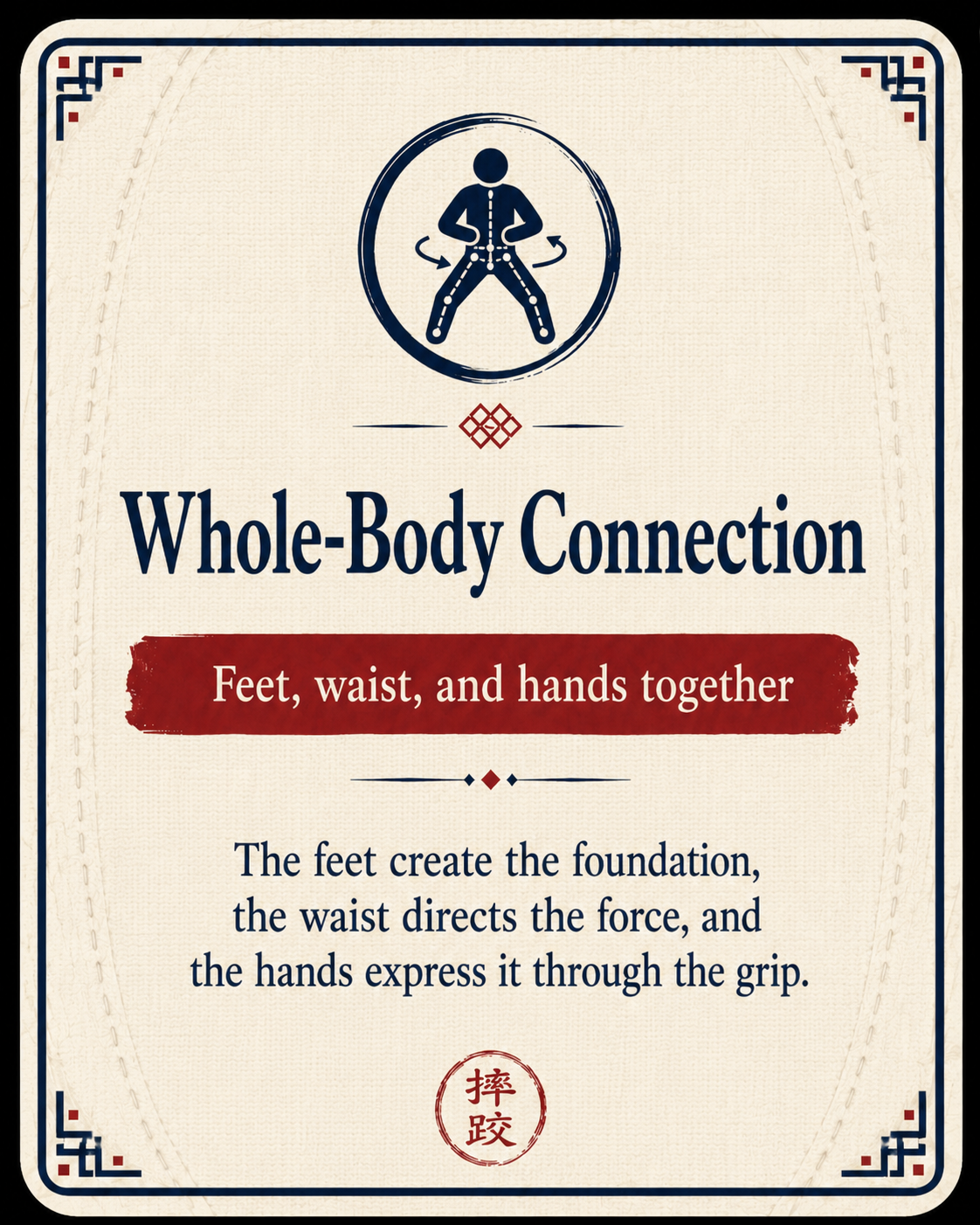
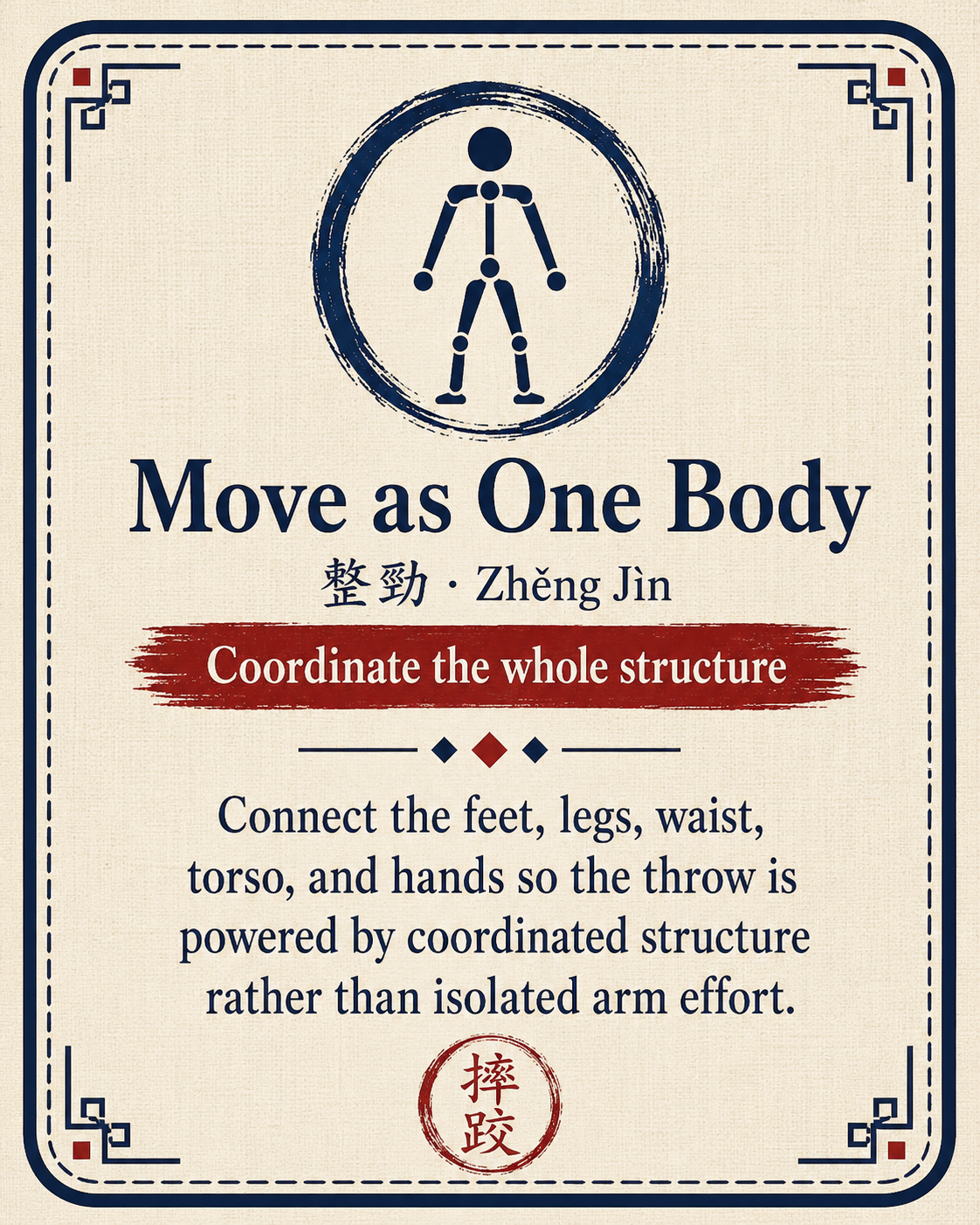
The speed comes from preparation and structure. The feet establish the angle. The hips and waist direct the movement. The hands complete the action. When these parts arrive together, the throw can happen almost as soon as contact is made.
This principle is sometimes summarized as “touch-and-throw.” You establish the right connection, break the opponent’s balance, and act before they can rebuild their posture.
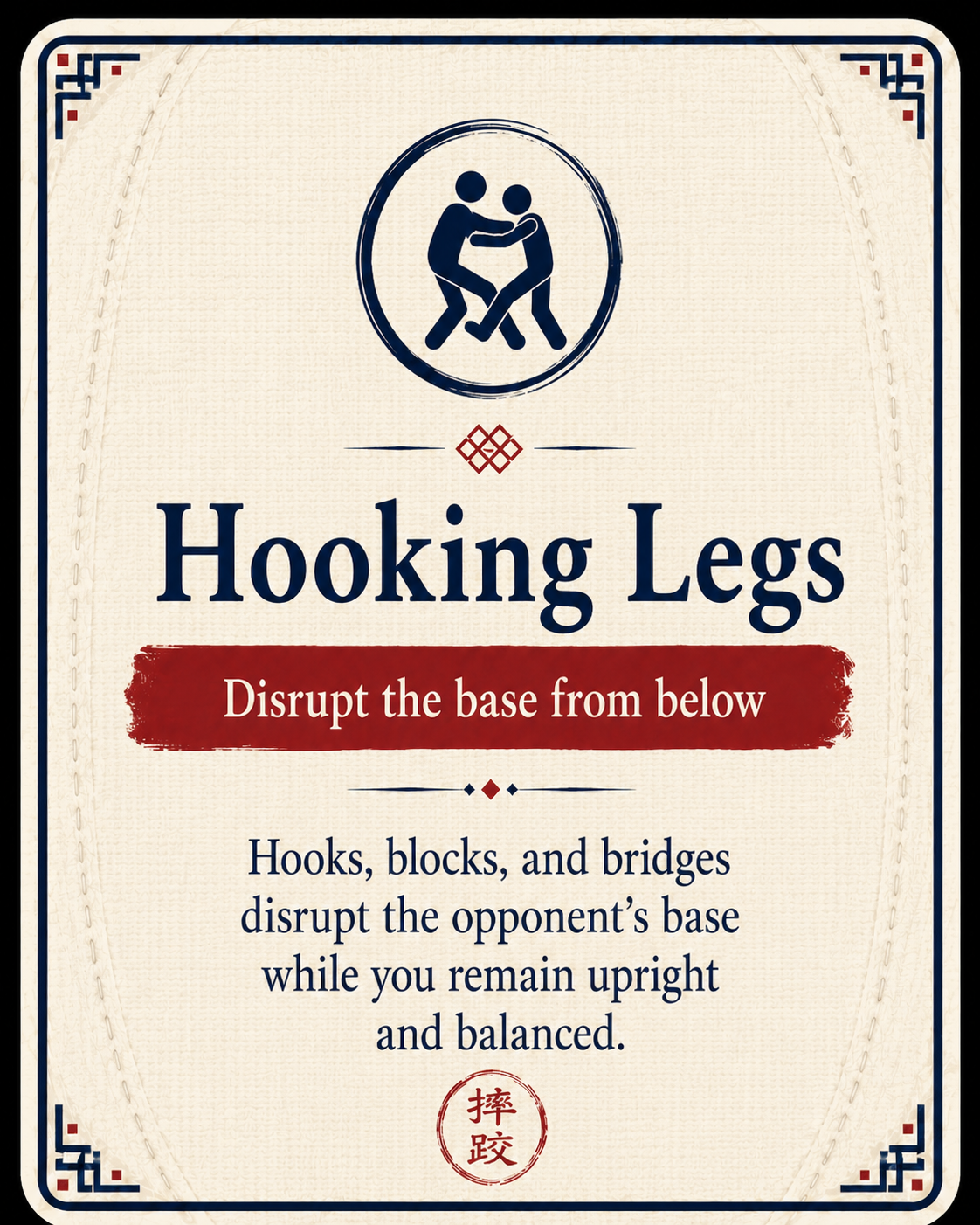
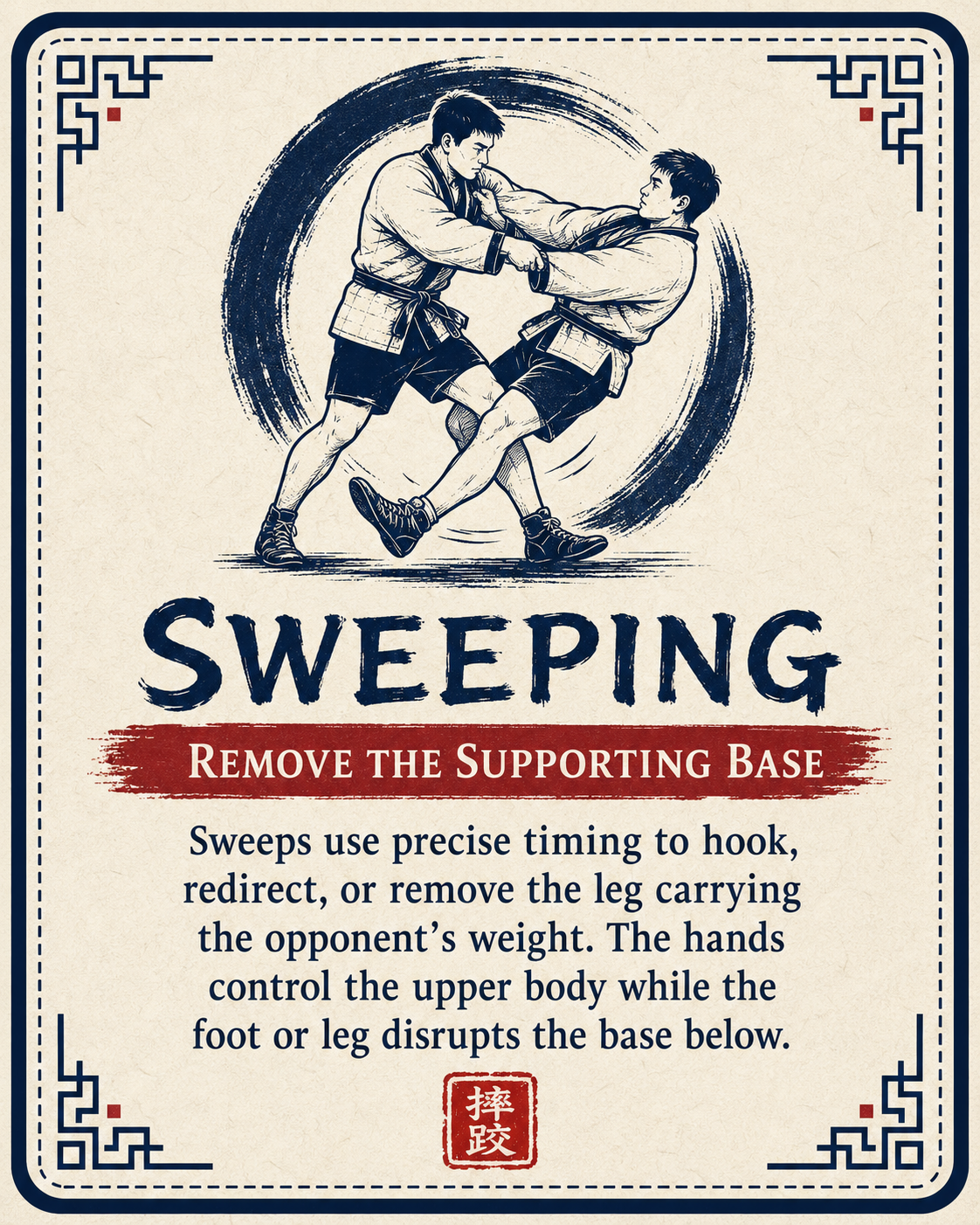
Baoding practice also places strong emphasis on hooking and leg-bridging methods. These lower-body actions work together with jacket control to block, redirect, or remove the opponent’s base while the practitioner remains upright.
The Throw Begins Before the Fall
A successful Shuai Jiao throw usually begins before the opponent visibly leaves the ground.
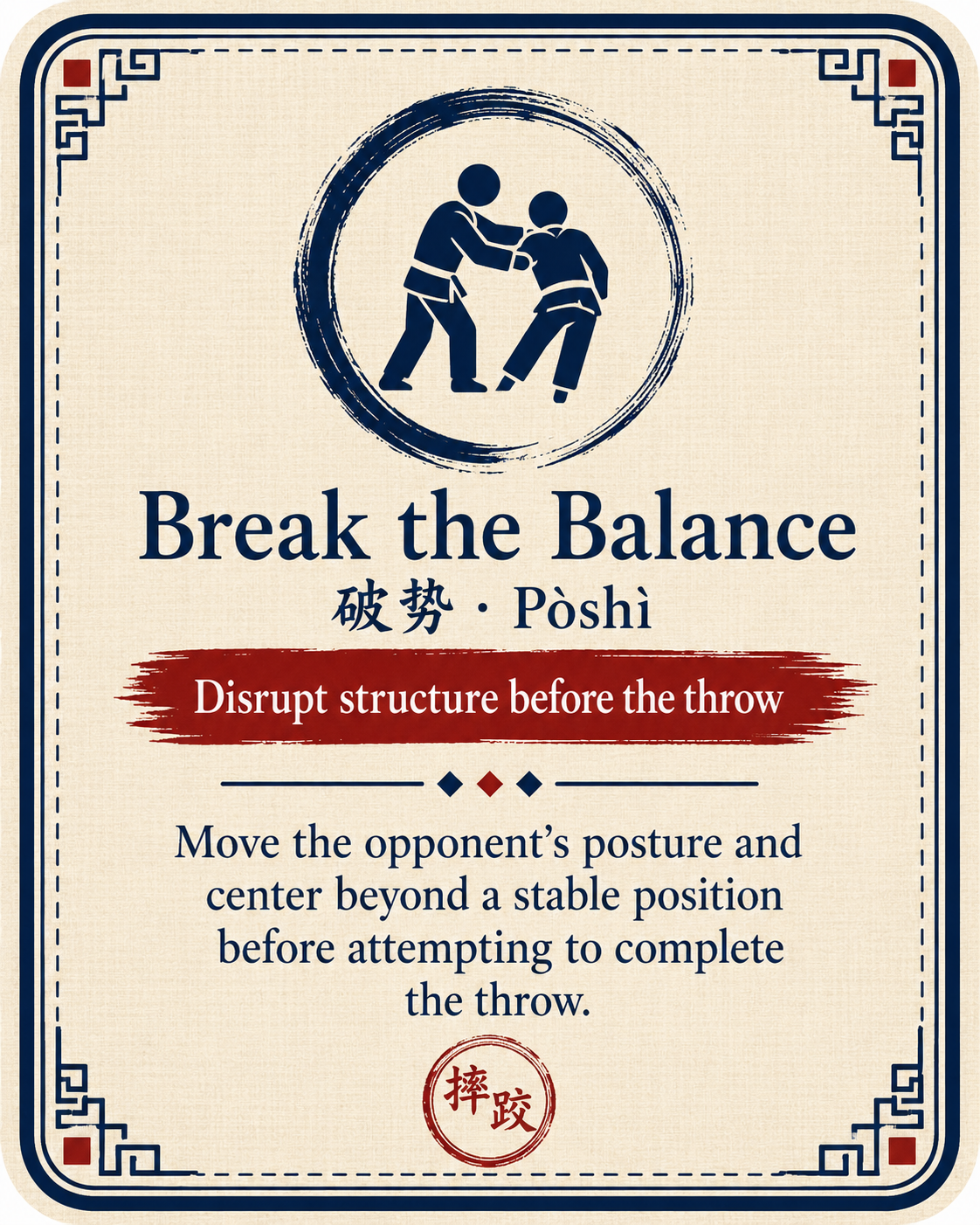
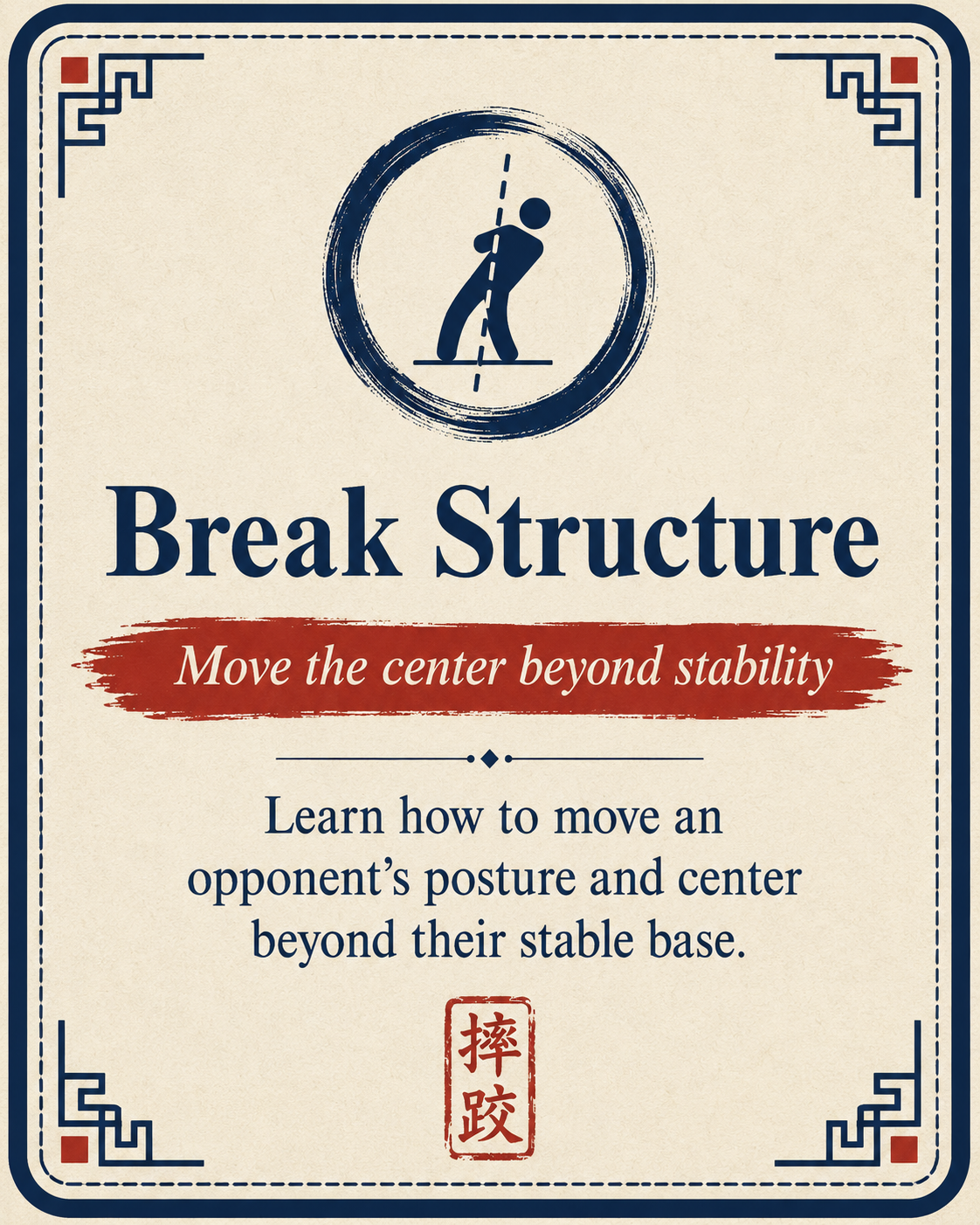
First, the practitioner establishes a useful grip and reads how the opponent is standing, stepping, pulling, or resisting. Then the opponent’s posture is disrupted, the angle is created, and the body enters as one coordinated unit.
Baoding Shuai Jiao emphasizes timing, leverage, structure, and whole-body connection. Strength matters, but it is most effective when applied through sound position and at the right moment.
The purpose of training these principles is not simply to memorize techniques. It is to understand why throws work, recognize when they are available, and adapt when the opponent reacts.
Want to explore the full system?
James’s Baoding Shuai Jiao syllabus examines the principles, stances, grips, breakfalls, equipment, and throwing families in greater depth.
Build the Skills Behind the Throw
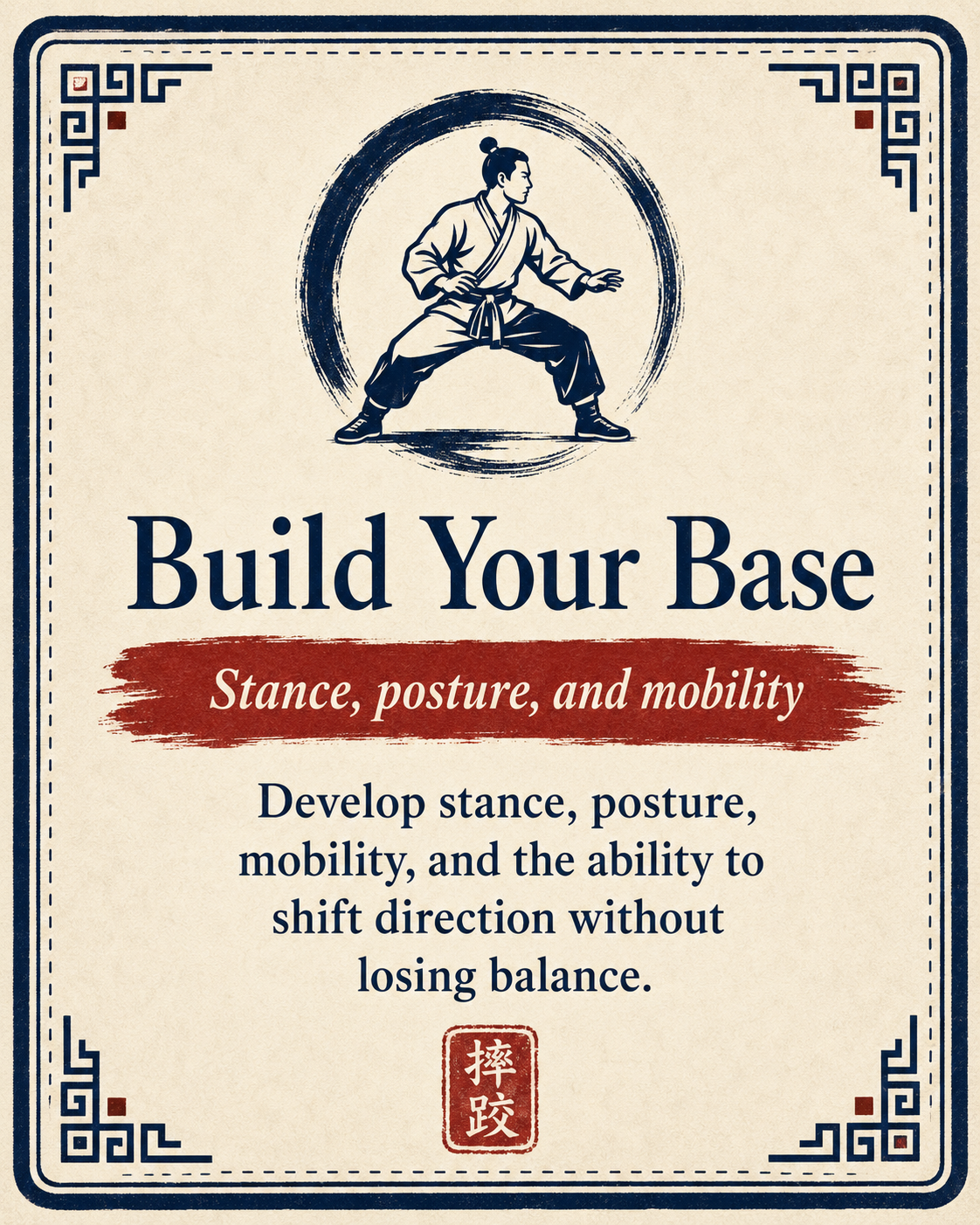
Shuai Jiao training develops more than a catalog of techniques. Students learn how to move, fall, grip, enter, unbalance, throw, and recover under increasingly realistic resistance.
Beginners start with foundational movement and safety. As their confidence and control improve, they progress into partner drills, throwing combinations, grip exchanges, counters, and live wrestling.
Each part of the class supports the next. Safe falling makes stronger throwing possible. Better footwork creates cleaner entries. Better grips create better control. Better timing reduces the need for force.
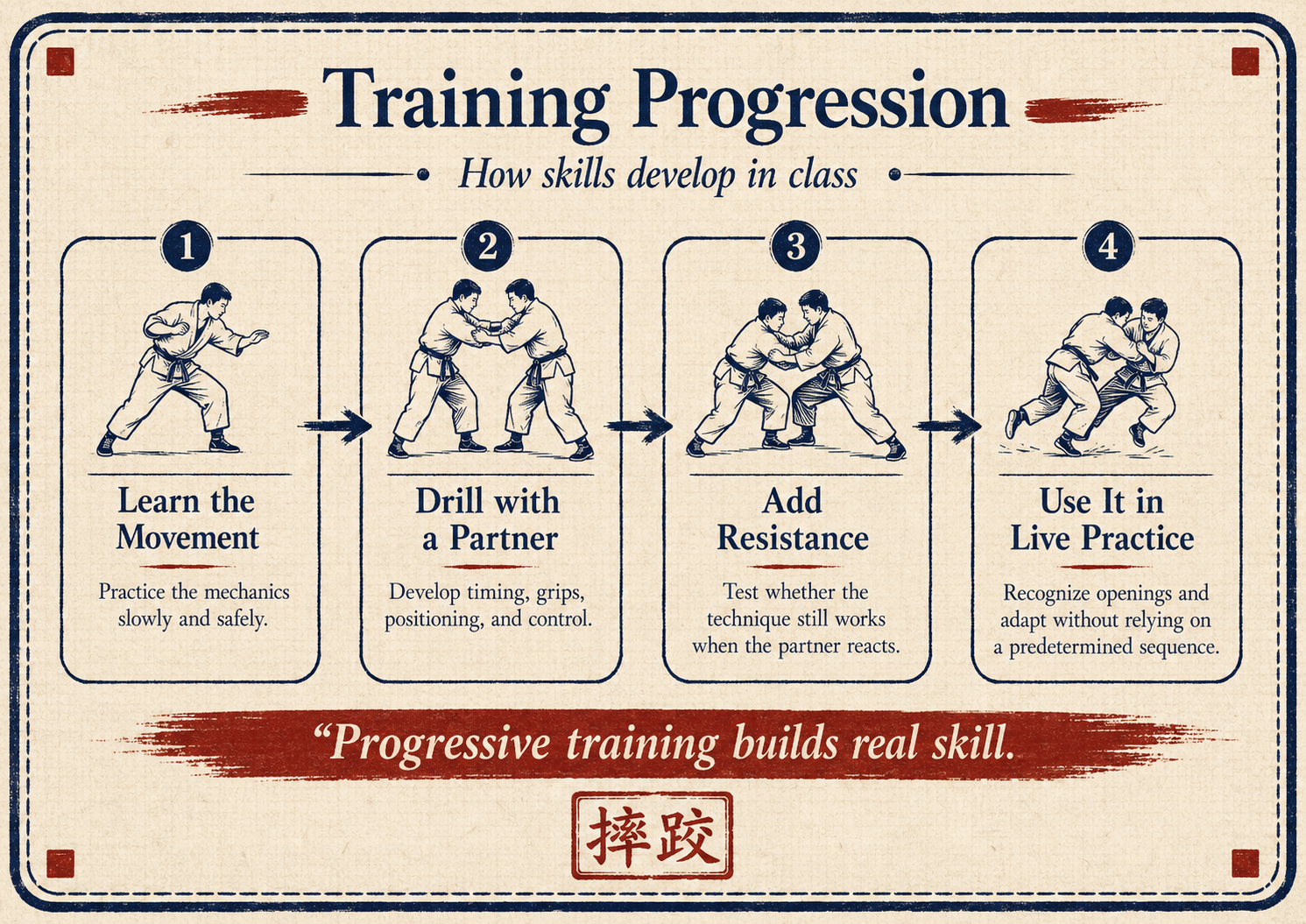
From Foundations to Live Practice
Every Shuai Jiao class connects fundamental movement with practical partner training. Students prepare the body, develop a specific skill, practice it cooperatively, and then test it through progressively more active resistance.
The exact emphasis may change from week to week, but each part of the class supports the same goal: learning to control balance, position, and movement during a real grappling exchange.
Part One: Prepare the Body
Movement, Conditioning, and Safe Falling
Class begins by preparing the joints, muscles, balance, and nervous system for active grappling.
Training may include:
Athletic warm-ups
Mobility and joint preparation
Foundational stances
Footwork and direction changes
Tumbling and rolling
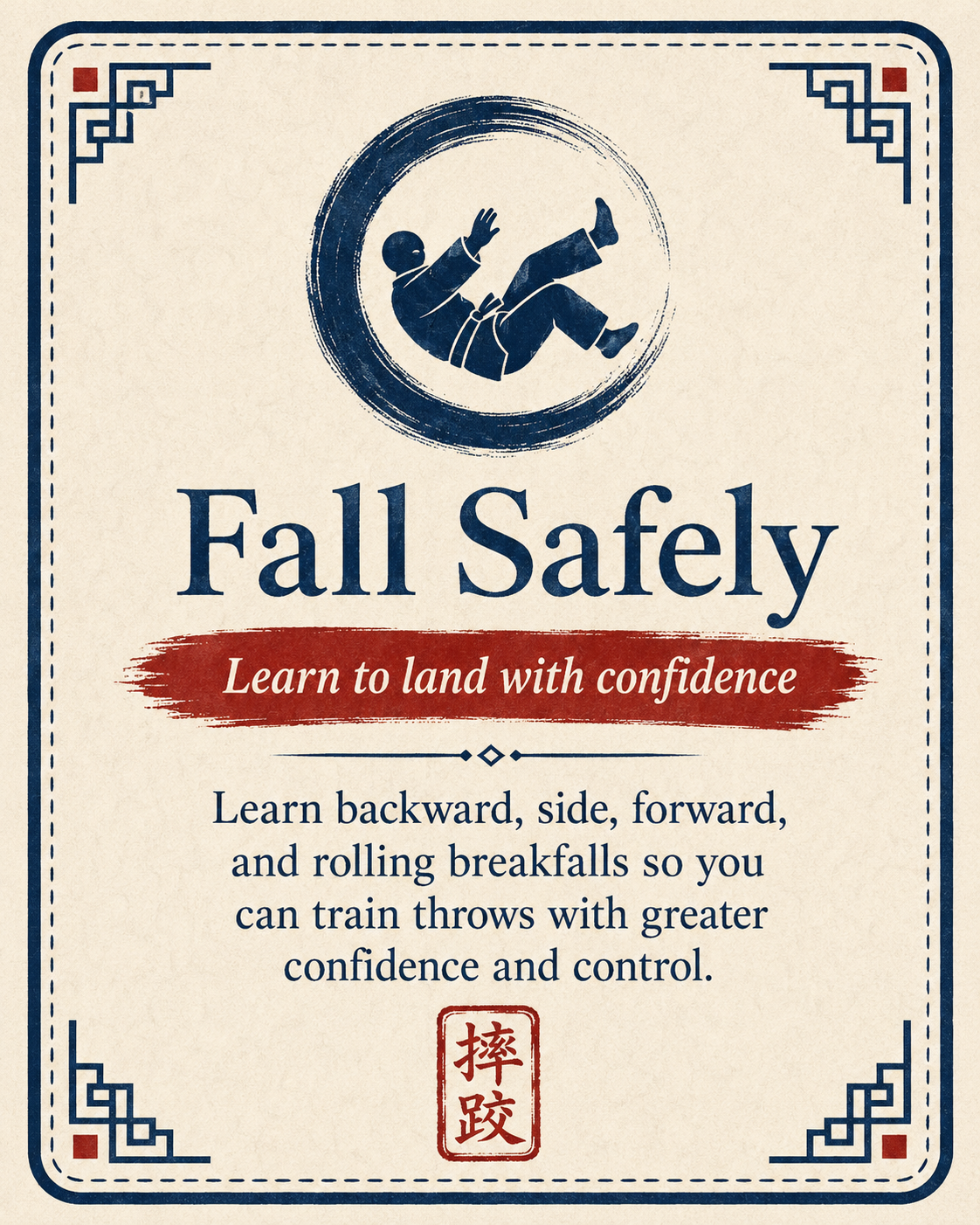
Backward, side, and forward breakfalls
Solo movement drills
Traditional or modern conditioning exercises
Breakfalls are not treated as an afterthought. Students learn how to protect the head, distribute impact, avoid posting on vulnerable joints, and recover into a position from which they can continue moving.
Learning to fall well allows both partners to practice throwing with greater confidence.
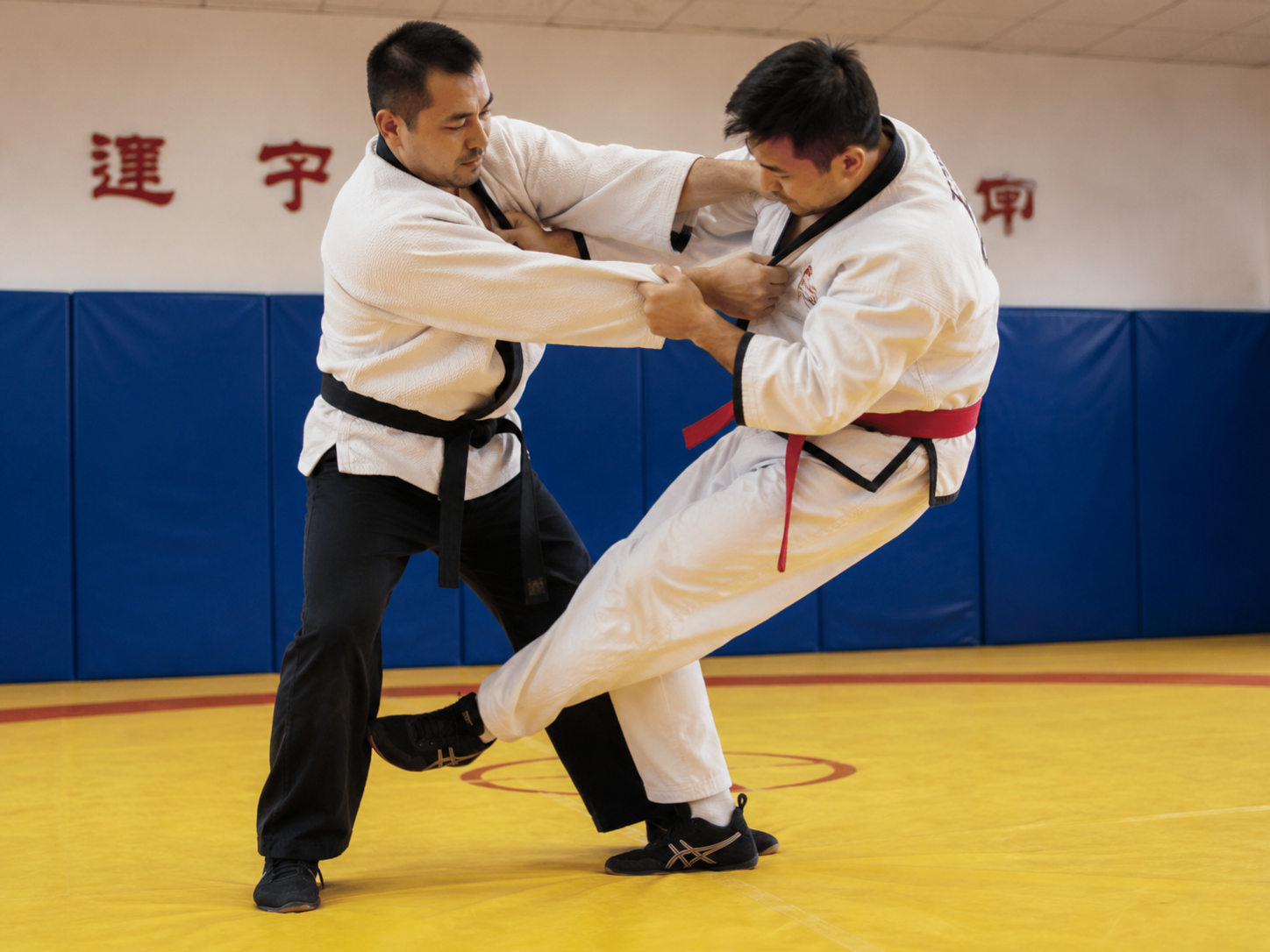
Part Two: Develop the Skill
Grips, Entries, and Partner Drills
The middle portion of class focuses on one or more technical themes.
Students may work on:
Sleeve, cuff, lapel, collar, seam, or belt grips
Grip changes and grip removal
Stance and stepping with a partner
Creating angles
Breaking posture and balance
Throwing entries
Sweeps, hooks, trips, and leg bridges
Hip and body-locking methods
Counters and combinations
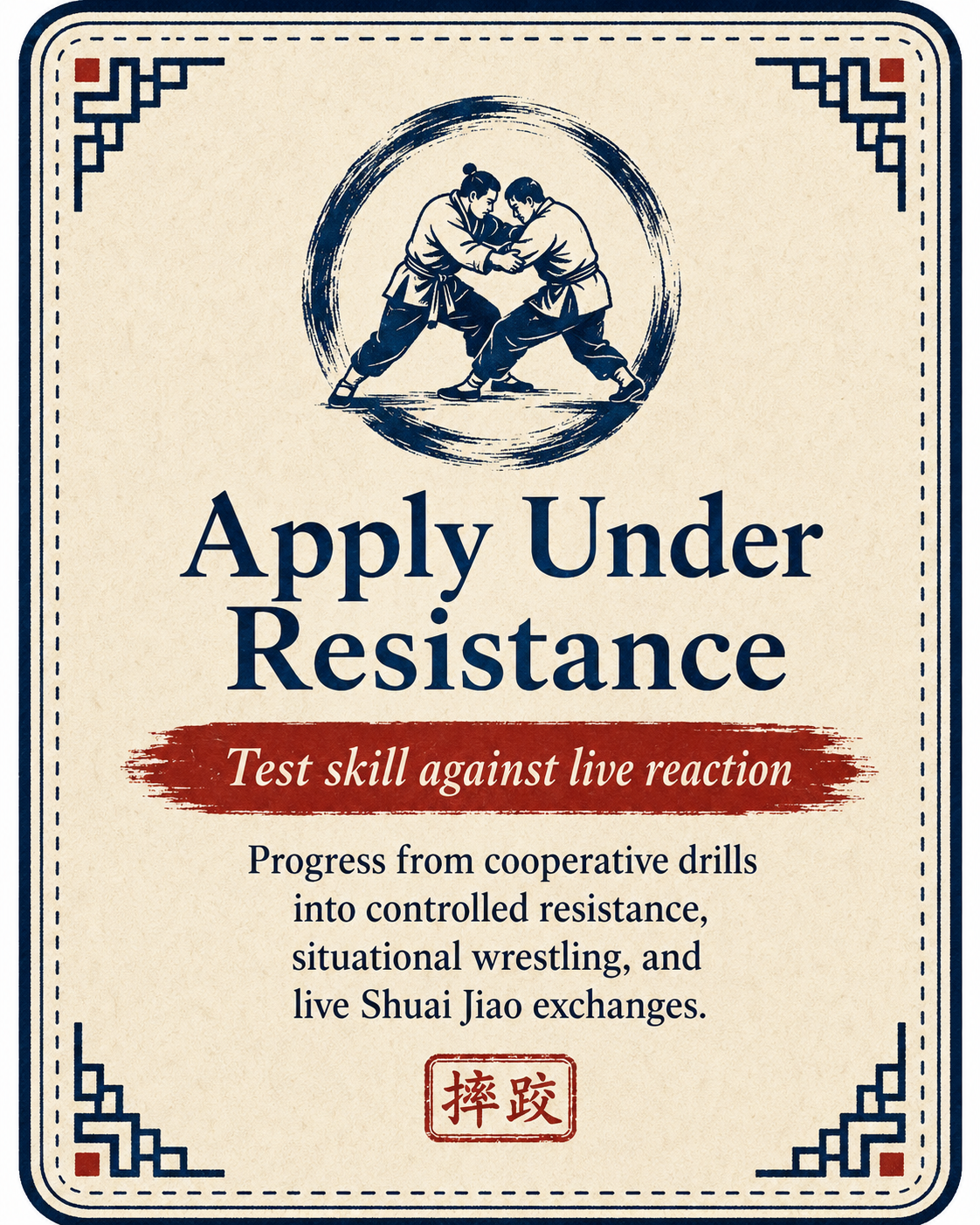
New techniques are first practiced with enough cooperation to understand the mechanics. James can then add movement, changing grips, defensive reactions, and increasing resistance as students become more comfortable.
The purpose is not to perform a memorized motion against a passive partner forever. Cooperative drilling gives students the foundation needed to use the skill against someone who is actively moving and responding.
Part Three: Apply the Training
Throwing, Resistance, and Live Wrestling
The final portion of class gives students opportunities to test what they have learned.
Depending on the experience of the students and the focus of the lesson, this may include:
Repeated throwing practice
Grip-specific rounds
Situational wrestling
Entry and counter drills
Progressive resistance
Controlled live Shuai Jiao
Competition-oriented exchanges
Self-defense variations
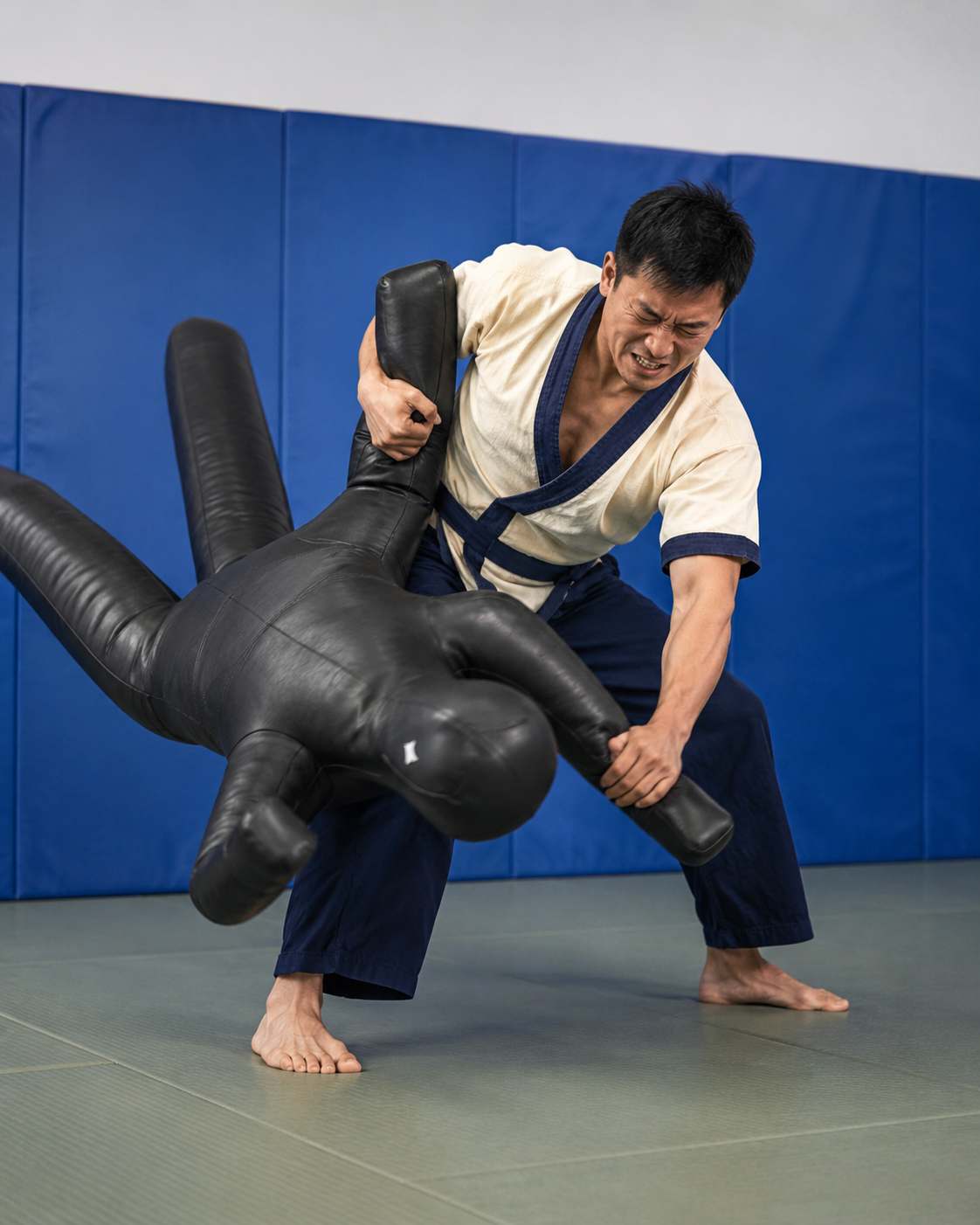
Throwing-dummy practice
Live practice is introduced progressively. Beginners may begin with a limited goal—such as establishing a particular grip or creating one specific reaction—rather than immediately entering unrestricted wrestling.
More experienced students can work with greater speed, resistance, strategic freedom, and athletic intensity.
Athletic does not mean reckless.
Students train on padded mats, learn breakfalls before demanding throwing practice, increase resistance gradually, and work with partners appropriate to their experience and physical size.
Technical control should remain more important than winning a practice exchange. Students are expected to protect their partners, respond to instruction, and increase intensity only when both people are prepared.
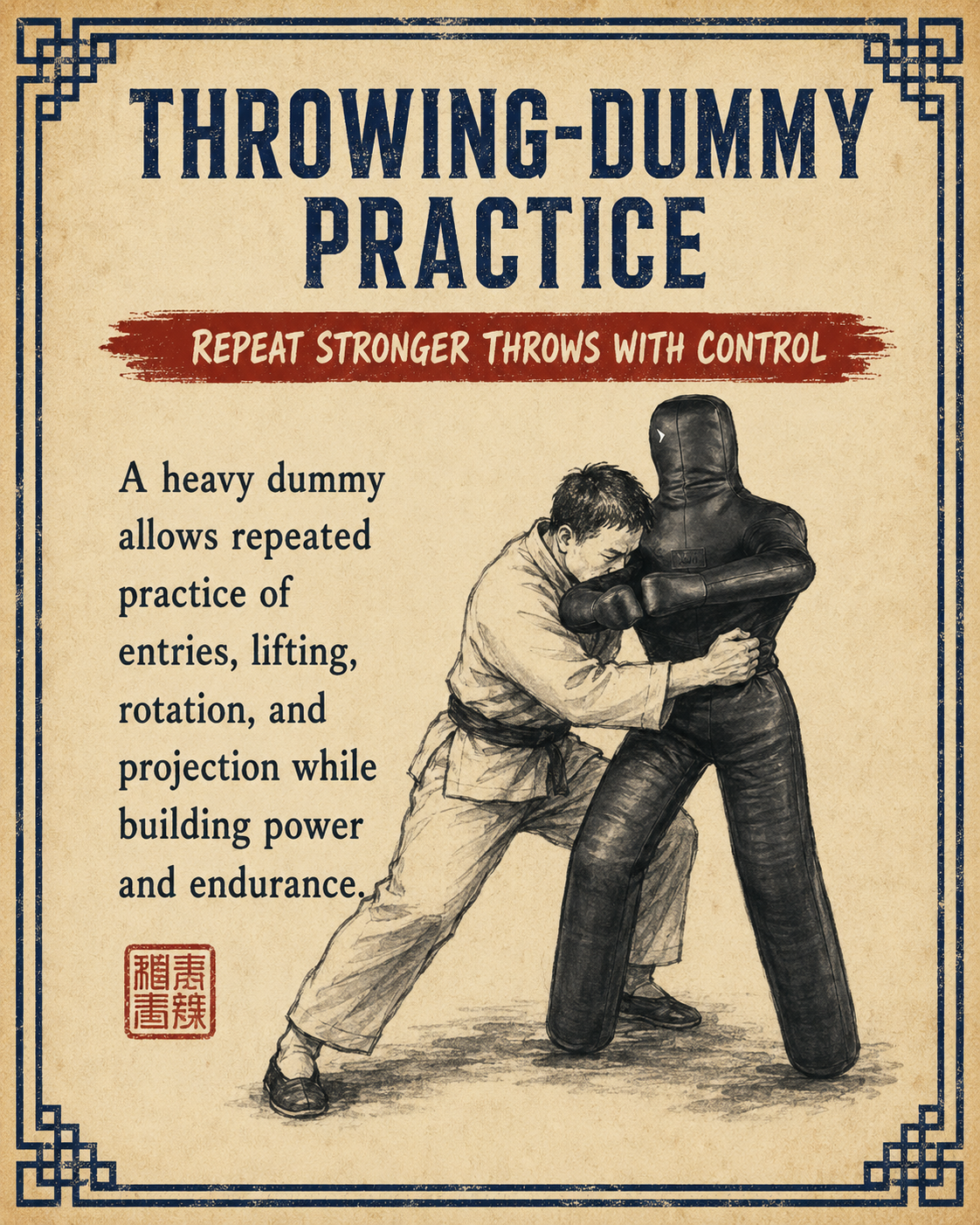
Practice Power Without Sacrificing Control
A heavy throwing dummy allows students to repeat entries, develop whole-body projection, and practice stronger throwing actions without placing the same impact on a training partner.
The dummy complements partner training; it does not replace the timing, sensitivity, balance, and adaptability developed through human contact.
Many Throws. One Connected Method.
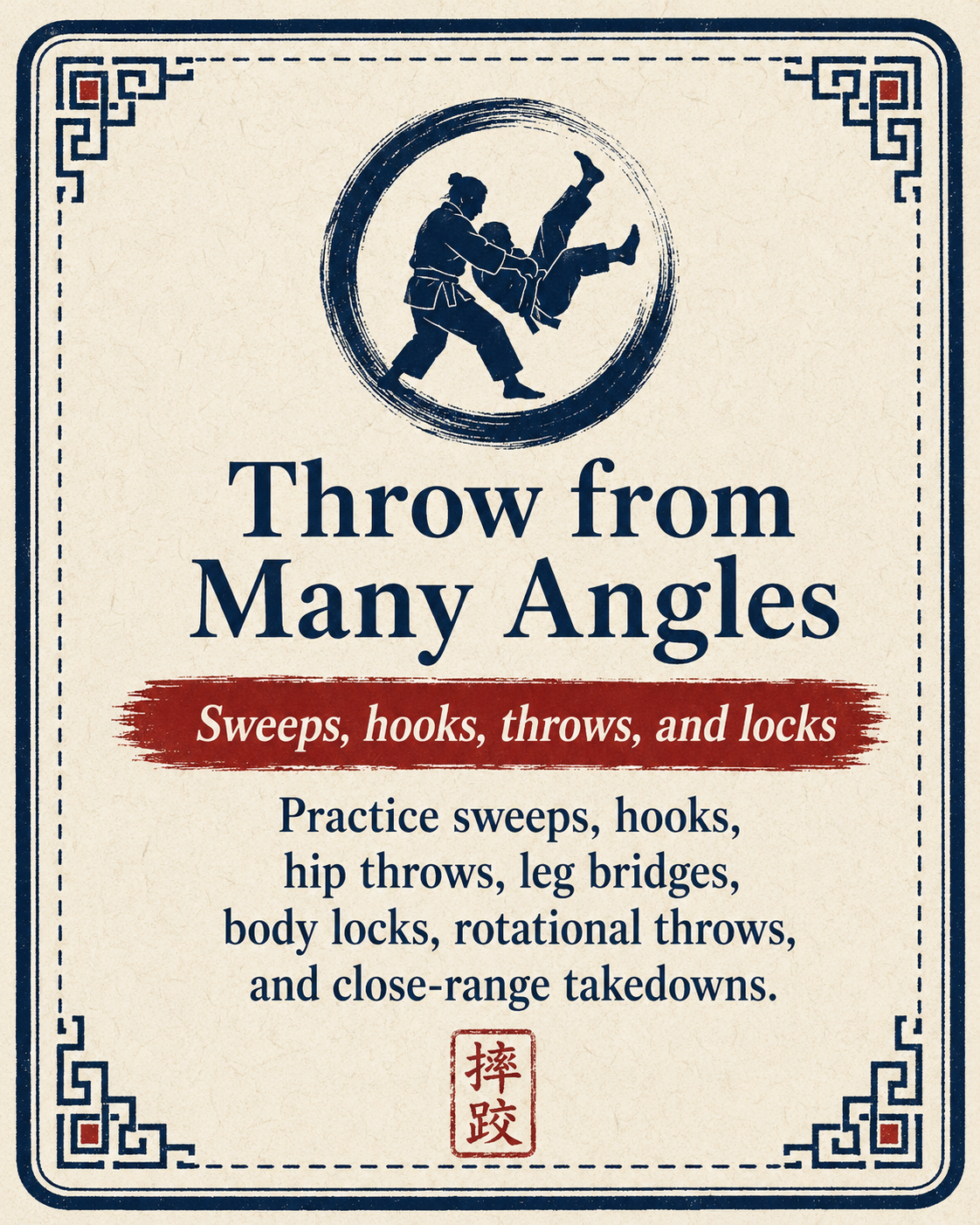
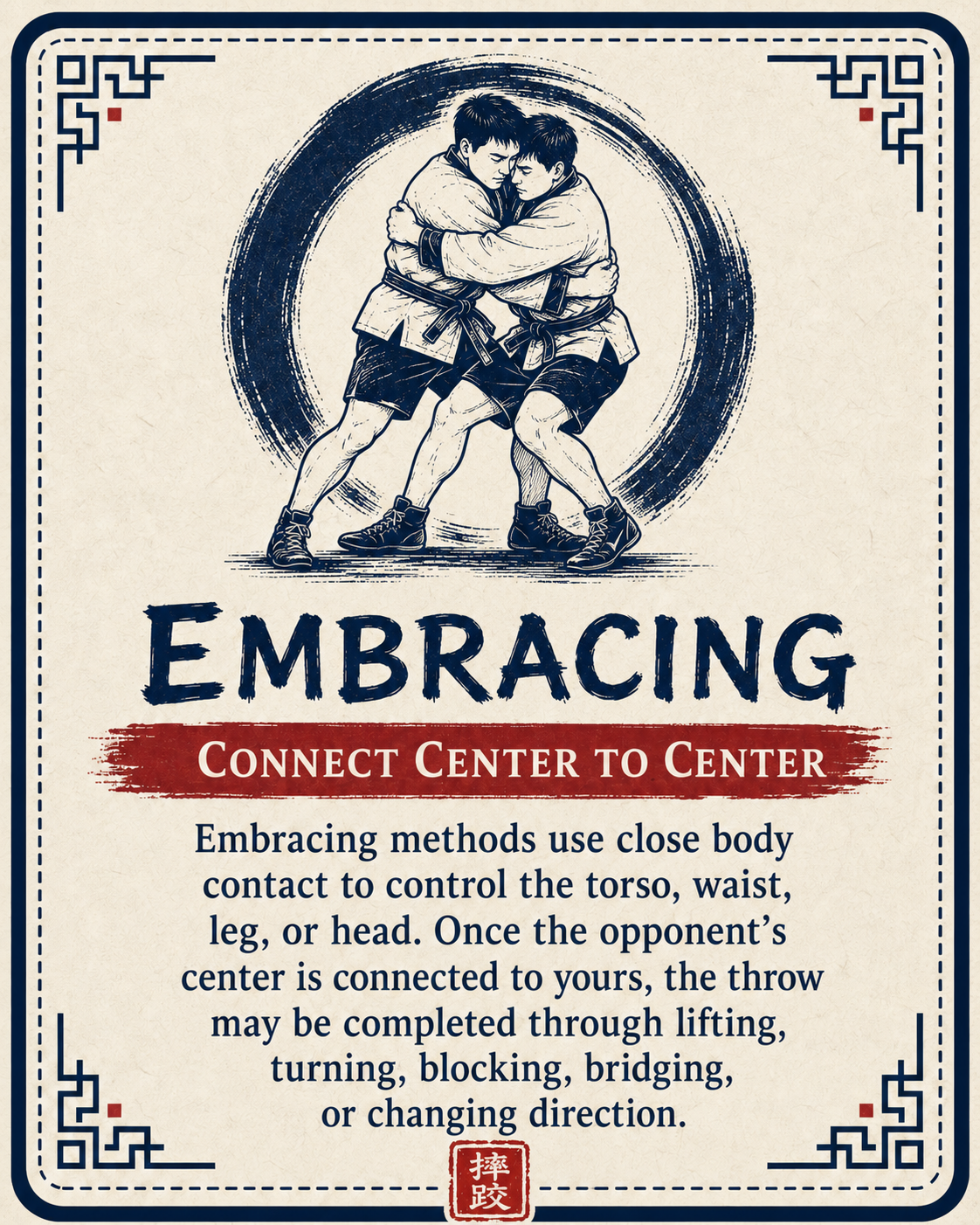
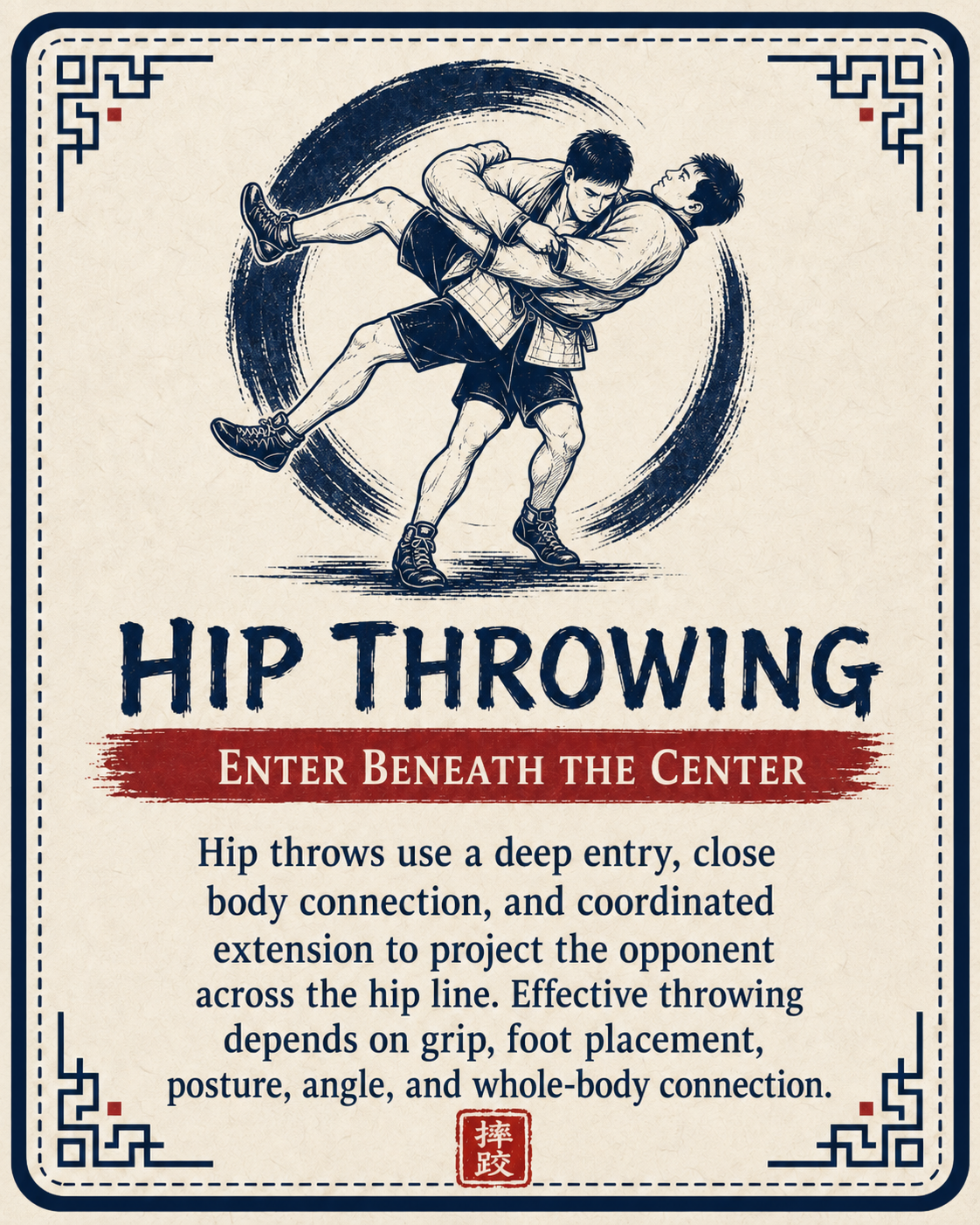
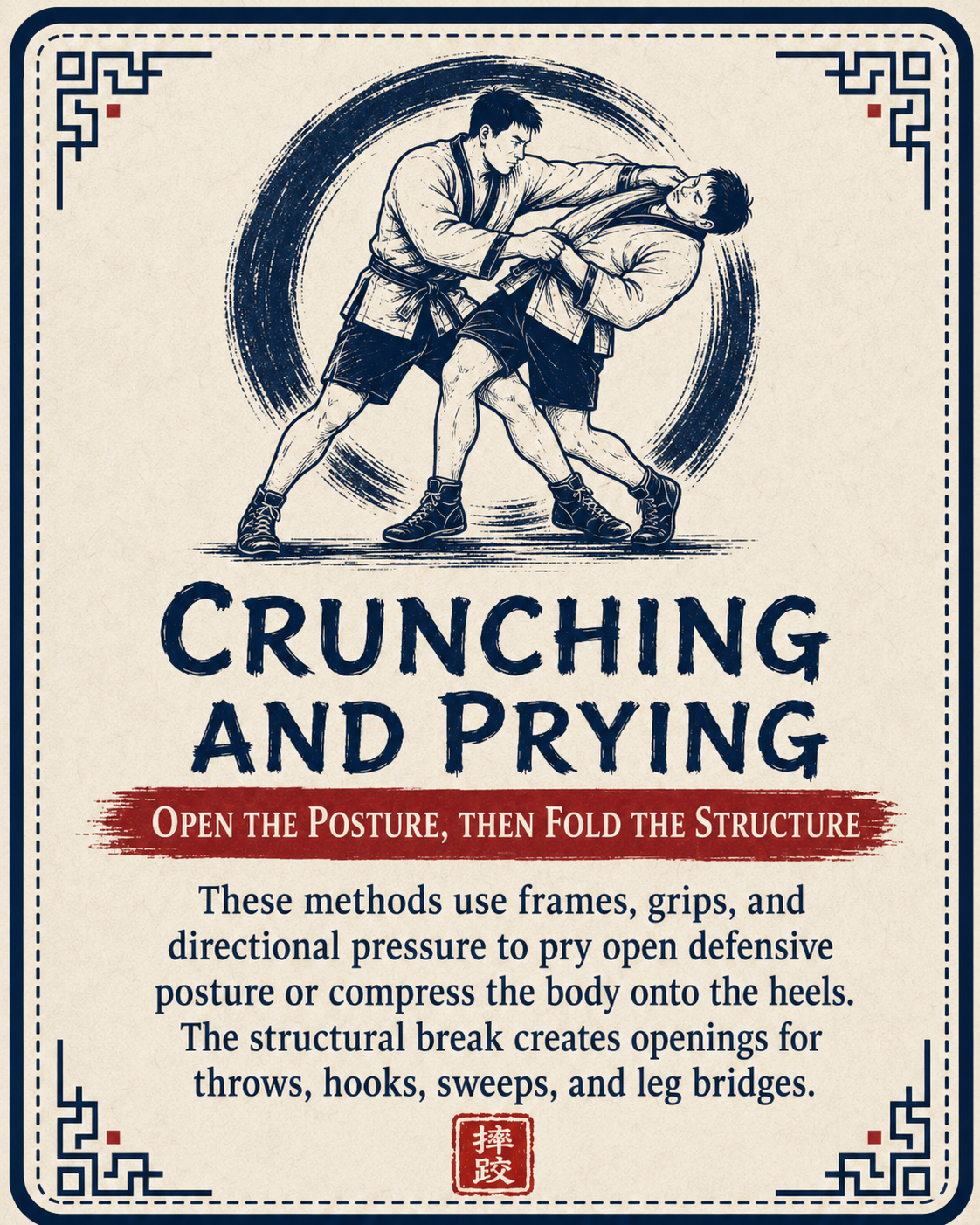
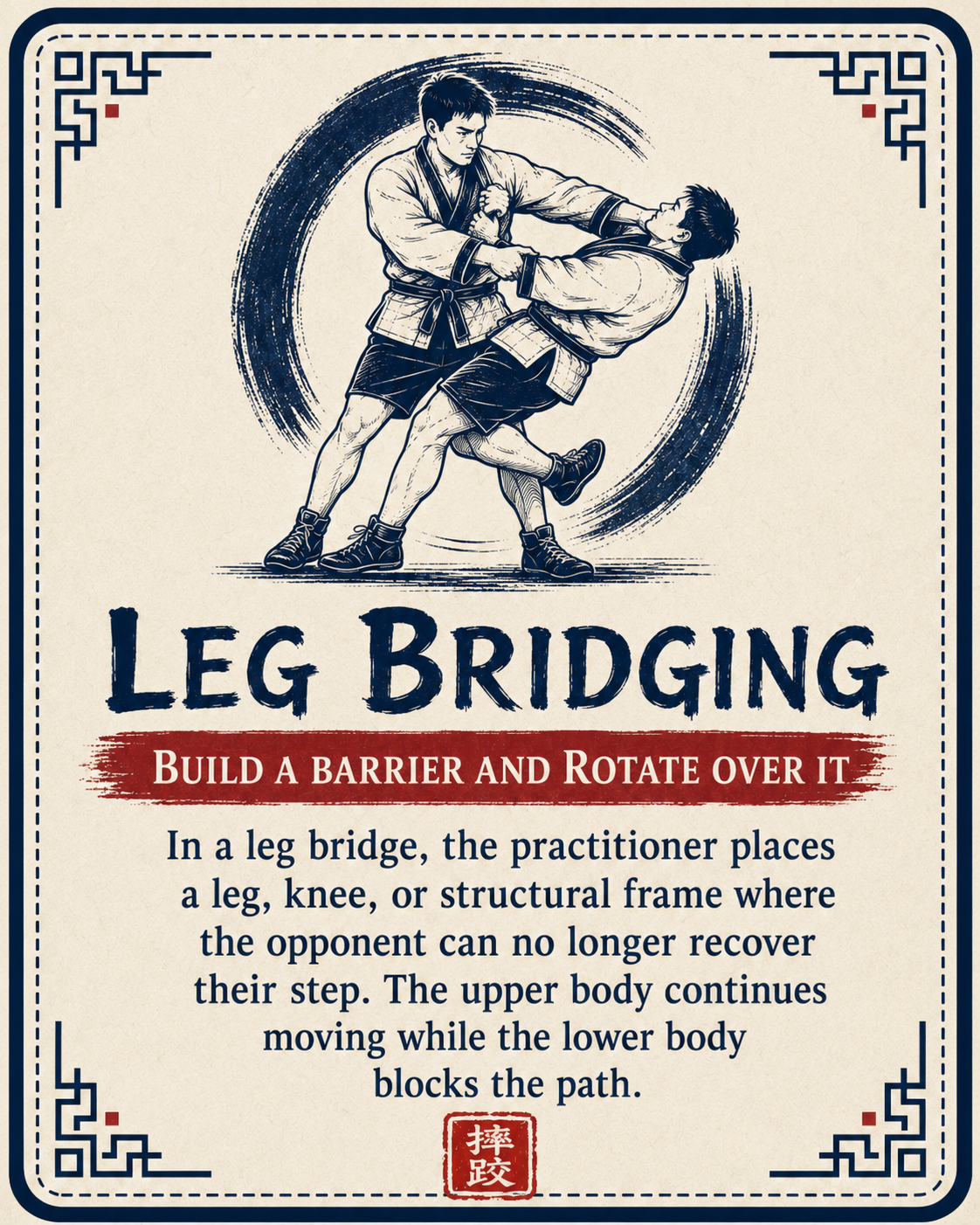
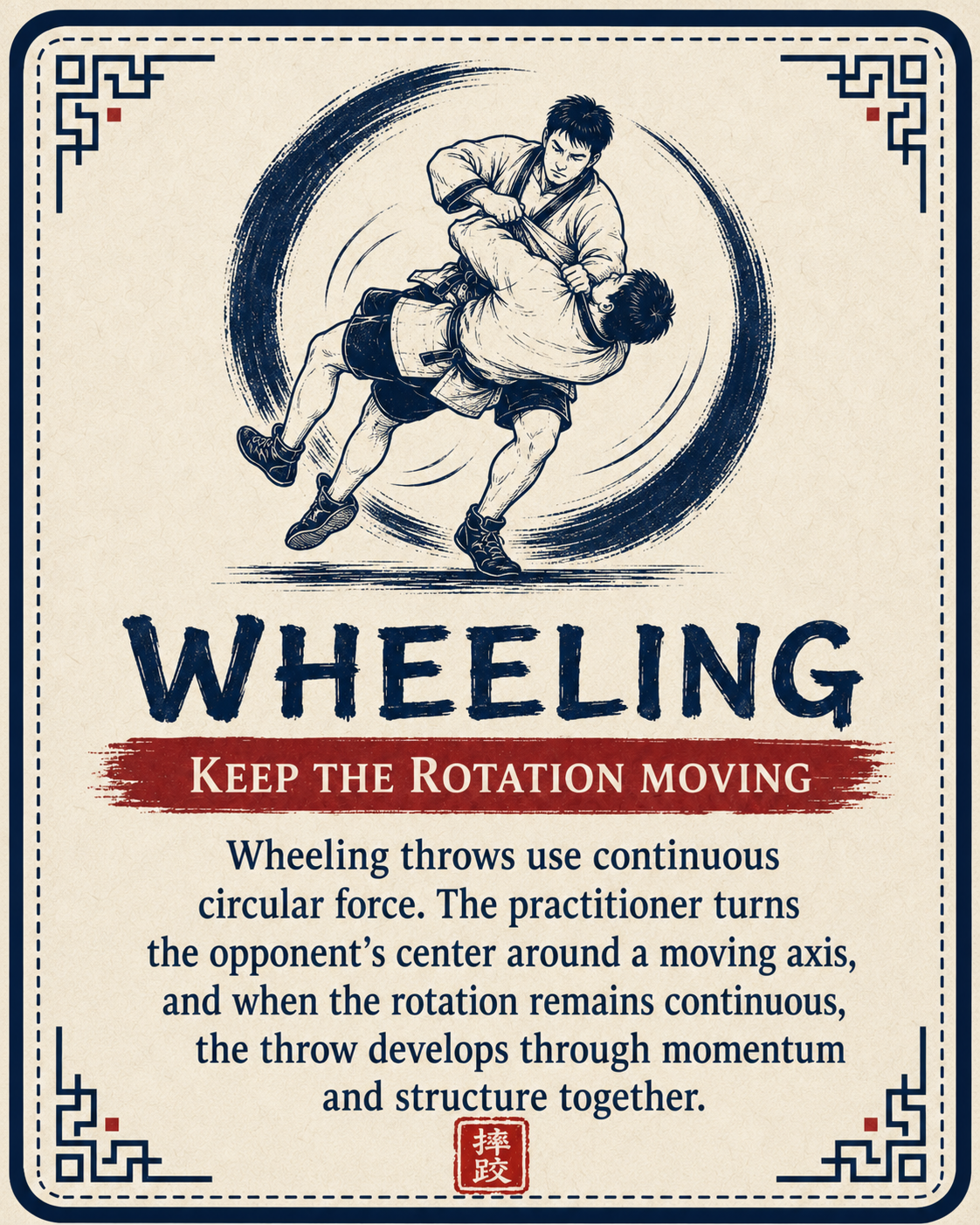
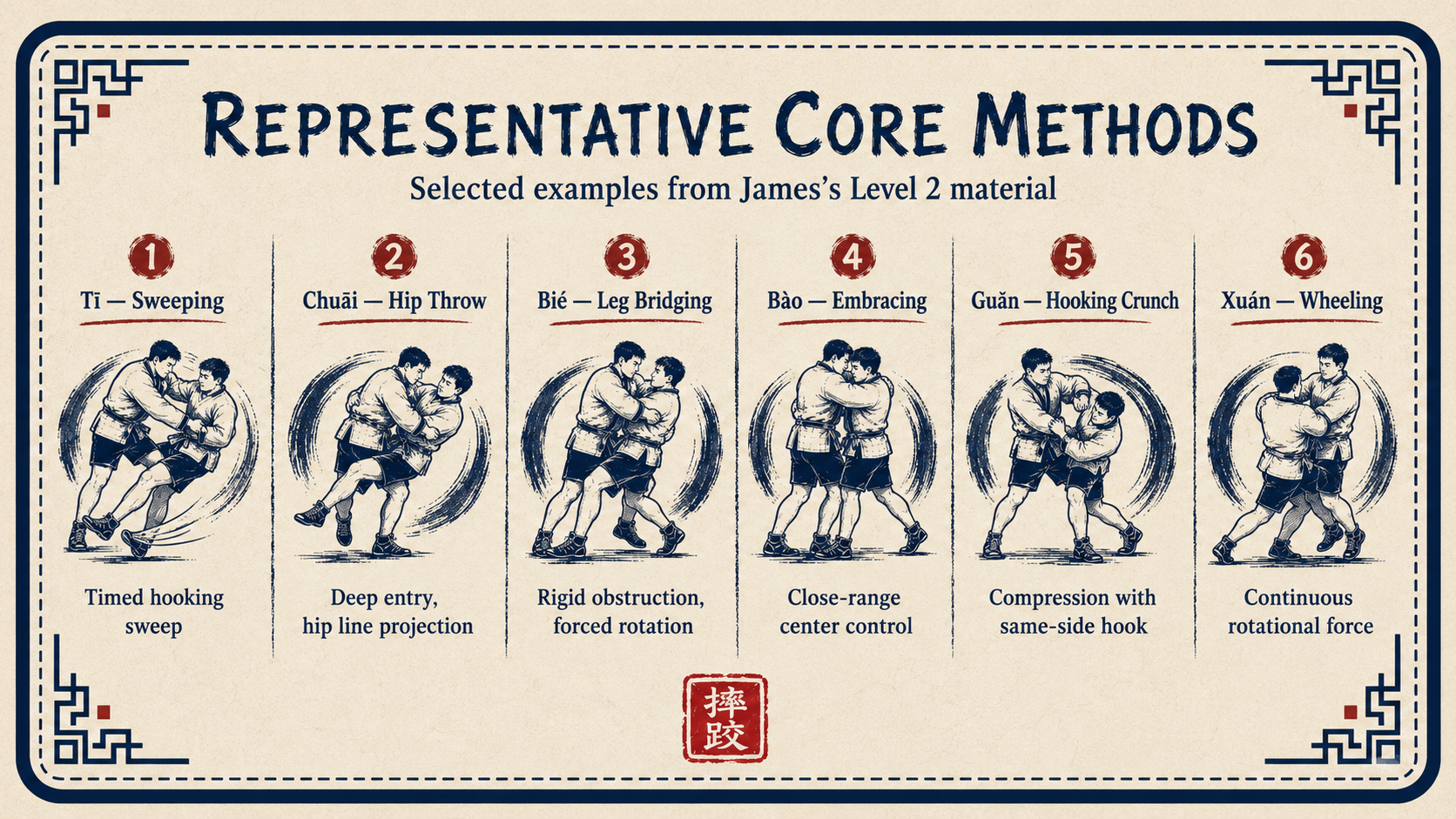
Shuai Jiao is not built around a single favorite takedown. Students learn to throw through different combinations of gripping, stepping, turning, lifting, sweeping, blocking, hooking, and rotating.
Some methods remove the supporting leg. Others create a barrier and drive the opponent over it. Some connect closely through the hips or waist, while others use continuous circular movement to redirect the opponent’s center.
Although the techniques may look very different, they rely on the same underlying process:
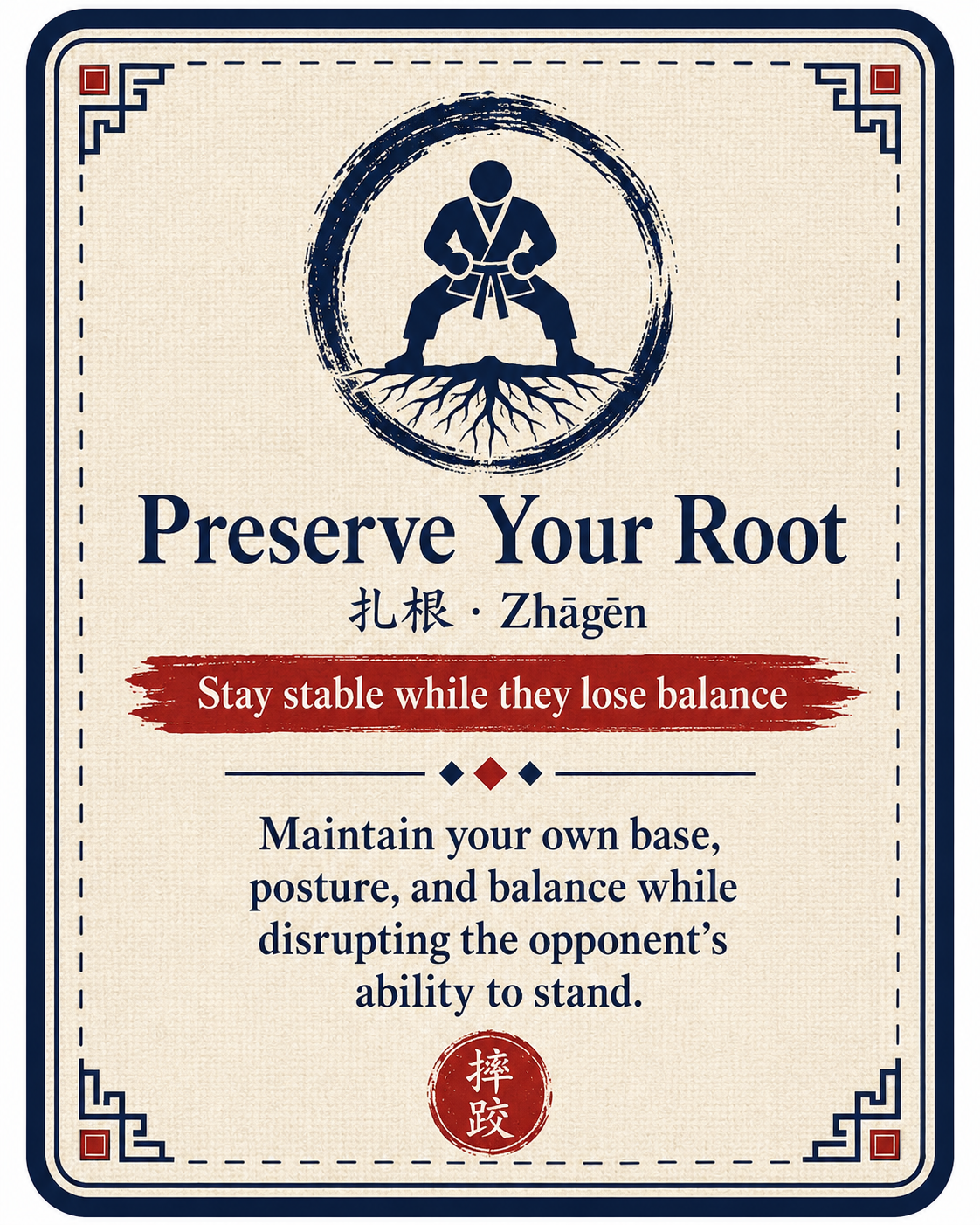
Establish control. Break the structure. Enter at the right angle. Complete the throw without losing your own balance.
At Dragon Phoenix, students study representative throws individually and then learn how they connect into broader throwing families, combinations, counters, and live applications.
Explore the Full Throwing Curriculum
James’s Baoding Shuai Jiao syllabus contains the ten core throwing methods, grip system, principles, conditioning tools, breakfalls, stances, technique families, and relationships among the material.
The First Contest Is for the Grip
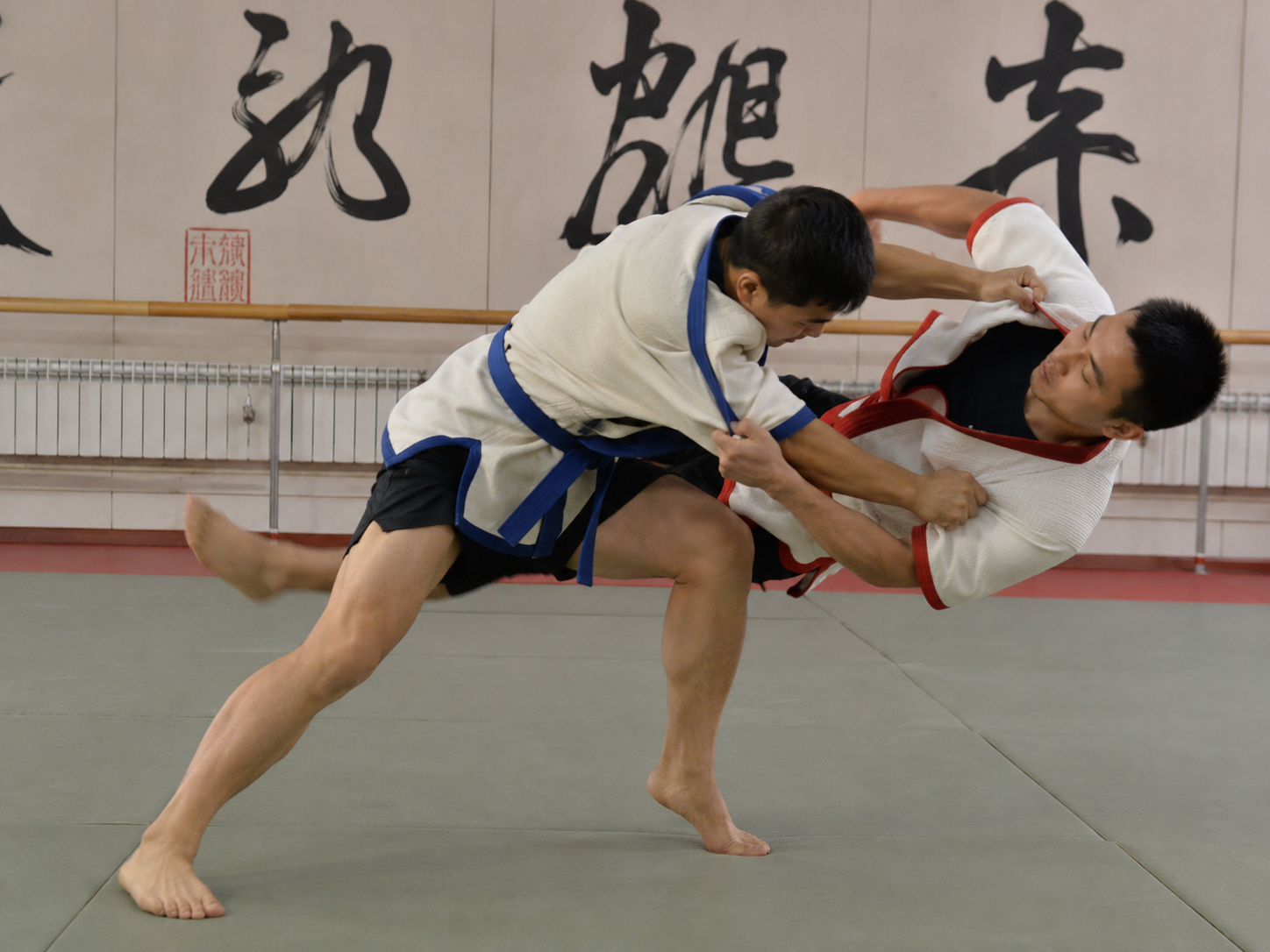
Before a throw can happen, both practitioners are fighting to establish useful control.
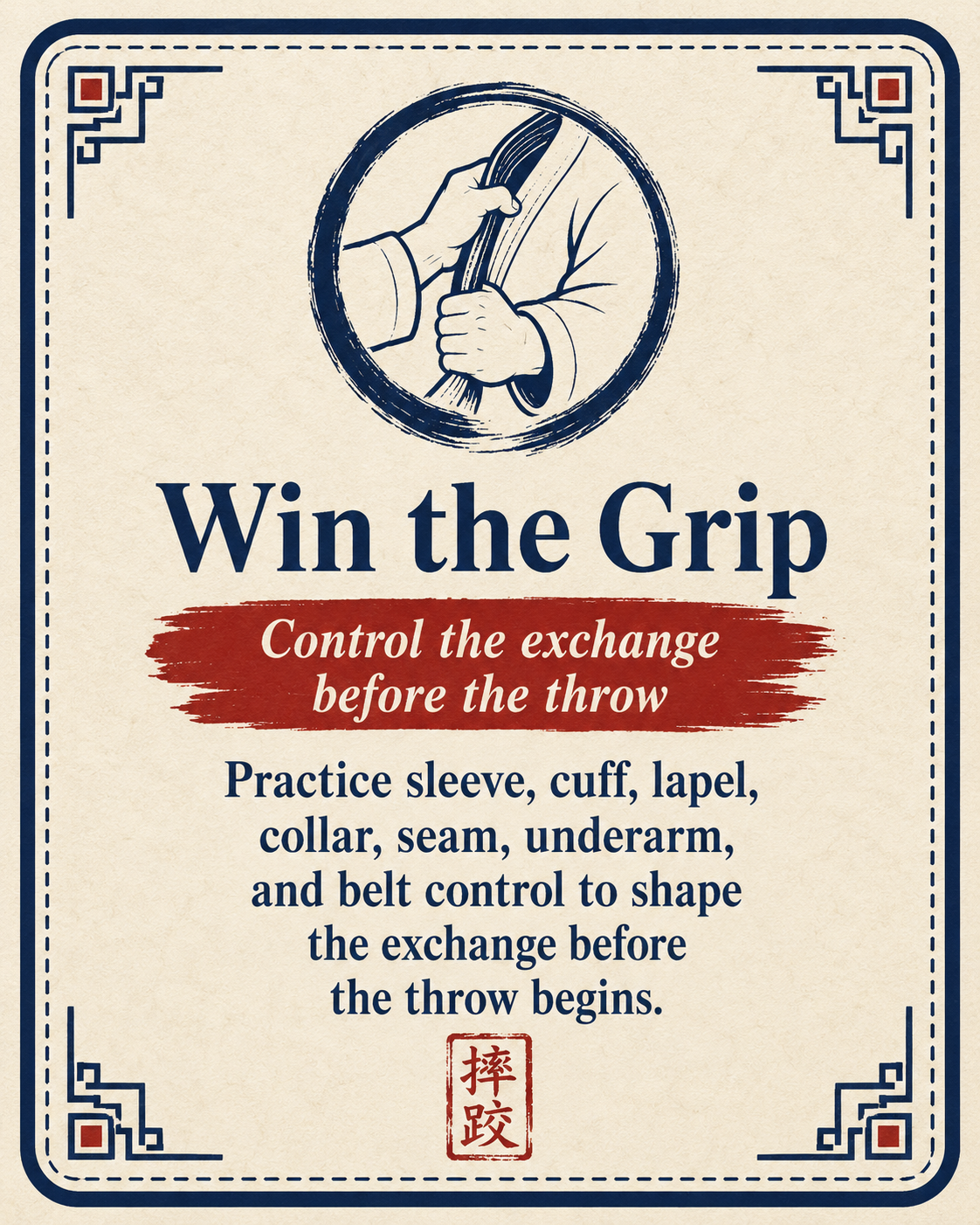
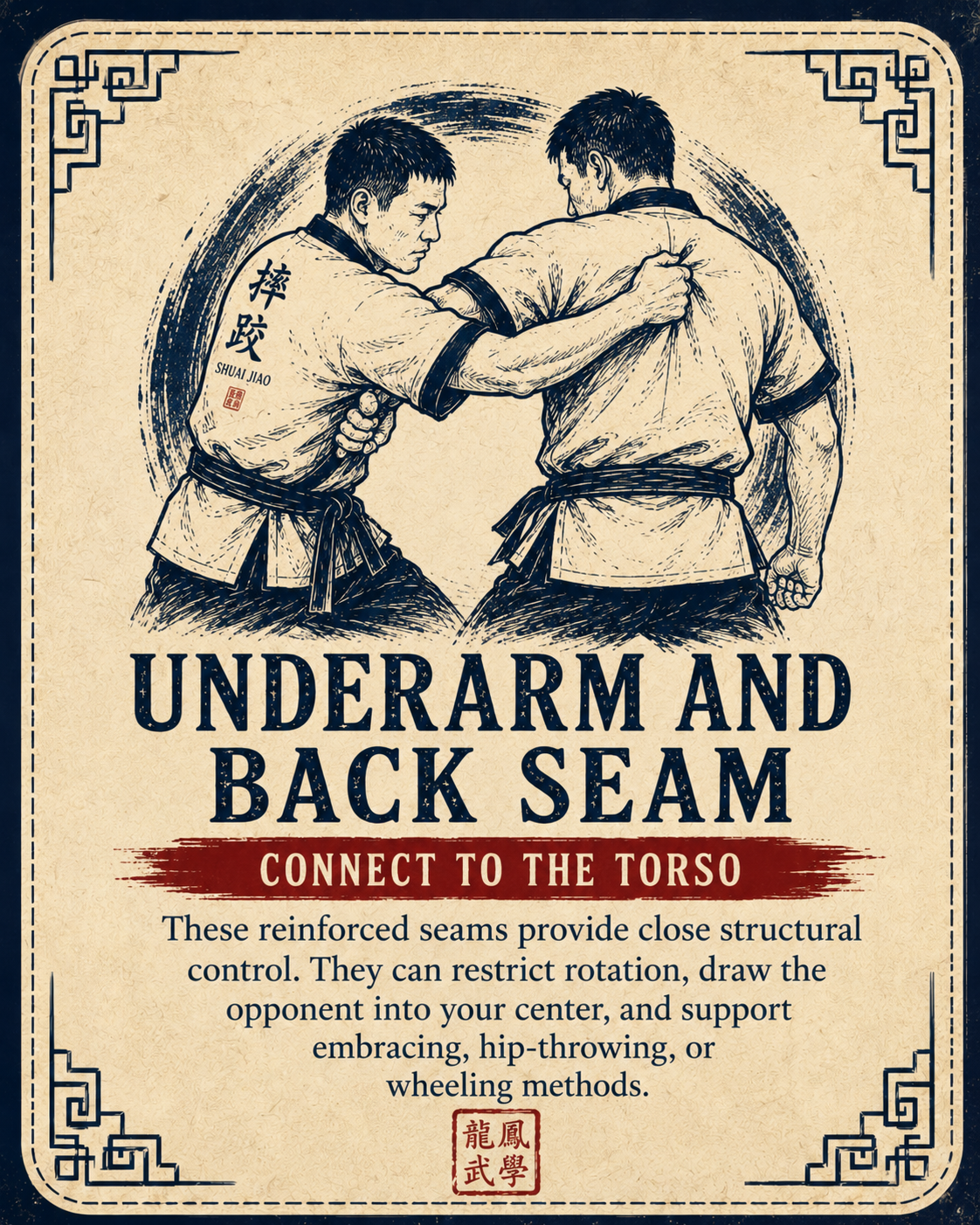
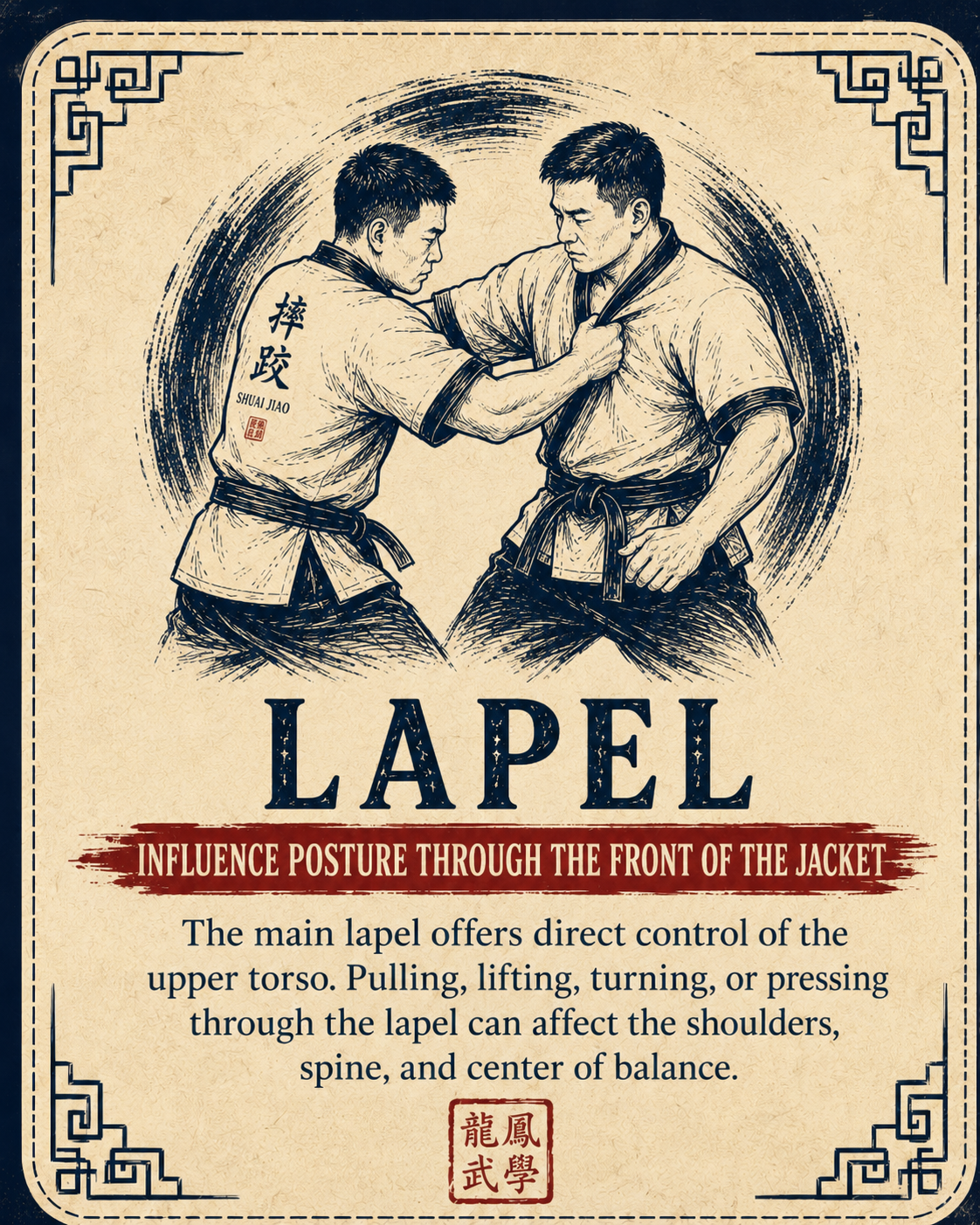
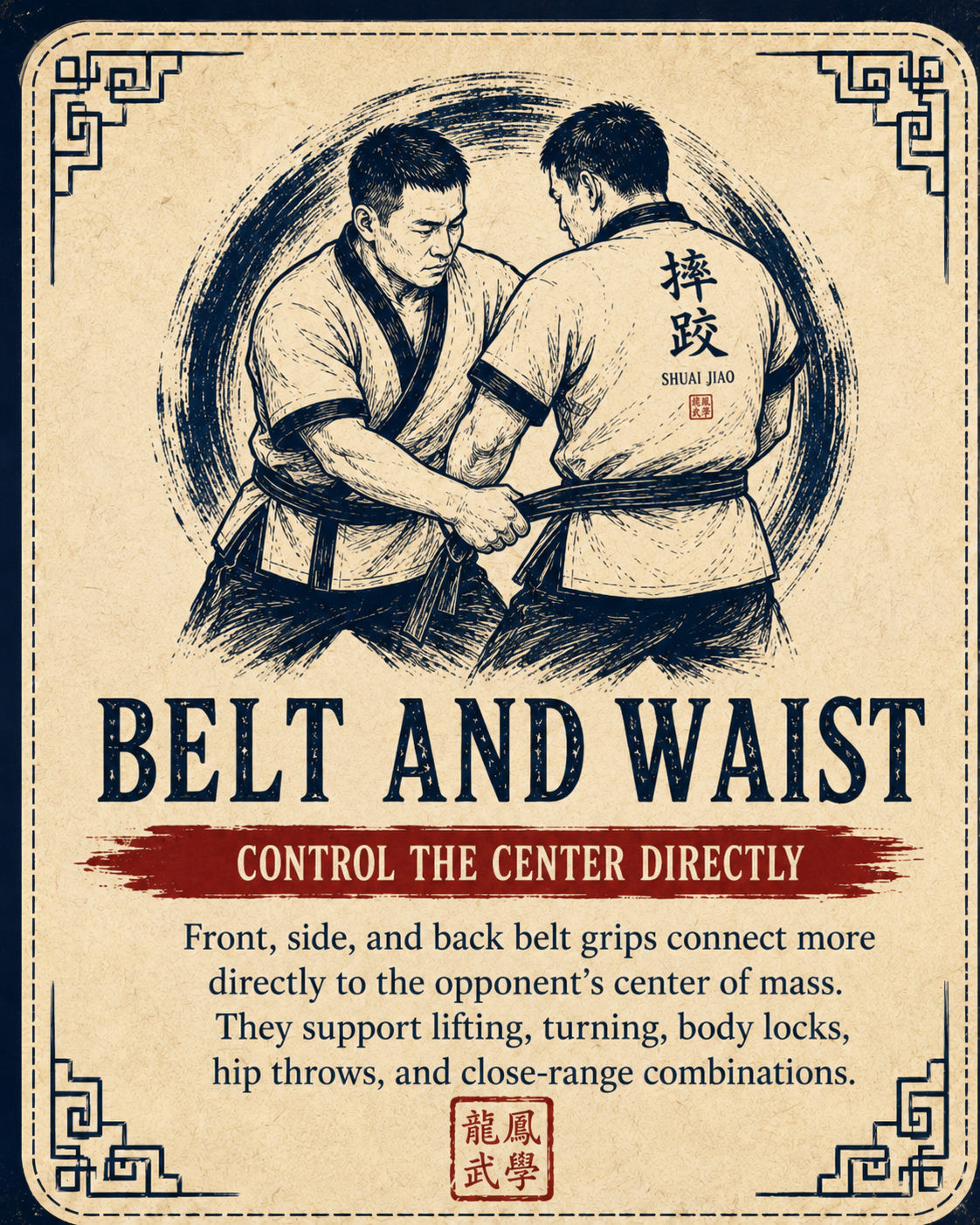
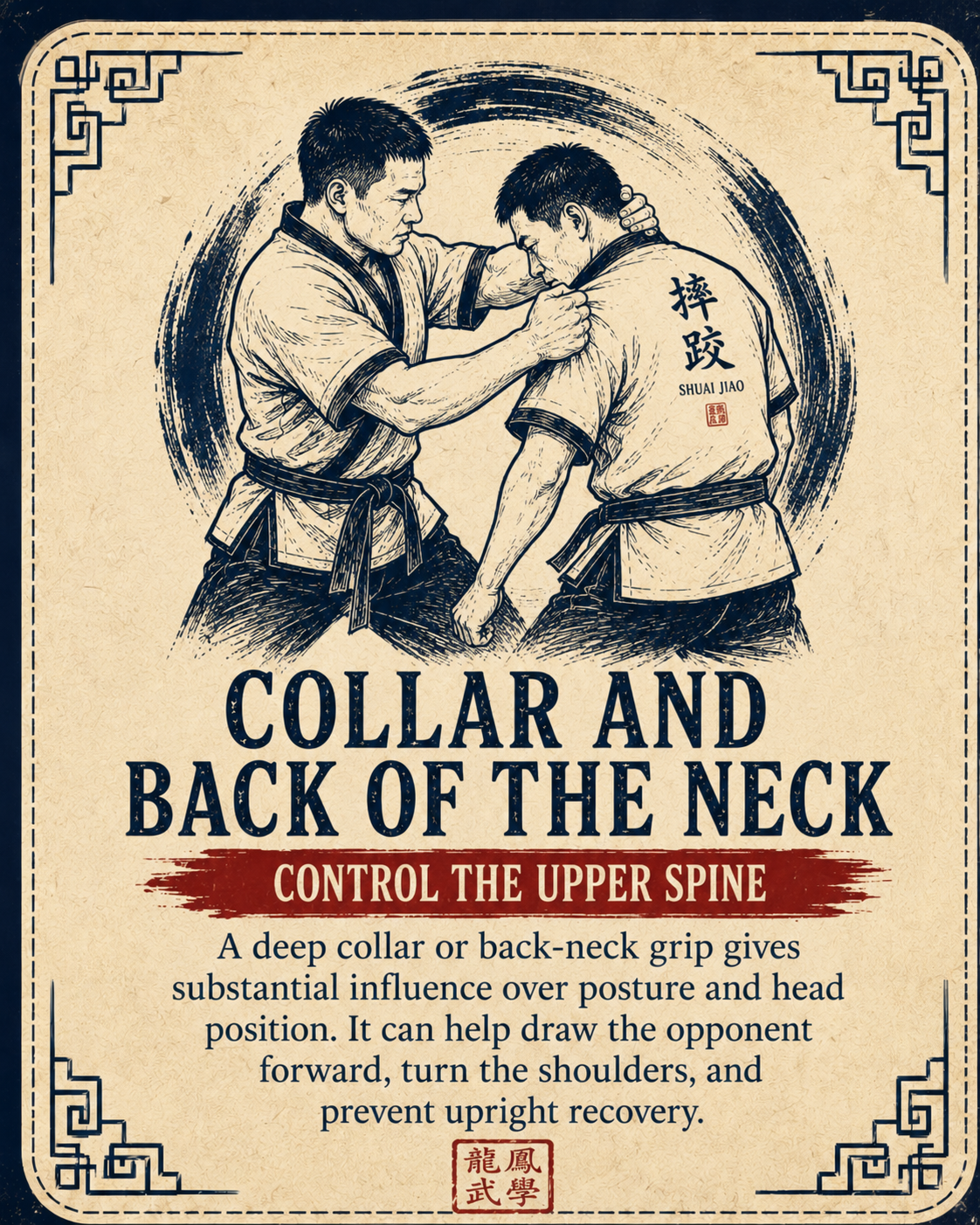
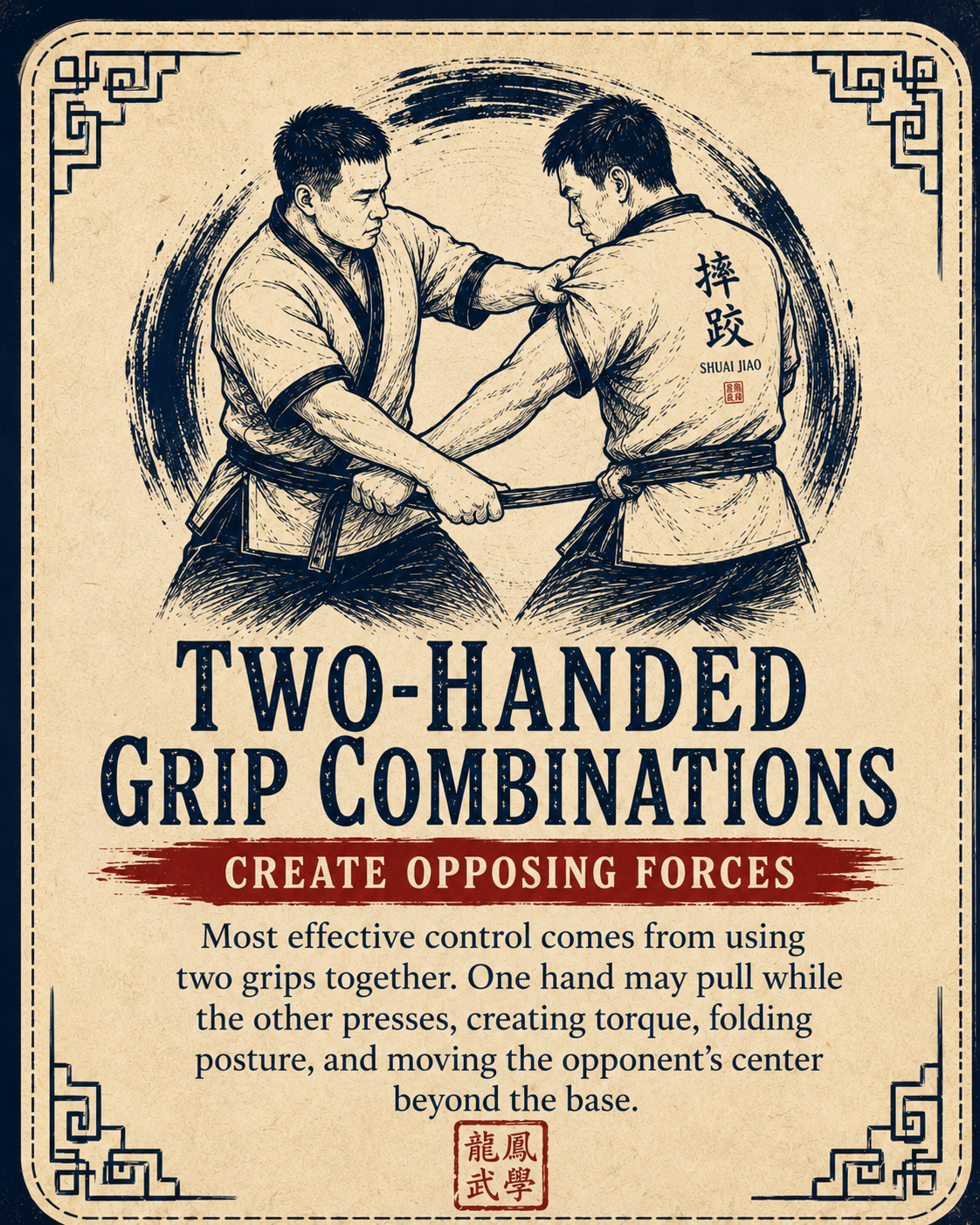
The traditional Shuai Jiao jacket—called a dálián—is short, durable, and designed to withstand repeated pulling, twisting, and throwing. Its sleeves, lapels, collar, seams, and belt create reliable gripping points that fundamentally shape the wrestling exchange.
A strong grip can alter posture, limit movement, expose a leg, create a turning angle, or prevent the opponent from completing an attack. A weak or poorly positioned grip may give the opponent those same opportunities.
For this reason, students do not learn throws separately from gripping. They learn how a particular grip creates particular attacks—and how an opponent’s grip changes what is possible.
The Grip Shapes the Throw
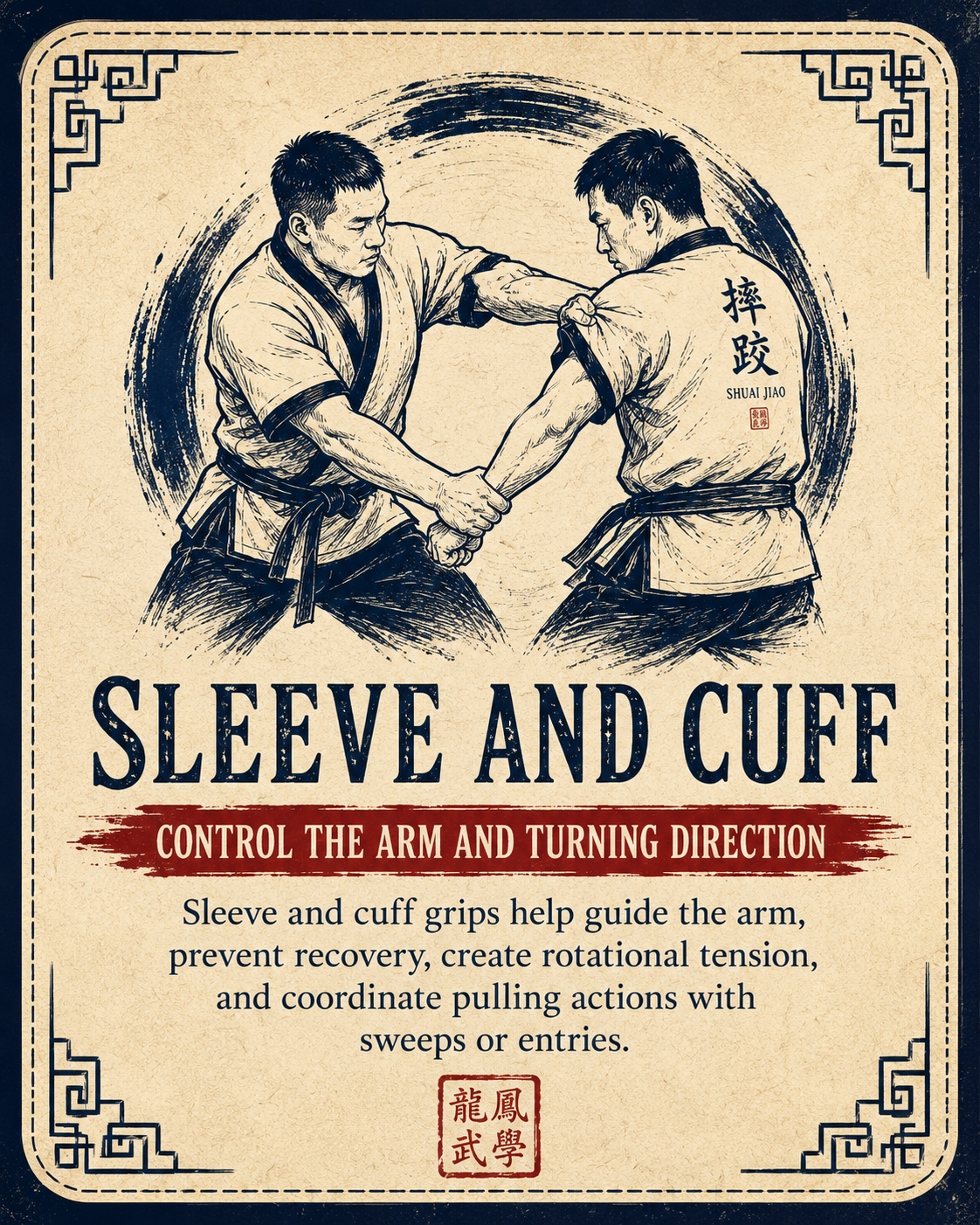
Where you hold determines where you can move the opponent.
A sleeve grip may control rotation or prevent an arm from recovering. A lapel grip can influence the shoulders and spine. A deep collar or back grip may create stronger control over posture. Belt and waist grips bring the centers closer together and open lifting, bridging, and embracing methods.
Students gradually learn to recognize three questions:
What part of the opponent can I control from this grip?
Which throws become available from this position?
What attacks does my opponent’s grip make possible?
This creates a strategic exchange before either practitioner commits to the final throw.
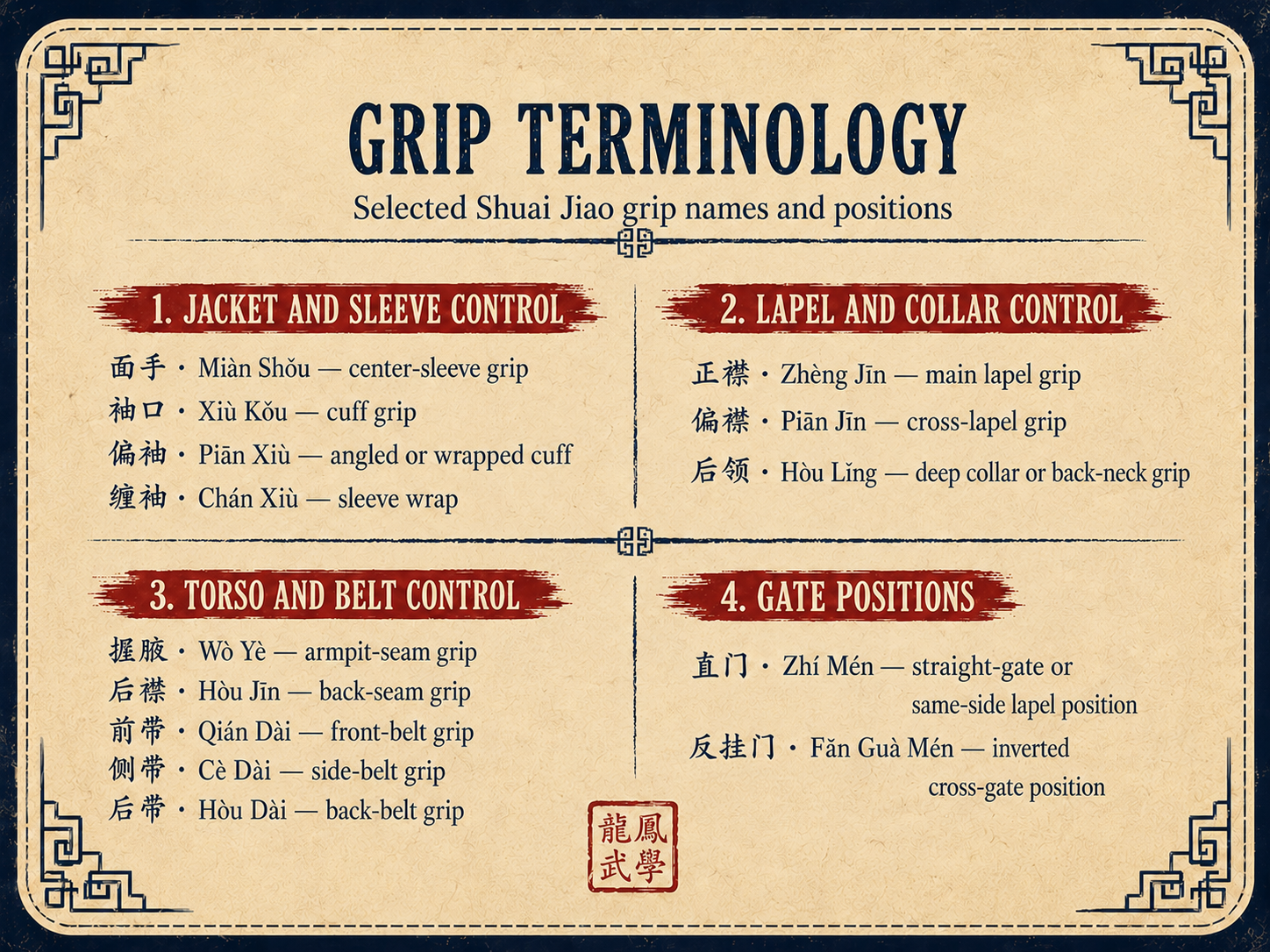
The jacket develops the hands—but traditional Shuai Jiao conditioning develops the entire connected body.
Build Strength That Connects to the Throw
Shuai Jiao conditioning is designed to support the movements and demands of wrestling.
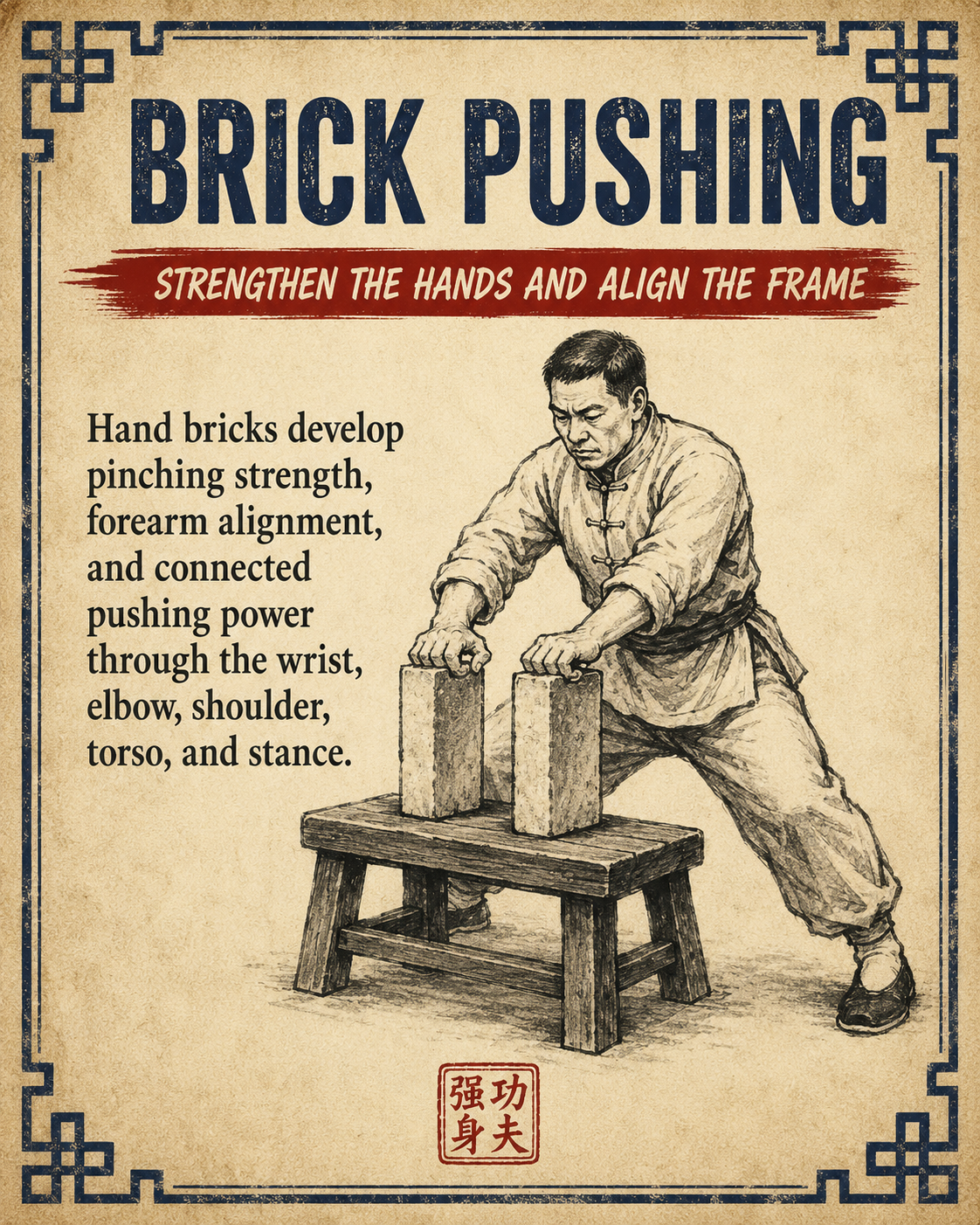
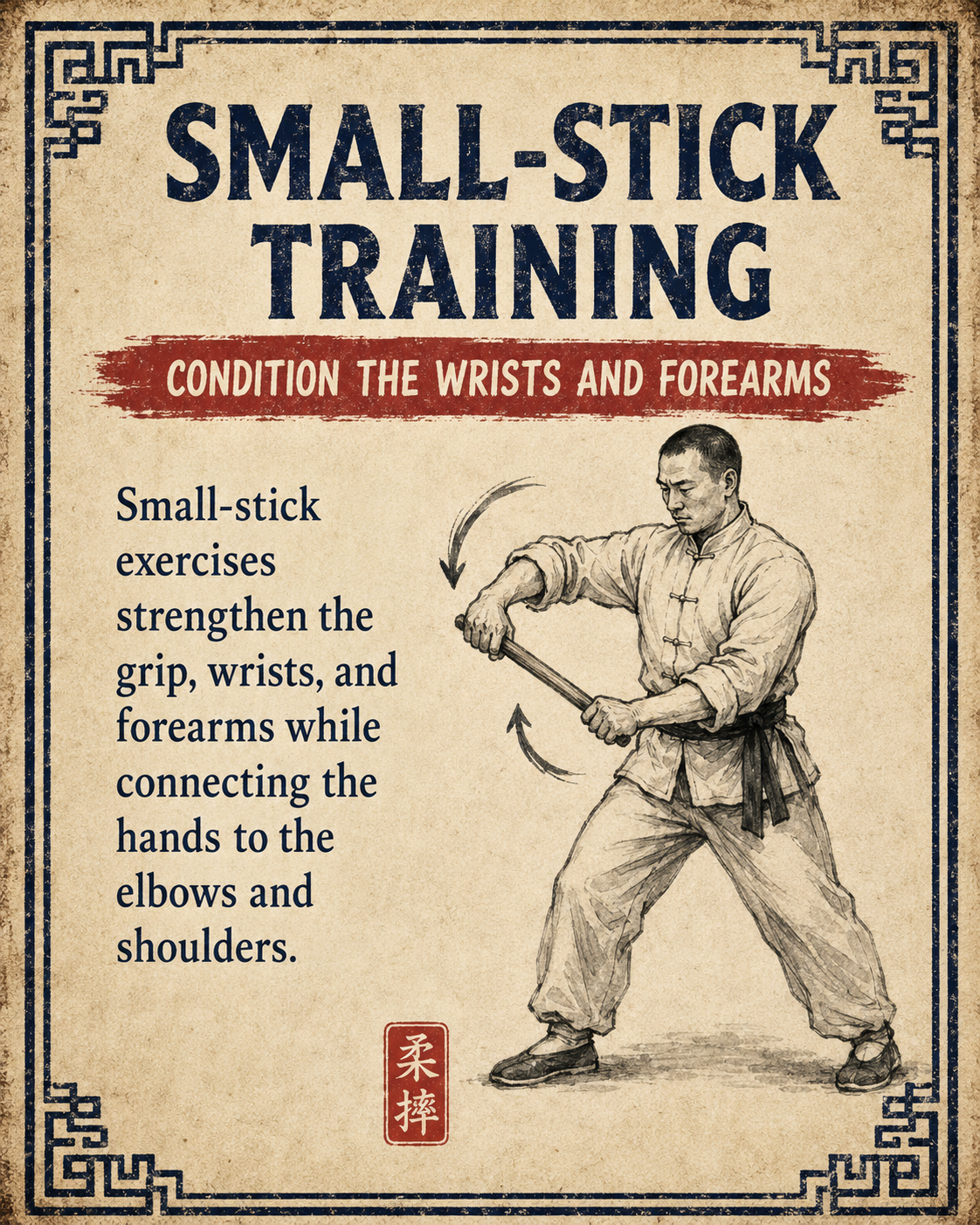
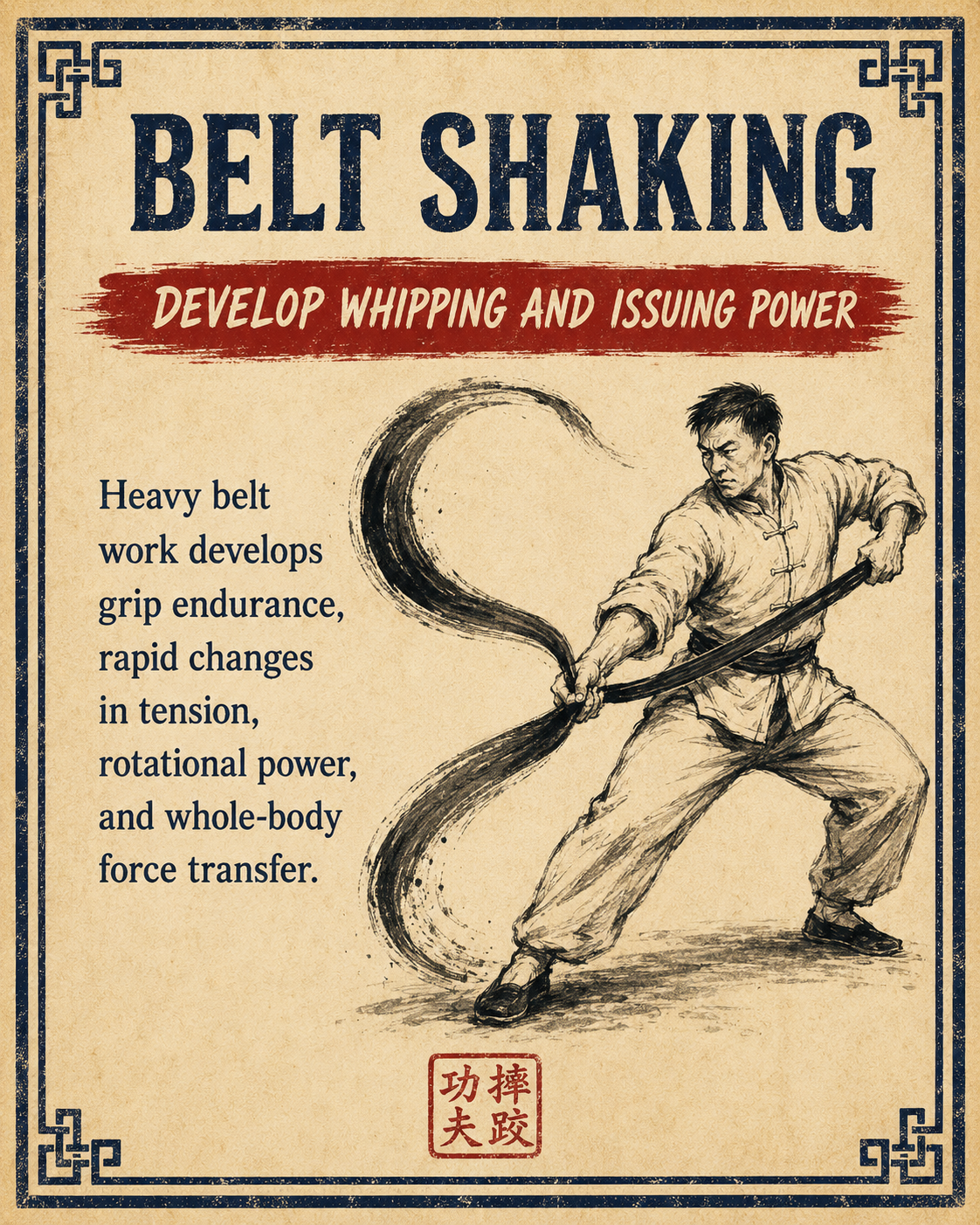
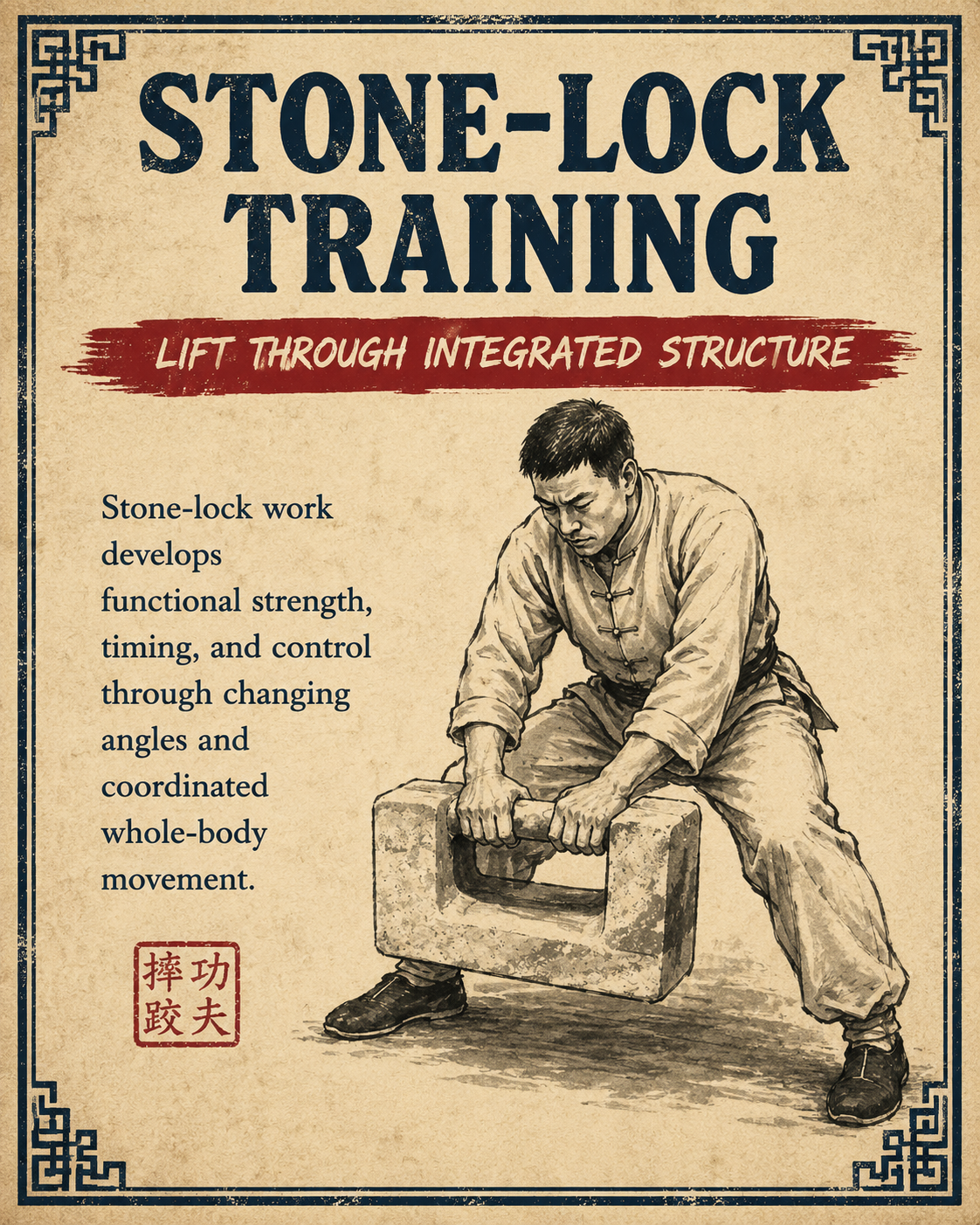
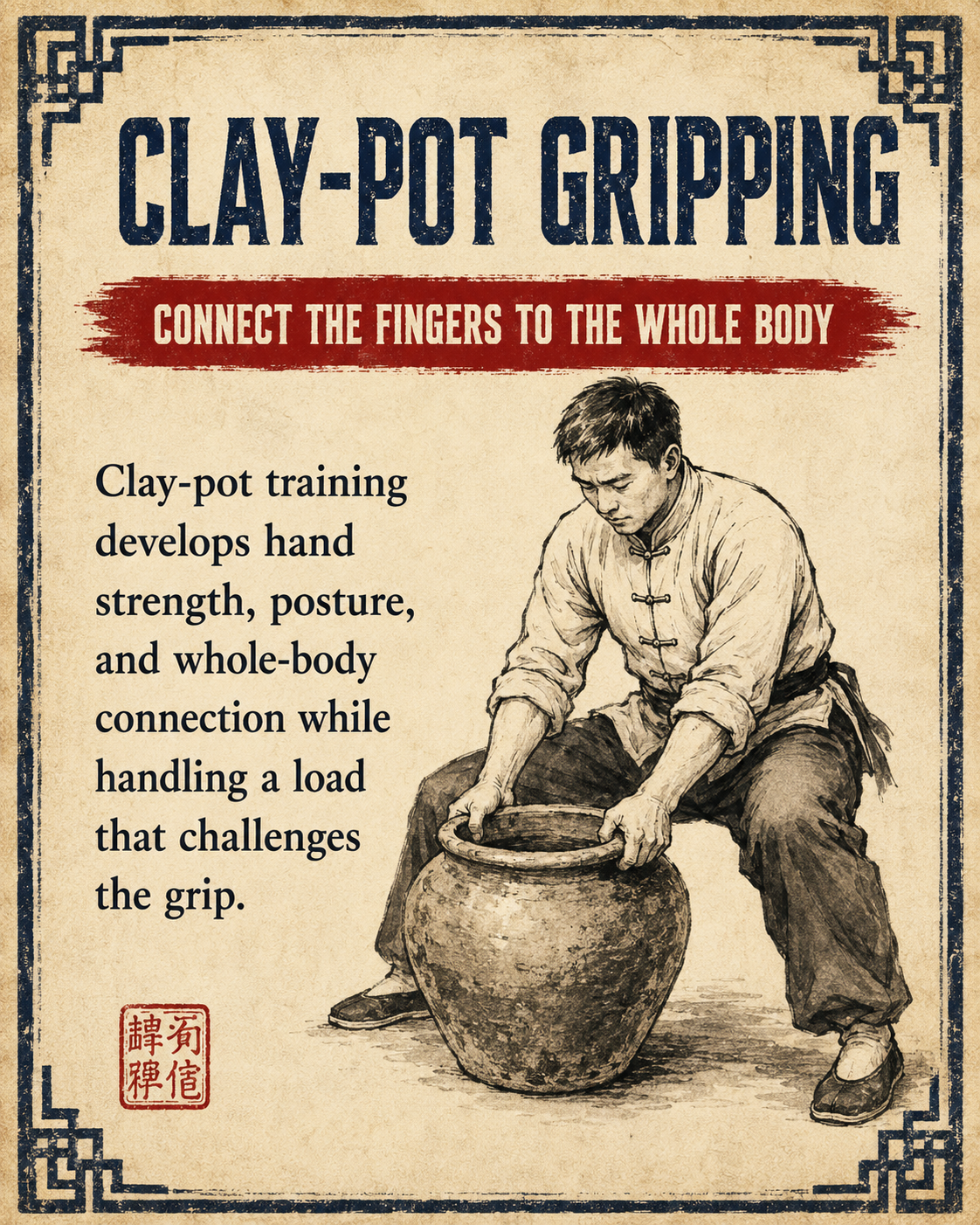
Students need strong hands to maintain grips, stable legs to preserve balance, a responsive waist to redirect force, and enough whole-body coordination to connect the ground to the jacket. Traditional training tools develop these qualities through movements that resemble the pulling, turning, lifting, shaking, and projecting actions used during grappling.
The goal is not isolated strength for its own sake. It is to build strength that remains useful while stepping, changing direction, controlling an opponent, and completing a throw.
A Traditional Approach to Whole-Body Power
The equipment may look unusual, but every exercise has a direct relationship to gripping, structure, movement, or throwing.
Some exercises emphasize the fingers and forearms. Others train the waist and shoulders. Several require the entire body to coordinate around an awkward or shifting load.
This combination develops:
Grip endurance
Wrist and forearm strength
Shoulder stability
Rotational power
Postural alignment
Leg and hip strength
Balance under load
Connected whole-body movement
Repeated throwing endurance
The Body Must Remain Connected
A student can possess strong arms and still struggle to throw effectively if the rest of the body is disconnected.
In Shuai Jiao, the hands connect to the opponent, but the action is supported by the feet, legs, hips, waist, spine, and shoulders. Conditioning should strengthen this chain rather than encourage the arms to work independently.
From Traditional Tools to Modern Training
The class may also incorporate modern athletic conditioning where appropriate.
This can include:
Bodyweight exercises
Partner resistance
Stance and stepping drills
Carrying and pulling exercises
Repeated technical entries
Throwing repetitions
Grip-specific rounds
Mobility and joint preparation
Cardiovascular conditioning
Traditional and modern methods serve the same practical objective: preparing the body to grapple safely, move efficiently, and apply technique against resistance.
Beginners Do Not Need Special Equipment
New students are not expected to own traditional conditioning tools.
James introduces exercises according to the student’s experience, physical readiness, and the equipment available in class. Students first learn safe handling, posture, and movement before increasing weight, speed, or repetition.
The emphasis should remain on:
Controlled progression
Correct body mechanics
Joint safety
Sustainable strength
Technical quality
Appropriate resistance
Who Thrives in Shuai Jiao?
Shuai Jiao appeals to people who enjoy learning through movement, partner contact, problem-solving, and progressively more realistic resistance.
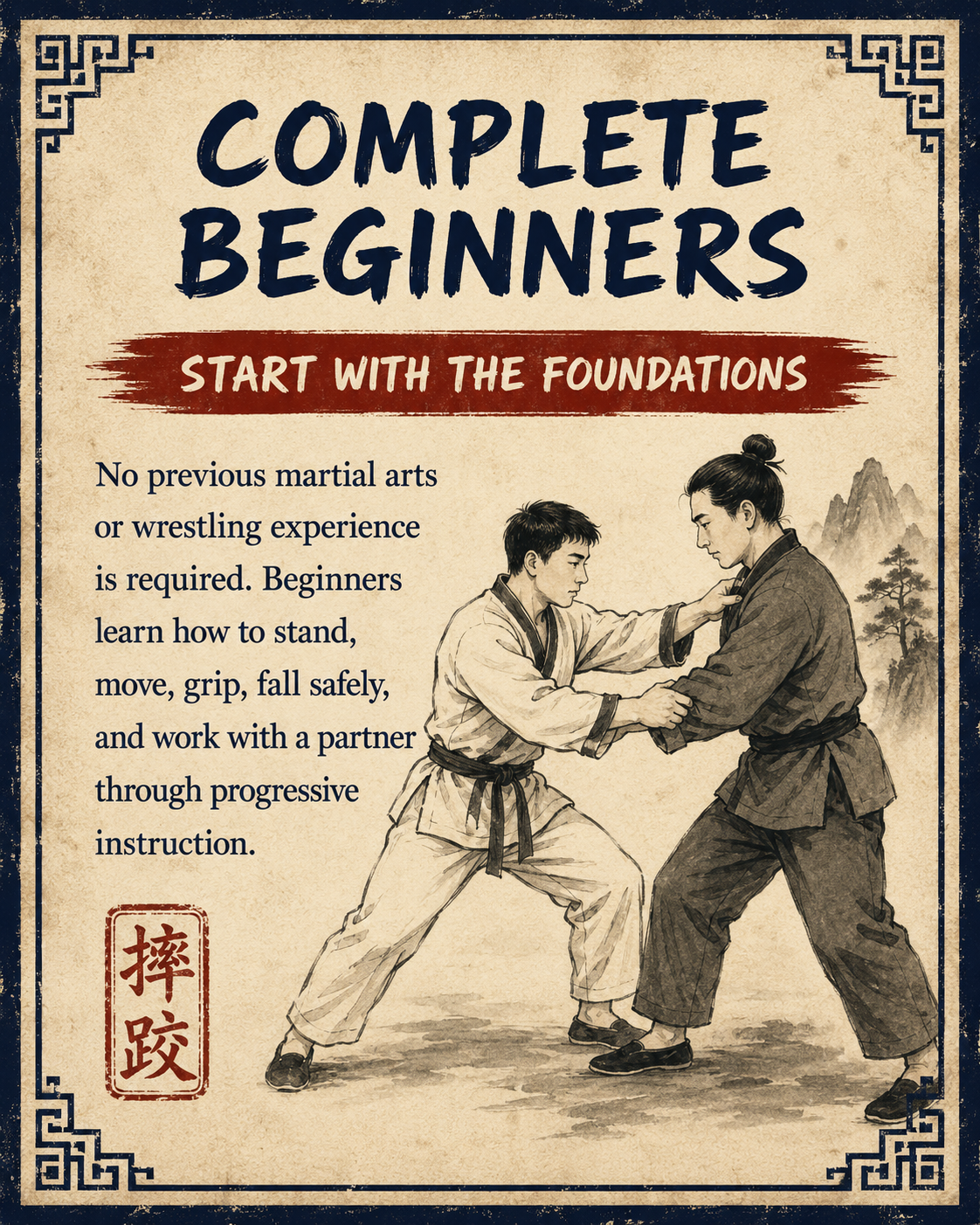
You do not need previous wrestling experience to begin. New students learn foundational movement, safe falling, grips, entries, and controlled partner work before advancing into more demanding throwing and live practice.
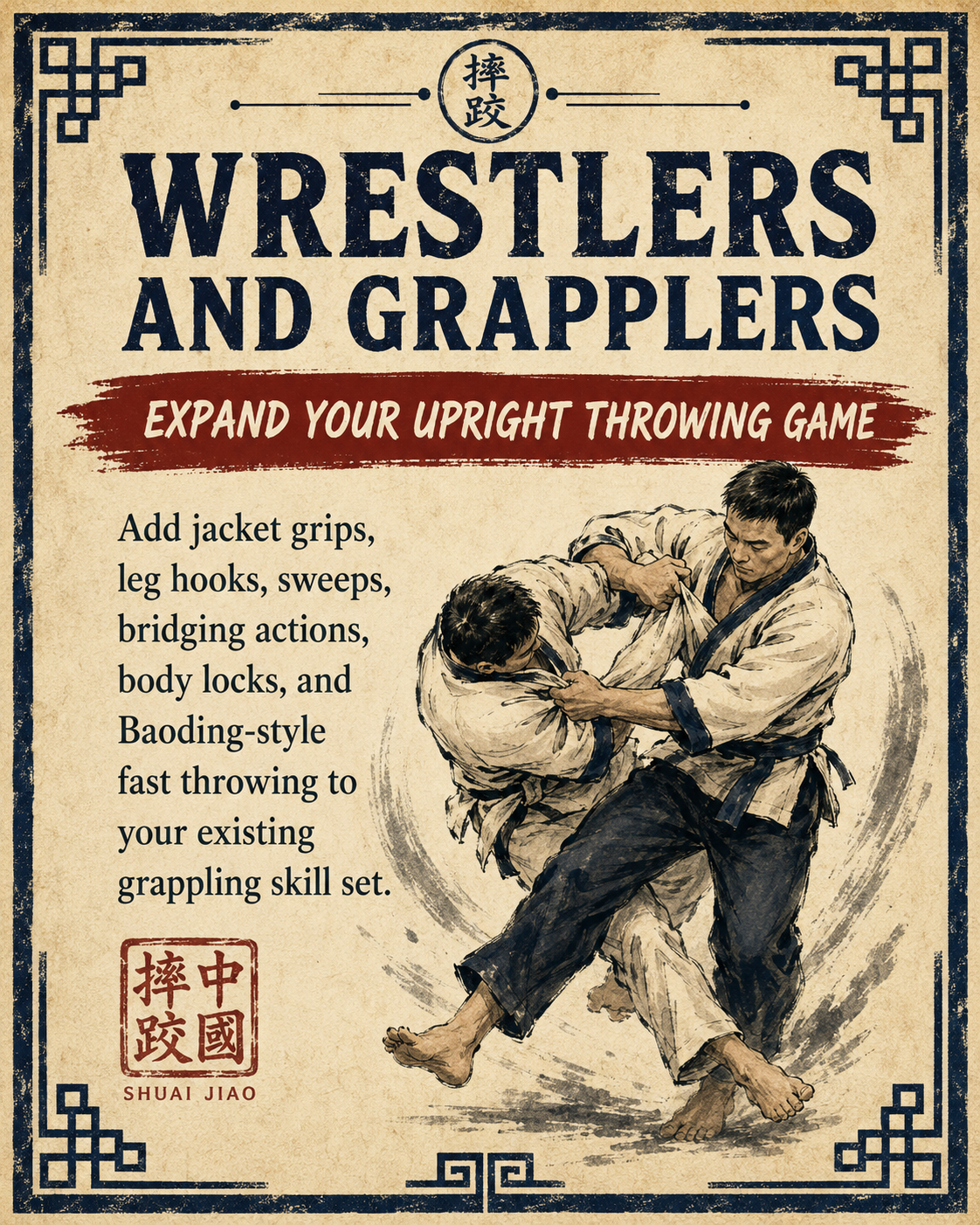
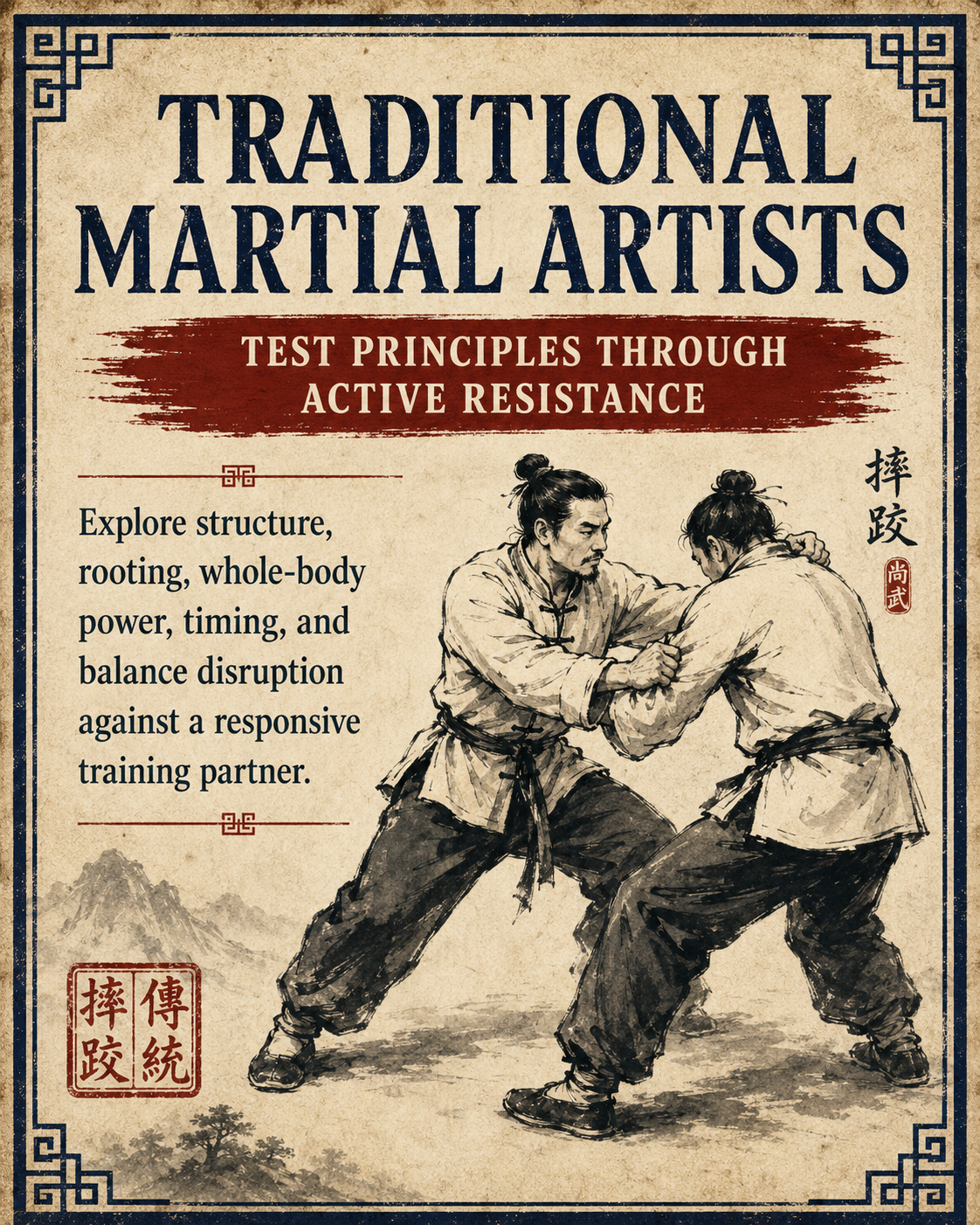
At the same time, experienced martial artists can explore a substantial system of jacket control, upright grappling, balance disruption, traditional conditioning, combinations, counters, and competitive application.
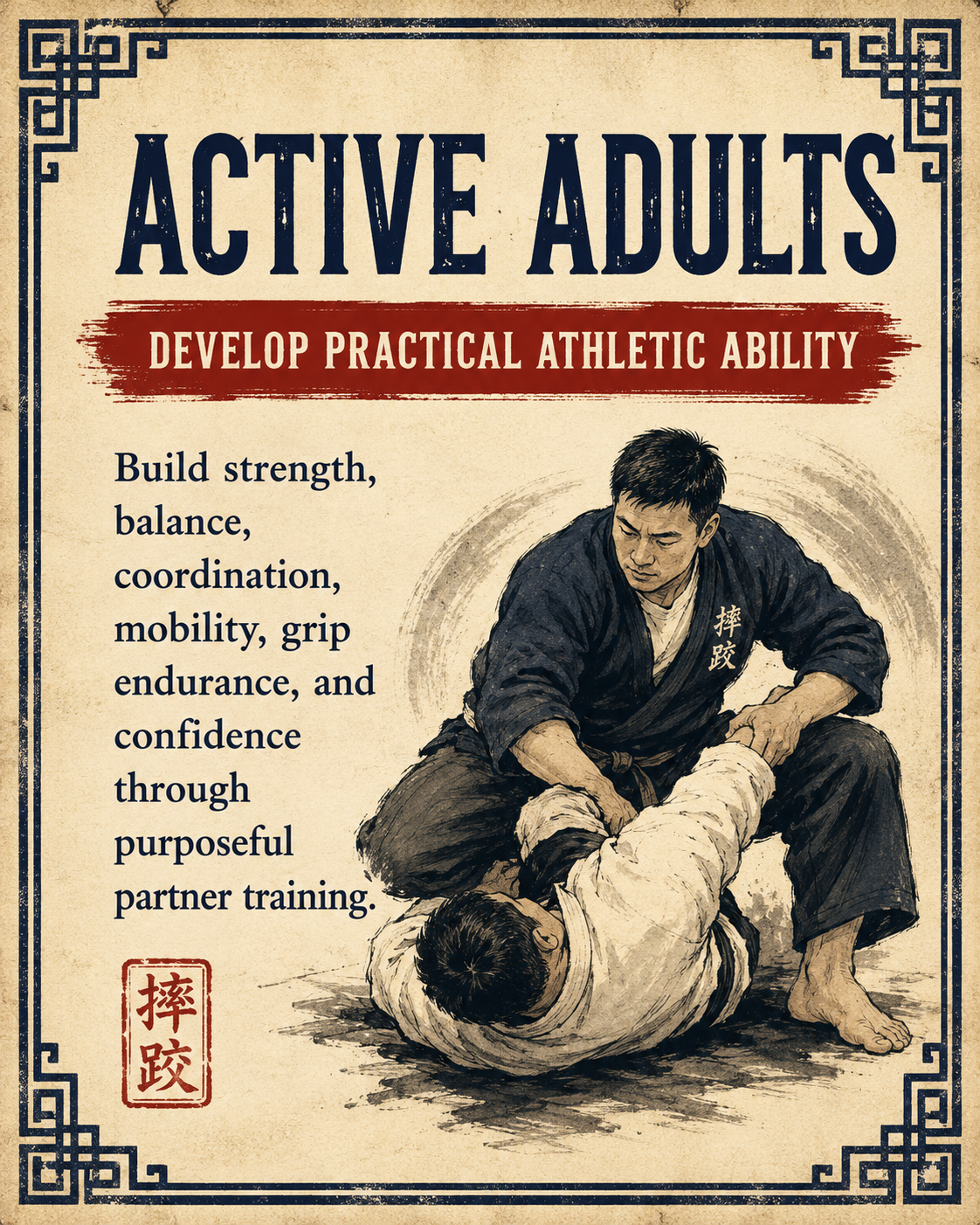
This is an active grappling class.
Students should expect sustained movement, close partner contact, gripping, falling, throwing, and periods of physical resistance. Intensity can be scaled, but the class is best suited to people who want a moderately to highly athletic practice.
Not Every Student Has the Same Goal
Some students may be drawn to Shuai Jiao for competition. Others may care more about practical grappling, martial tradition, fitness, or understanding Chinese body mechanics.
The class can support several motivations:
Learning a traditional Chinese martial art
Developing practical throwing ability
Improving wrestling and MMA skills
Training for competition
Building functional strength and conditioning
Exploring martial principles through resistance
Joining a serious and supportive training community
Competition should be presented as an option rather than an expectation unless James later decides otherwise.
Tradition, Application,
and Competition
Students may enter Shuai Jiao for different reasons.
Some are drawn to its place within Chinese martial culture. Others want practical throwing skills, stronger clinch work, or a physically demanding form of partner training. Some may eventually become interested in competition.
These goals are not mutually exclusive. Each perspective develops a different part of the art, and together they create a more complete understanding of Shuai Jiao.
Traditional Martial Art
Preserve the methods and training culture
Shuai Jiao belongs to China’s broader wrestling tradition and carries a distinct body of grips, stances, footwork, throwing methods, terminology, conditioning practices, and training equipment.
Traditional study can include:
The dálián wrestling jacket
Chinese grip and throwing terminology
Baoding-style fast throwing
Foundational stances and stepping
Traditional conditioning tools
Throwing families and technical principles
Etiquette and partner responsibility
Historical and cultural context
The purpose is not to preserve techniques as museum pieces. Traditional training keeps the methods alive through continued physical practice and careful transmission.
Practical Grappling
Control balance and position under resistance
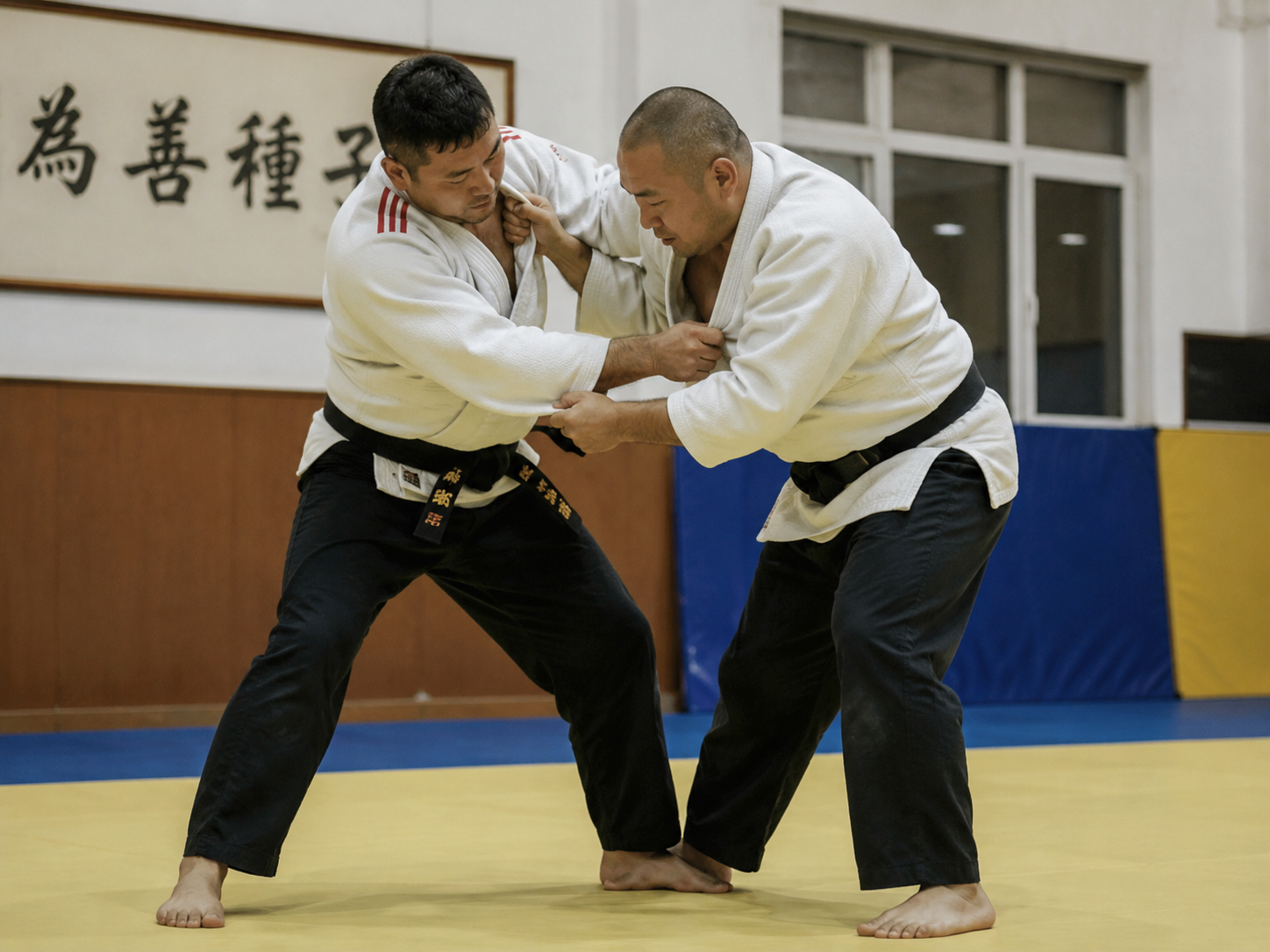
Shuai Jiao develops skills that remain meaningful whenever two people are standing in close contact and attempting to control one another.
Students learn to:
Establish and deny grips
Maintain posture under pressure
Create useful angles
Disrupt balance and structure
Enter safely into throwing range
Use sweeps, trips, hooks, and body control
Change direction when an attack is resisted
Remain upright after completing a throw
Recover when an exchange goes wrong
Jacket training creates a specific gripping environment, but the deeper lessons of posture, timing, leverage, pressure, and center control extend beyond the jacket itself.
Competition
Test timing, control, and adaptability
Competition gives students an opportunity to apply their skills against unfamiliar opponents under a defined ruleset.
A competitive exchange may test:
Grip strategy
Footwork and positioning
Throwing combinations
Counters and defensive recovery
Tactical decision-making
Physical conditioning
Emotional control under pressure
The ability to act without a predetermined sequence
Competition can expose weaknesses that are difficult to see during cooperative practice. It also teaches students to remain composed while another trained person is actively attempting to disrupt and throw them.
Competition should remain optional. A student does not need to compete in order to benefit from serious Shuai Jiao training.
A Broader Martial Context
Shuai Jiao can complement several kinds of martial training.
For Chinese Martial Artists
It provides a direct environment for exploring rooting, whole-body force, balance disruption, stepping, and close-range control against a resisting partner.
For Wrestlers and Judoka
It introduces a distinct jacket, gripping structure, upright rhythm, and family of Chinese throwing methods.
For MMA and Combat-Sport Students
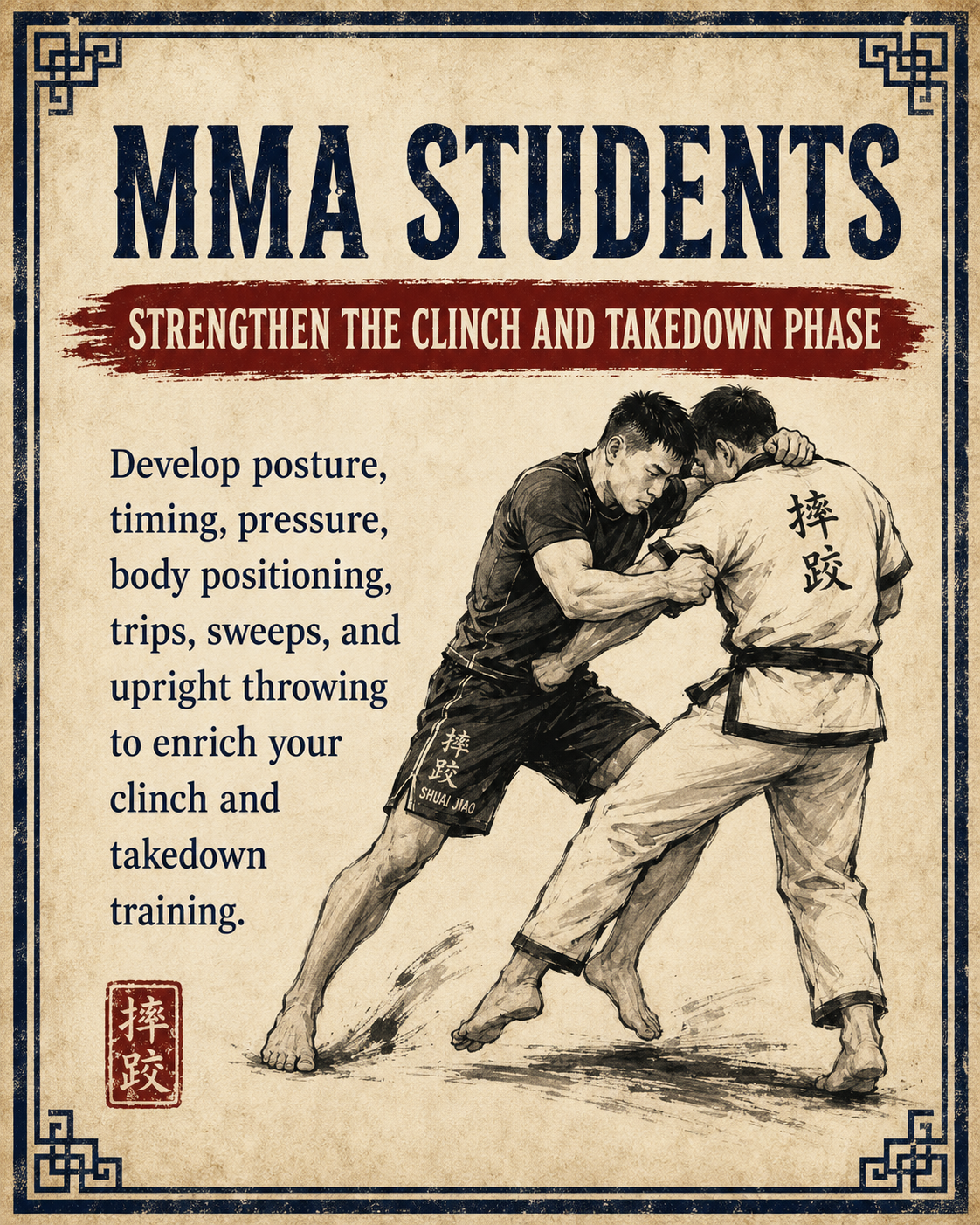
It can strengthen clinch awareness, posture, off-balancing, trips, sweeps, body control, and transitions into takedowns.
For Students Interested in Self-Defense
It develops the ability to remain standing, control another person’s structure, and use the ground as the primary impact surface rather than following every exchange into prolonged ground grappling.
The self-defense language should remain measured. Shuai Jiao develops useful grappling attributes, but no single class or martial art guarantees personal safety in every situation.

Train with Shifu James Richards
Shifu James Richards brings decades of martial study across Chinese martial arts, wrestling, striking, weapons, and Southeast Asian fighting systems.
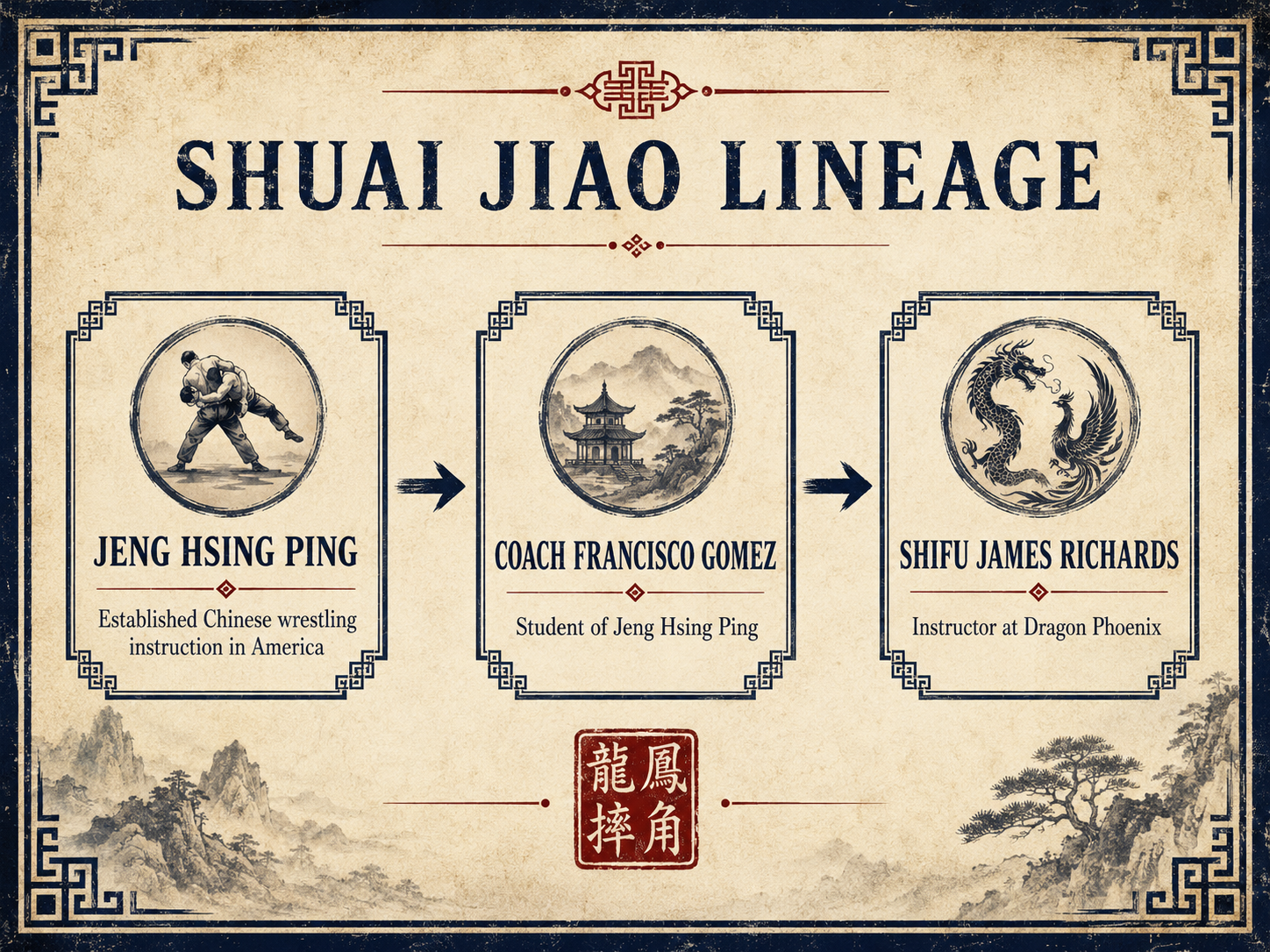
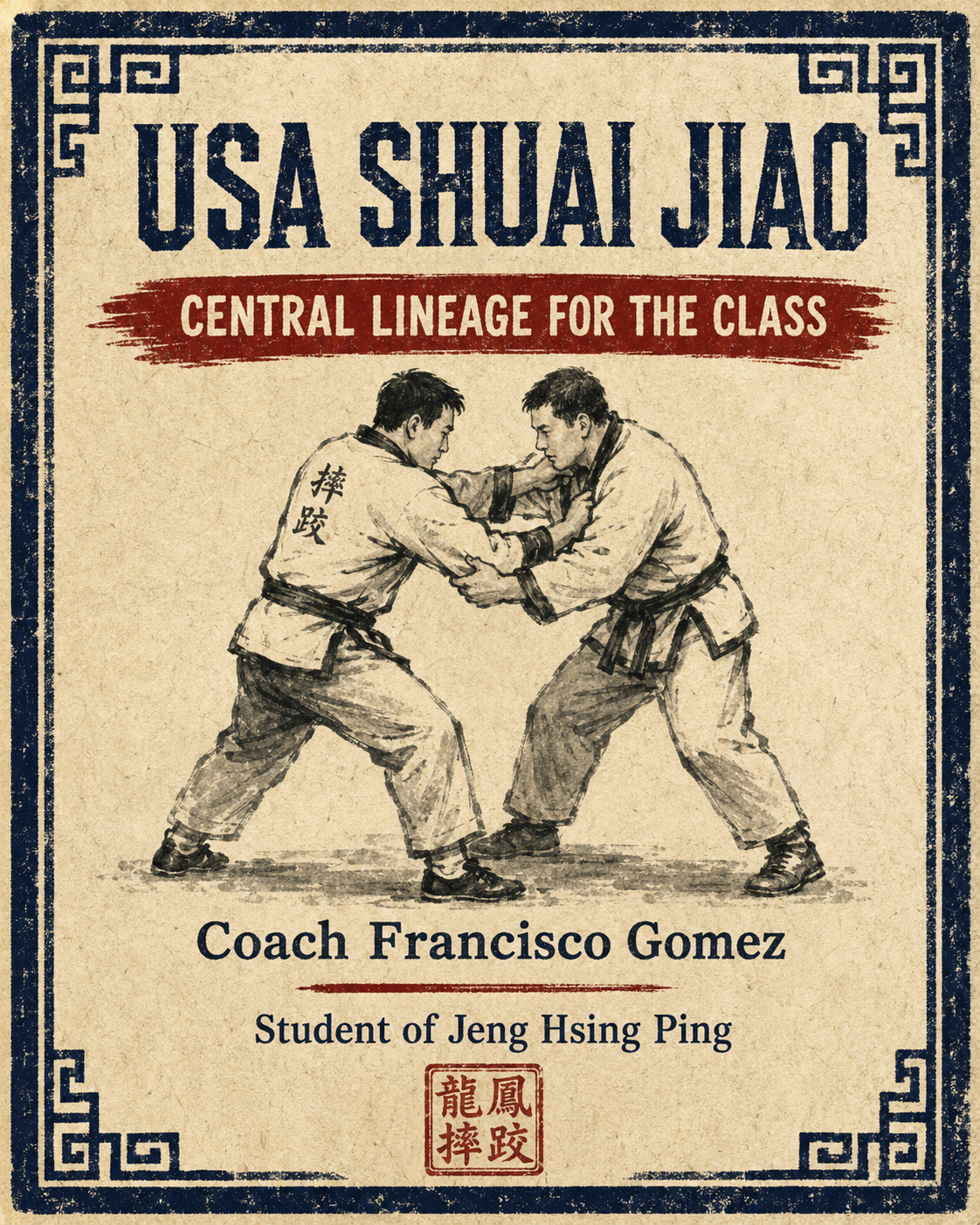
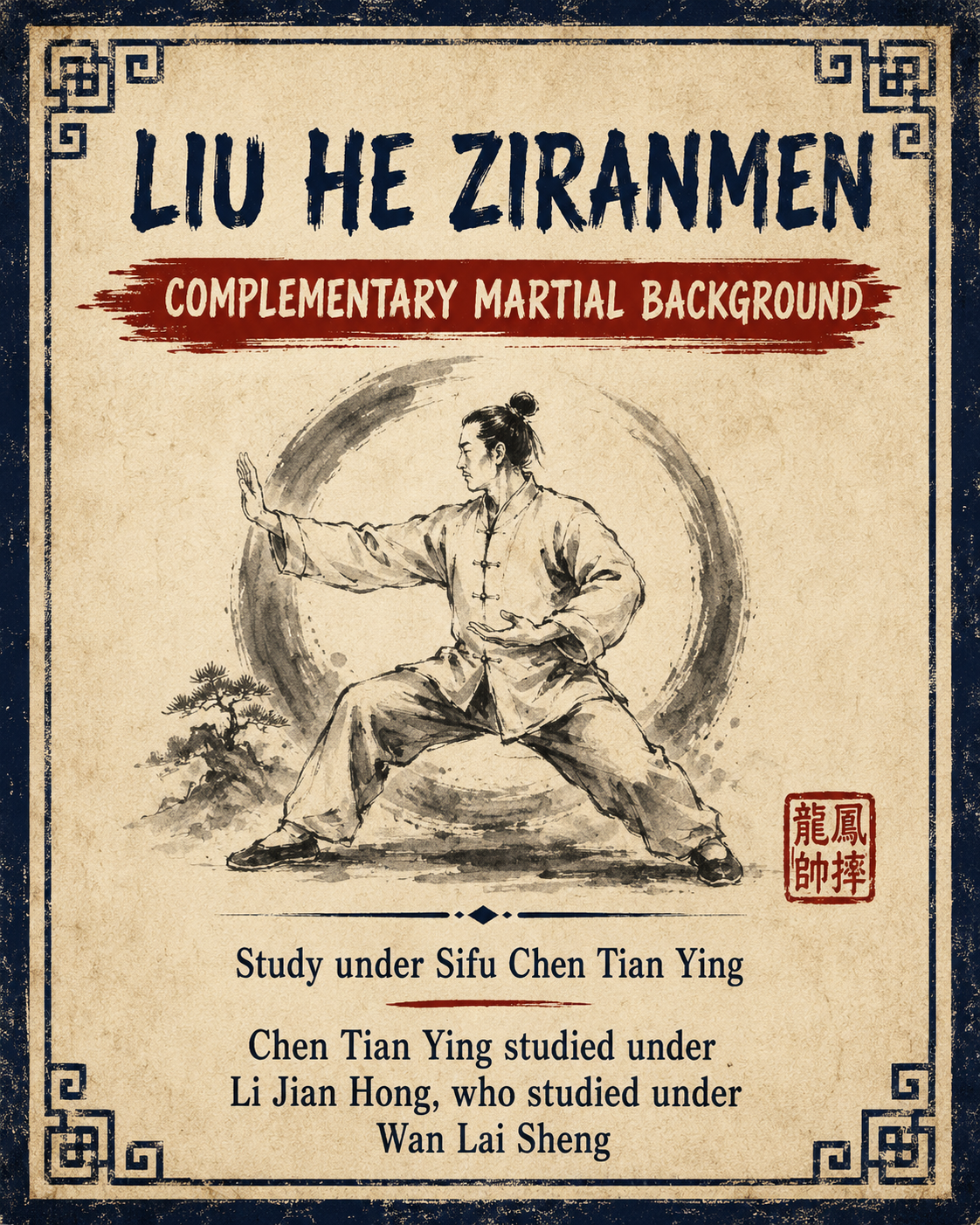
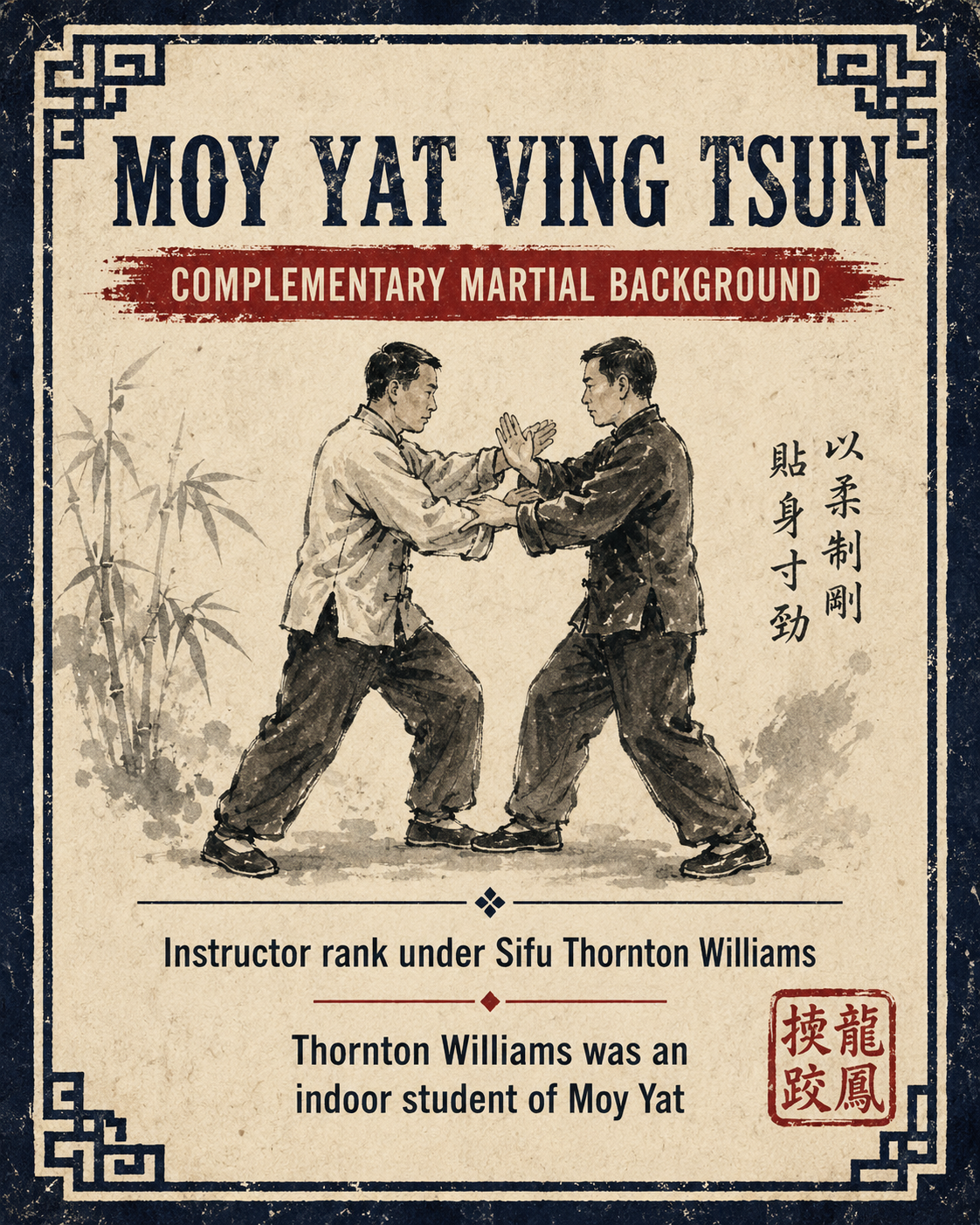
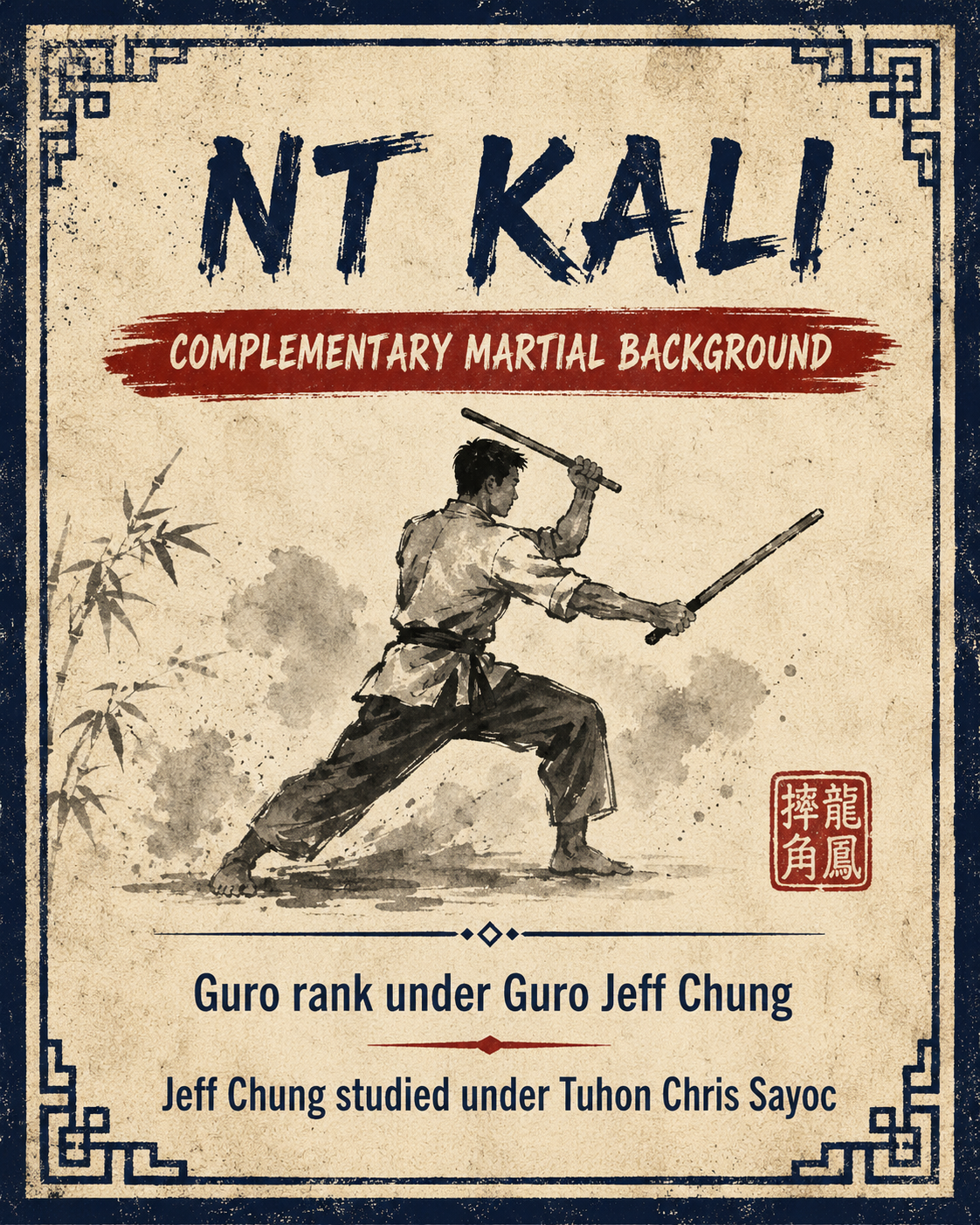
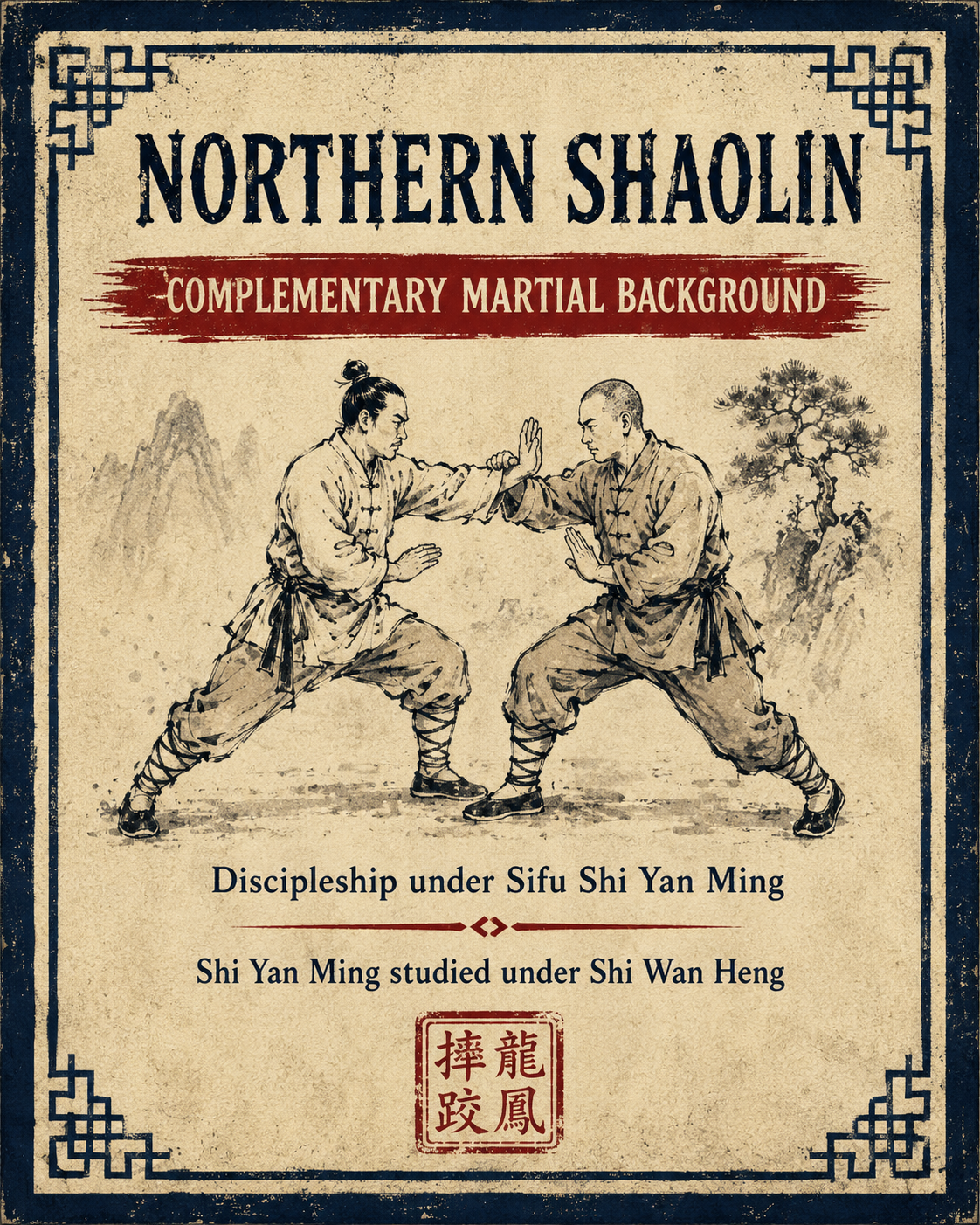
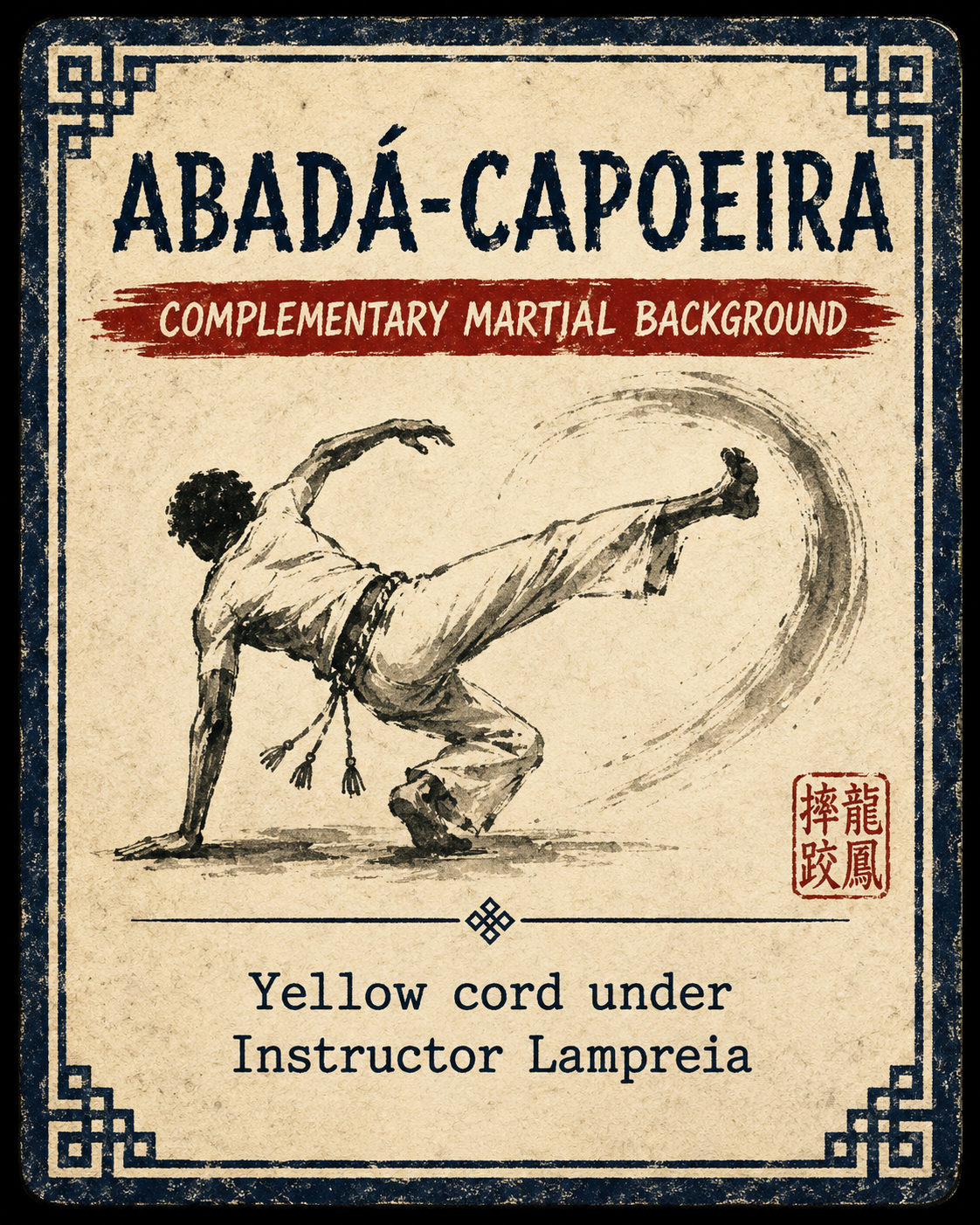
His Shuai Jiao training comes through Coach Francisco Gomez, a student of Jeng Hsing Ping. James’s broader experience includes instructor-level or long-term study in Moy Yat Ving Tsun, Northern Shaolin, Liu He Ziranmen, NT Kali, and Capoeira.
This diverse background allows him to teach Shuai Jiao as both a traditional Chinese martial art and an applied grappling system. Students learn the historical methods, technical vocabulary, conditioning practices, and jacket-wrestling structure while also exploring how balance disruption, clinch control, timing, and throwing function against active resistance.
Serious Training Without Unnecessary Ego
James’s class is designed for people who want to work, learn, and improve.
Technical precision matters, but so do patience, partner safety, and the willingness to begin with fundamentals. Students are expected to train with purpose rather than attempting to prove themselves during every exchange.
Beginners receive a progressive introduction to movement, falling, gripping, and throwing. Experienced martial artists are given room to study technical detail, test their assumptions, and integrate the material with skills they already possess.
The goal is not simply to collect throws. It is to understand balance, structure, timing, and control well enough to apply the right method when the opportunity appears.
How This Background Informs the Class
James’s experience across different martial systems gives him several useful perspectives as an instructor.
Structure and Close-Range Control - His Chinese martial arts background supports careful attention to posture, body connection, positioning, and efficient use of force.
Grappling and Resistance - Shuai Jiao provides the central environment for testing balance, gripping, throwing, counters, and adaptation against a moving partner.
Practical Application - Experience across striking, weapons, grappling, and self-defense systems helps James place individual techniques within a broader martial context.
Respect for Traditional Training - The class preserves traditional conditioning tools, terminology, technical families, and training methods while allowing students to test them through modern partner practice.
Your First Shuai Jiao Class Is Free
You do not need wrestling experience, a Shuai Jiao jacket, or prior martial arts training to begin.
Your first class gives you an opportunity to meet Shifu James Richards, experience the training environment, learn several foundational movements, and determine whether Shuai Jiao is a good fit for your interests and physical goals.
New students are introduced progressively. You will not be expected to wrestle at full intensity or perform advanced throws during your first visit.
Shuai Jiao
Saturdays · 4:00–5:30 PM
Dragon Phoenix Kung Fu and Tai Chi
Asheville–Woodfin, North Carolina
First class free
Beginners are welcome immediately.
A loaner Shuai Jiao jacket is available for your introductory class.
Physical Readiness
Shuai Jiao is a moderately to highly athletic class involving:
Active movement
Gripping
Partner contact
Breakfalls
Throwing
Resistance
Repeated drills
Conditioning
You do not need to arrive in peak athletic condition. However, the class is most appropriate for people who are comfortable participating in an active grappling environment.
Students should tell James about relevant injuries, physical limitations, or concerns before class begins so he can determine what modifications are appropriate.
Why Membership Includes More Than One Style
Because Shuai Jiao is part of the broader Dragon Phoenix curriculum, students may have opportunities to complement their wrestling practice with other martial disciplines.
Depending on current class eligibility and schedule, this may include training related to:
Cheng Baguazhang
Chen Taijiquan
Xingyiquan
Kung fu fundamentals
Weapons
Partner practice
Internal body mechanics
What to Expect During Your First Visit
Arrive and Meet the Instructor
James will introduce you to the training space, explain how the class works, and help you prepare for the lesson.
Learn the Foundations
You may practice stance, movement, gripping position, safe falling, or the mechanics behind a basic entry and throw.
Work at an Appropriate Level
Your training partner and the intensity of the exercise will be selected according to your experience and physical readiness.
Ask Questions
You will have an opportunity to ask about the curriculum, equipment, membership, and how Shuai Jiao may complement your existing training.
Curriculum Membership
Shuai Jiao is included as one of the Dragon Phoenix curriculum classes.
Students enrolled in the Dragon Phoenix curriculum may attend Shuai Jiao alongside their other eligible curriculum classes, according to their membership level.
The same curriculum pricing used for the school’s other curriculum classes applies:
One Class Per Week - $100 per month
Choose one regular curriculum class each week.
Two Classes Per Week - $185 per month
Train in Shuai Jiao and another curriculum class, or attend two eligible classes each week.
Three or More Classes Per Week - $270 per month
Designed for students pursuing a broader and more intensive Dragon Phoenix curriculum.
Shuai Jiao Class Questions
Do I need wrestling or martial arts experience?
No. Complete beginners are welcome immediately.
New students begin with stance, footwork, safe falling, jacket grips, balance disruption, and controlled partner exercises. You are not expected to know how to wrestle or perform throws before attending.
How physically demanding is the class?
Shuai Jiao is a moderately to highly athletic class.
Training may include active footwork, gripping, breakfalls, repeated throwing practice, conditioning, resistance drills, and live wrestling. Exercises can be scaled, but students should expect a physically engaged grappling class rather than a gentle movement practice.
Will I be thrown during my first class?
Possibly, but only through an appropriate and controlled exercise.
Beginners first learn how to fall safely and how to work cooperatively with a partner. James will adjust the lesson according to your experience, comfort, and physical readiness. New students are not immediately placed into unrestricted live wrestling.
Is Shuai Jiao safe?
All contact sports involve some risk, but the class is structured to reduce unnecessary danger.
Training takes place on padded mats. Students learn breakfalls, increase resistance progressively, and are expected to protect their partners. Technical control, appropriate partner matching, and responsible training are emphasized over reckless force.
What should I wear?
Wear comfortable athletic clothing that allows unrestricted movement.
Close-fitting clothing is preferable because loose material can catch during gripping and partner practice. Avoid jewelry, exposed metal, hard zippers, and large pockets.
A loaner Shuai Jiao jacket is available for your first class.
We should confirm James’s footwear policy before adding a definitive statement about training barefoot or in wrestling shoes.
Do I need to buy a jacket before attending?
No.
A loaner jacket is available for your free introductory class. Students who enroll will eventually need to purchase their own dálián, the traditional Shuai Jiao wrestling jacket.
What makes the Shuai Jiao jacket different?
The dálián is short, durable, and designed for gripping and throwing.
Its sleeves, lapels, collar, reinforced seams, and belt create several control points. These grips allow practitioners to influence posture, restrict movement, create angles, and set up different families of throws.
The jacket is not simply a uniform. It is part of the technical system.
Is Shuai Jiao the same as judo?
No, although the arts share several universal grappling concepts.
Both may include jacket gripping, off-balancing, sweeps, trips, hip throws, and rotational projections. Shuai Jiao has its own jacket design, terminology, historical development, rules, strategies, conditioning practices, and technical emphasis.
The Dragon Phoenix class focuses particularly on upright Chinese jacket wrestling and Baoding-style fast throwing.
How is Shuai Jiao different from Brazilian jiu-jitsu?
Shuai Jiao concentrates primarily on standing control and throwing, while Brazilian jiu-jitsu devotes substantial attention to grappling after the participants reach the ground.
In Shuai Jiao, a central objective is to throw the opponent while preserving your own balance and remaining standing whenever possible.
The two arts can complement one another, but they emphasize different phases of grappling.
Is Shuai Jiao useful for wrestling or MMA?
It can be a valuable complementary practice.
Shuai Jiao develops:
Clinch positioning
Balance disruption
Grip control
Body locks
Sweeps and trips
Leg hooks and bridges
Rotational throwing
Upright recovery after a takedown
The jacket creates a different gripping environment from no-gi wrestling or MMA, so Shuai Jiao should not be presented as a replacement for sport-specific cage wrestling or no-gi training. Its principles and throwing methods can nevertheless broaden an athlete’s clinch and takedown skill set.
What should I do if I have an old injury?
Tell James before class begins.
He can explain which exercises may be modified and whether the class appears appropriate for your current condition. Some activities may need to be limited or avoided.
The instructor cannot diagnose injuries or guarantee that participation is medically appropriate.
What happens after the free class?
Students who wish to continue can enroll in the Dragon Phoenix curriculum at the membership level that fits their desired weekly training frequency.
They will then need to obtain their own Shuai Jiao jacket and can begin progressing through the class material more consistently.
There is no formal rank requirement before beginning regular practice.
Does the class include ground fighting?
The primary emphasis is upright grappling, throwing, and remaining balanced after the opponent falls.
Students may study safe landing, recovery, follow-up awareness, or applications connected to the completion of a throw. However, this is not primarily a ground-grappling class.
James should confirm whether any formal groundwork is included before we make the answer more specific.
Is competition required?
No.
Students may study Shuai Jiao as a traditional martial art, a practical grappling discipline, an athletic training method, or preparation for competition. Competition can provide a valuable pressure test, but students do not need to compete to participate meaningfully in the class.
Are there belts or formal ranks?
There is currently no formal belt or ranking system for the Dragon Phoenix Shuai Jiao class.
Progress is demonstrated through improved movement, falling ability, grip control, technical understanding, throwing skill, conditioning, partner awareness, and performance under resistance.
A more formal guided curriculum may be developed in the future by James and Dragon Phoenix.
Can current Dragon Phoenix students attend?
Shuai Jiao is available to Dragon Phoenix curriculum members according to their chosen membership plan.
A student enrolled for one weekly curriculum class may select Shuai Jiao as that class. Students enrolled for two or more weekly classes may combine Shuai Jiao with other eligible curriculum training.
How much does membership cost?
Shuai Jiao uses the standard Dragon Phoenix curriculum pricing:
One class per week: $100 per month
Two classes per week: $185 per month
Three or more classes per week: $270 per month
The first class is free.
Can I attend only Shuai Jiao?
Yes.
A student may choose Shuai Jiao as their regular weekly curriculum class without being required to study another martial art. Students who want broader training may select a membership that includes additional eligible curriculum classes.
Am I too old to begin?
Age alone does not determine whether the class is appropriate.
Shuai Jiao does require active movement, partner contact, falling, gripping, and physical resistance. Suitability depends more on your current mobility, health, injury history, and comfort with athletic grappling.
Anyone uncertain about participation should speak with James before class and consult an appropriate medical professional when health concerns are involved.
Learn to Throw Without Losing Your Balance
Shuai Jiao develops practical skill through gripping, movement, timing, balance disruption, and controlled throwing.
You do not need previous wrestling experience. You do not need to purchase a jacket before trying the class. You only need to be willing to learn, move, and work with a partner.
Your first class is free.
Class Details
Saturdays · 4:00–5:30 PM
Dragon Phoenix Kung Fu and Tai Chi
Asheville–Woodfin, North Carolina
Beginners welcome
Moderately to highly athletic
Loaner jacket available
Open to Dragon Phoenix curriculum members
Control the grip. Break the balance. Complete the throw.