
Cheng Baguazhang Classes in Asheville, NC
Circular Movement, Internal Coordination, and Martial Skill
Dragon Phoenix offers traditional Cheng Baguazhang instruction in Woodfin, just north of Asheville. Students begin with foundational stepping, palm positions, standing practice, direction changes, and circle walking before progressing into the deeper forms and applications of the art.
Cheng Baguazhang is a detailed internal martial art that develops footwork, coordination, adaptability, whole-body movement, and practical martial understanding. Beginners are welcome, and students can progress through a structured curriculum over many years.
Book a Free Baguazhang Class
Ages: 15 and older
Experience: Beginners welcome
Level 1: Tuesdays at 1:00 PM or 5:30 PM
Level 2: Tuesdays at 6:45 PM
Location: Reynolds Village, Woodfin
First class: Free
Why Practice Cheng Baguazhang?
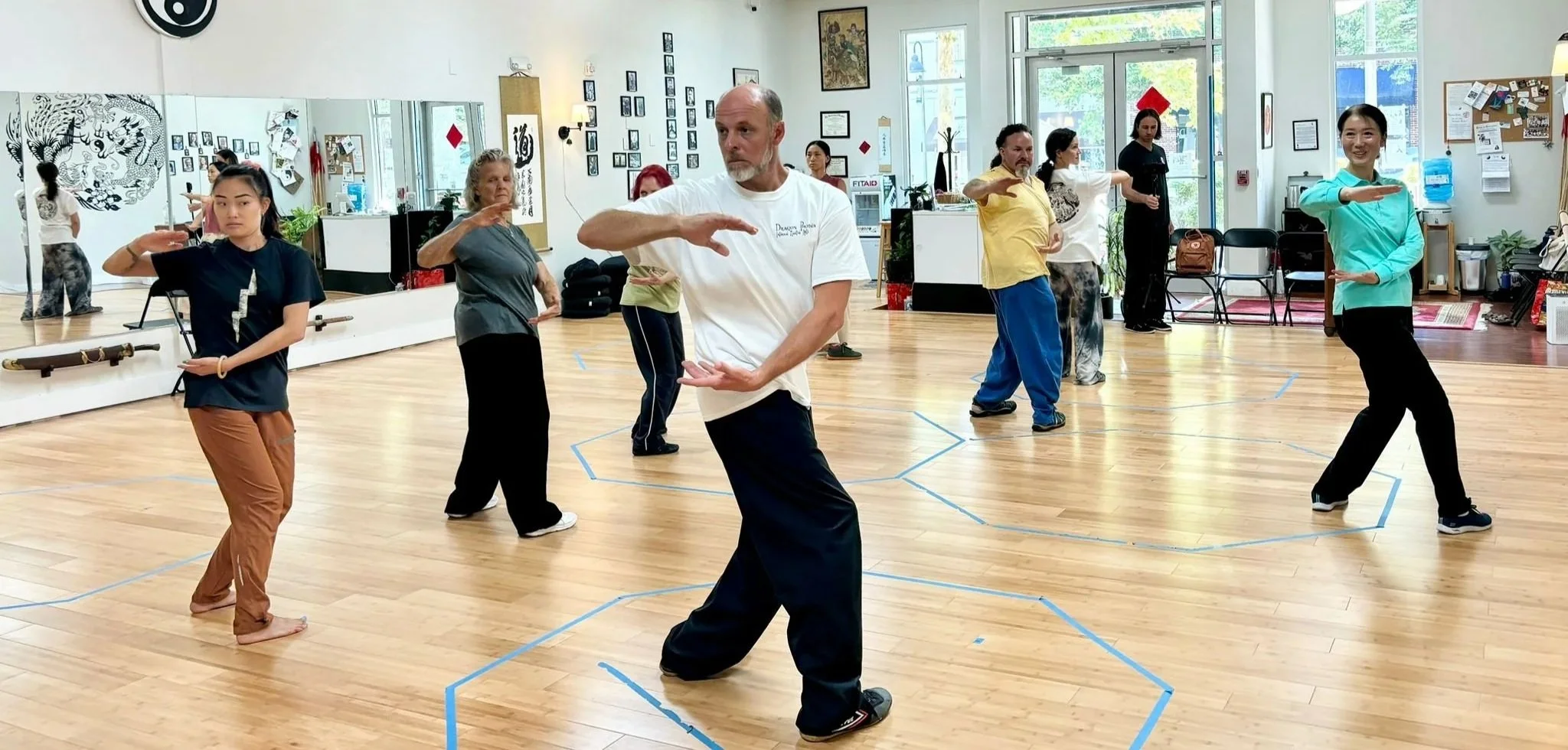
Cheng Baguazhang is one of the great internal styles of Chinese martial arts. Its training combines health development, whole-body coordination, practical martial principles, meditation, and a long-term path of personal cultivation.
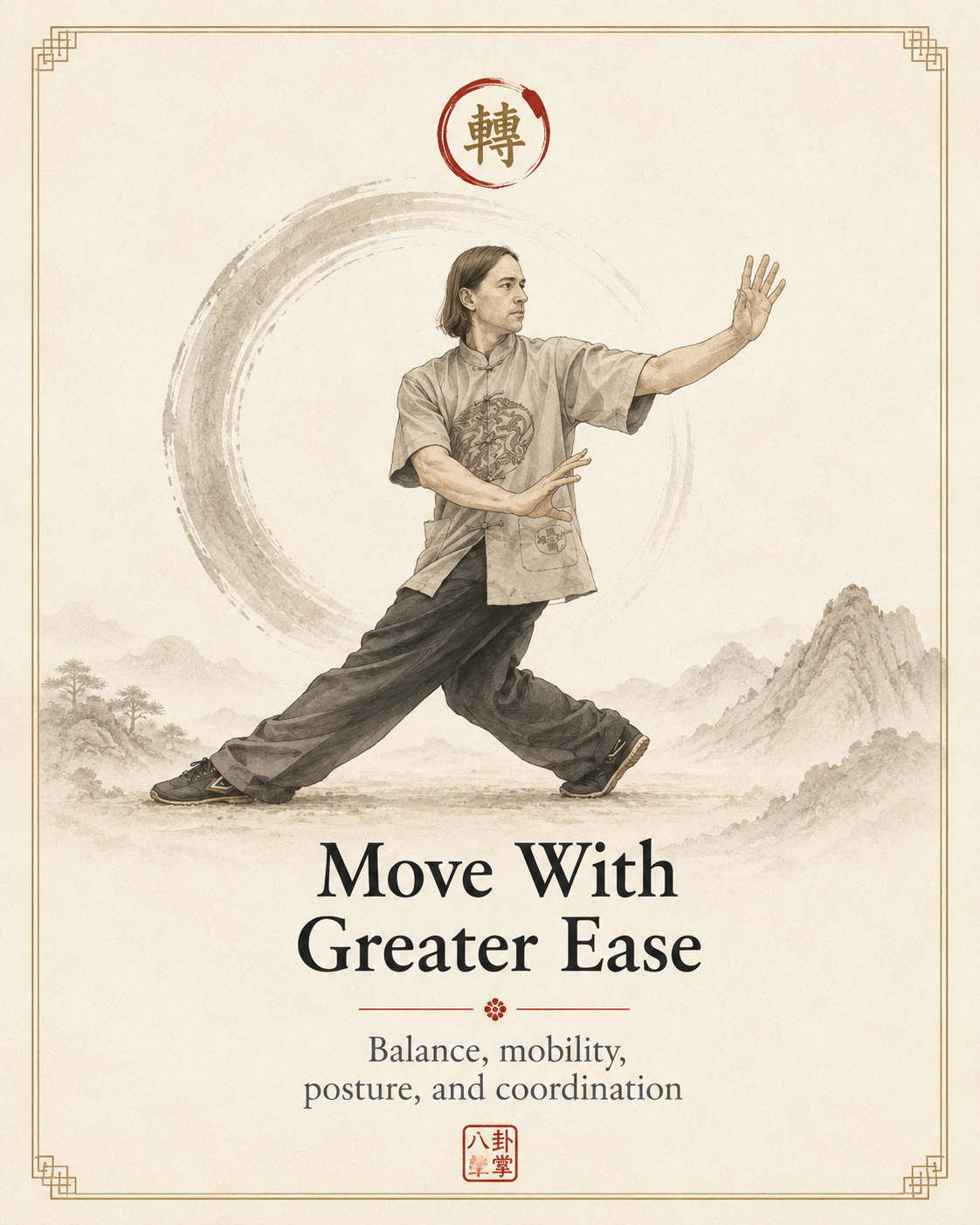
People come to Baguazhang for many different reasons. Some are looking for a martial art they can continue practicing as they grow older. Others want to improve their balance, mobility, posture, coordination, focus, or internal strength. Many are drawn to the unusual circular footwork, spiraling movement, traditional weapons, Daoist philosophy, and the depth of a living martial lineage.
What keeps students training is often more difficult to describe: Baguazhang simply feels remarkable to practice.
As the body becomes more connected, movements that initially feel unfamiliar begin to flow with greater ease. Stepping becomes lighter and more stable. Turning becomes more coordinated. Posture, breath, intention, and movement begin working together rather than as separate parts.
Benefits Students Commonly Experience
With consistent training, students often report improvements in:
Balance and stability
Mobility and flexibility
Leg strength and endurance
Posture and body alignment
Coordination and spatial awareness
Mental focus and concentration
Confidence and comfort in movement
Relaxation and stress management
Whole-body connection
Practical understanding of martial movement
Every student begins with a different body, background, and level of experience. The training can be adjusted for different mobility levels, and students are encouraged to communicate any previous injuries or physical limitations so the instructor can make appropriate accommodations.
A Martial Art That Can Grow With You
Many martial artists eventually look for a system that allows them to continue developing skill without depending entirely on speed, muscular tension, flexibility, or youthful athleticism.
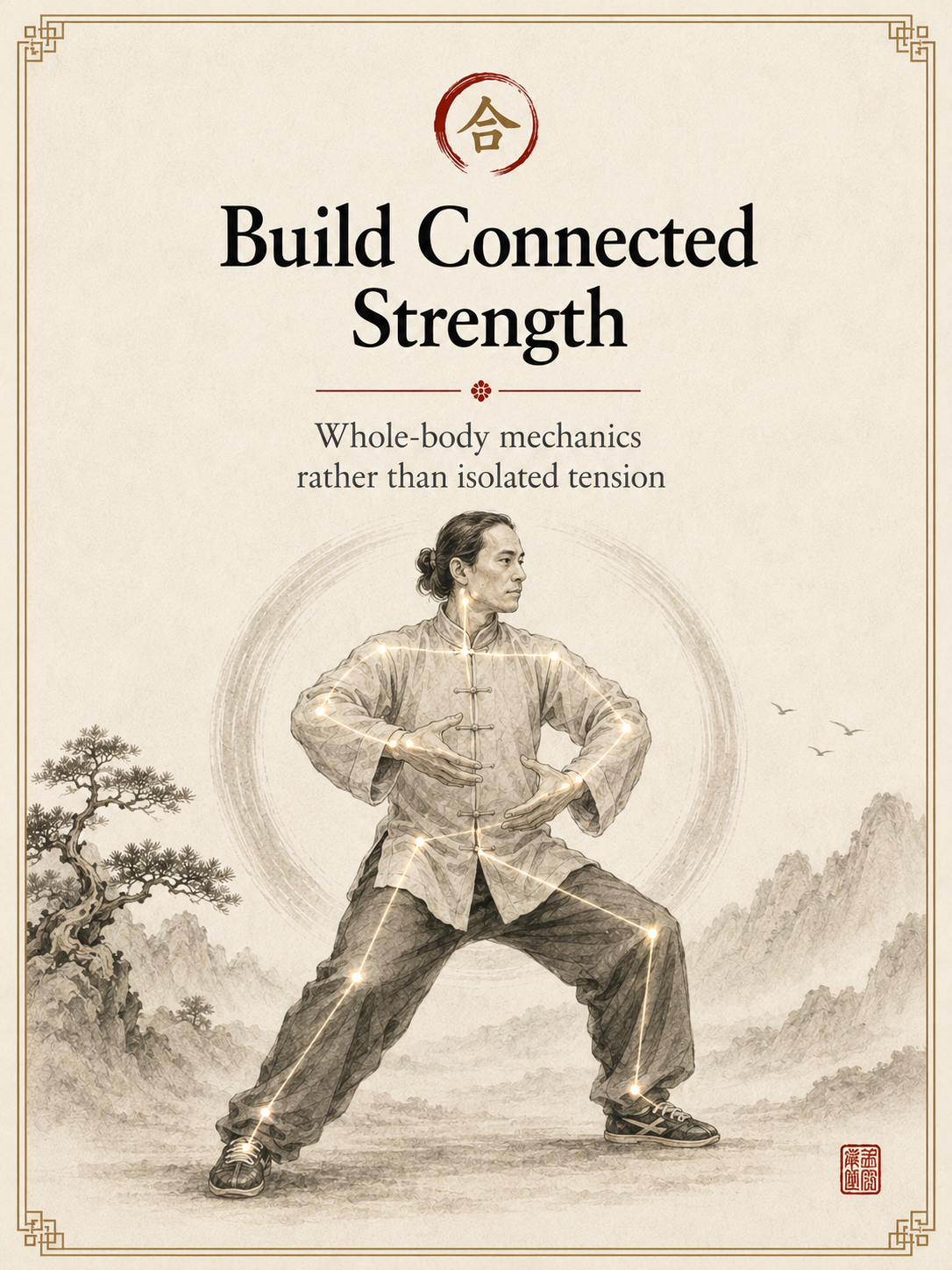
Baguazhang develops power through alignment, timing, coordinated movement, spiraling mechanics, and the intelligent use of the whole body. The goal is not merely to push the body harder, but to teach it to move more efficiently.
This makes Cheng Baguazhang especially valuable for people seeking a martial practice that can deepen over decades.
More Than Exercise
Cheng Baguazhang is not simply a fitness class, a collection of forms, or a theoretical martial art.
It is a complete system that brings together:
Foundational body training
Circle walking and directional change
Traditional palm methods
Forms practiced on both sides of the body
Cooperative partner applications
Advanced martial training
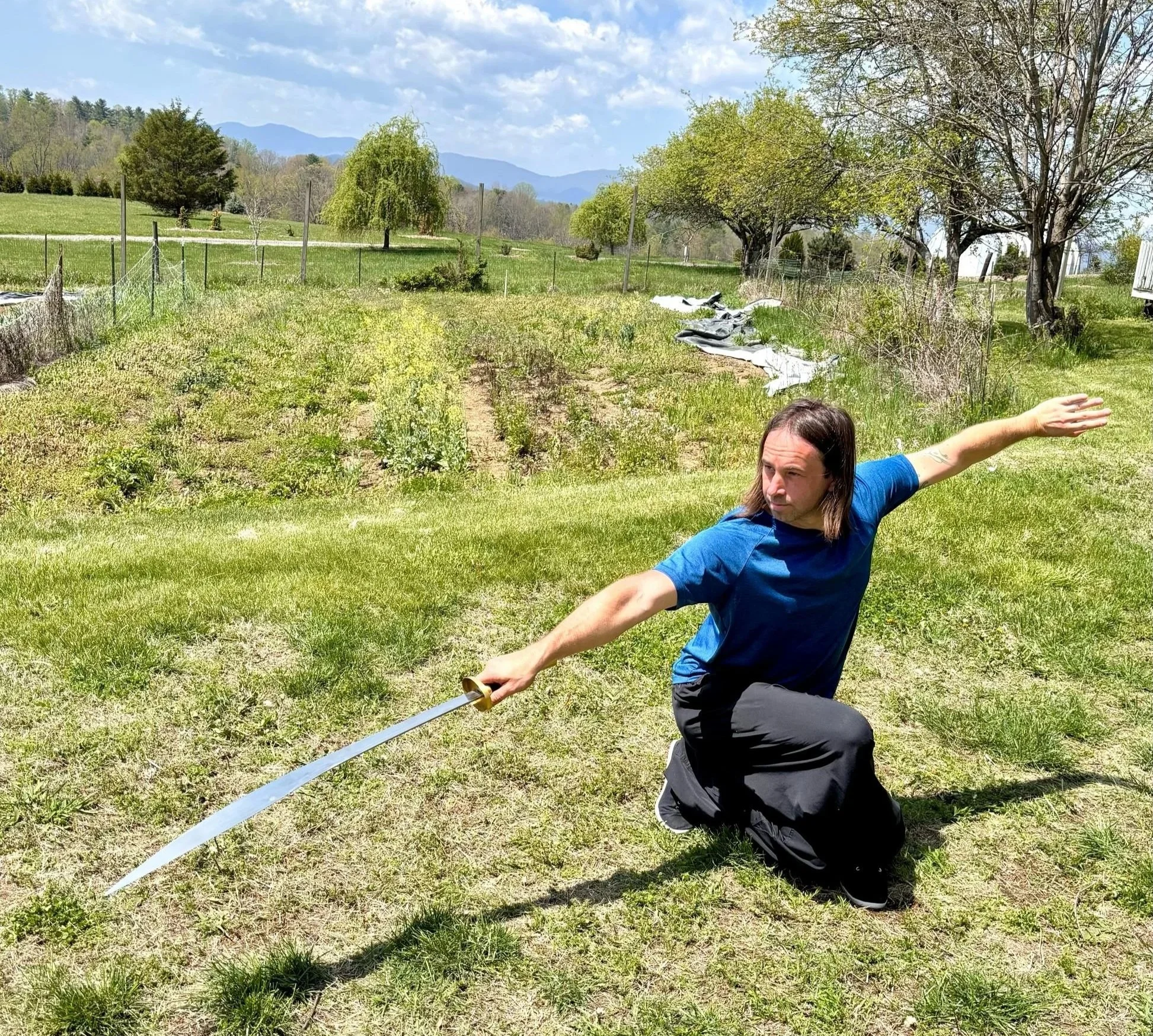
Traditional weapons
Daoist study and meditation
Rank development and black sash
Possible instructor training and discipleship
Students may begin for health, curiosity, or enjoyment. Those who remain often discover a lifelong practice and a community of people who share their enthusiasm for learning something rare, demanding, and deeply rewarding
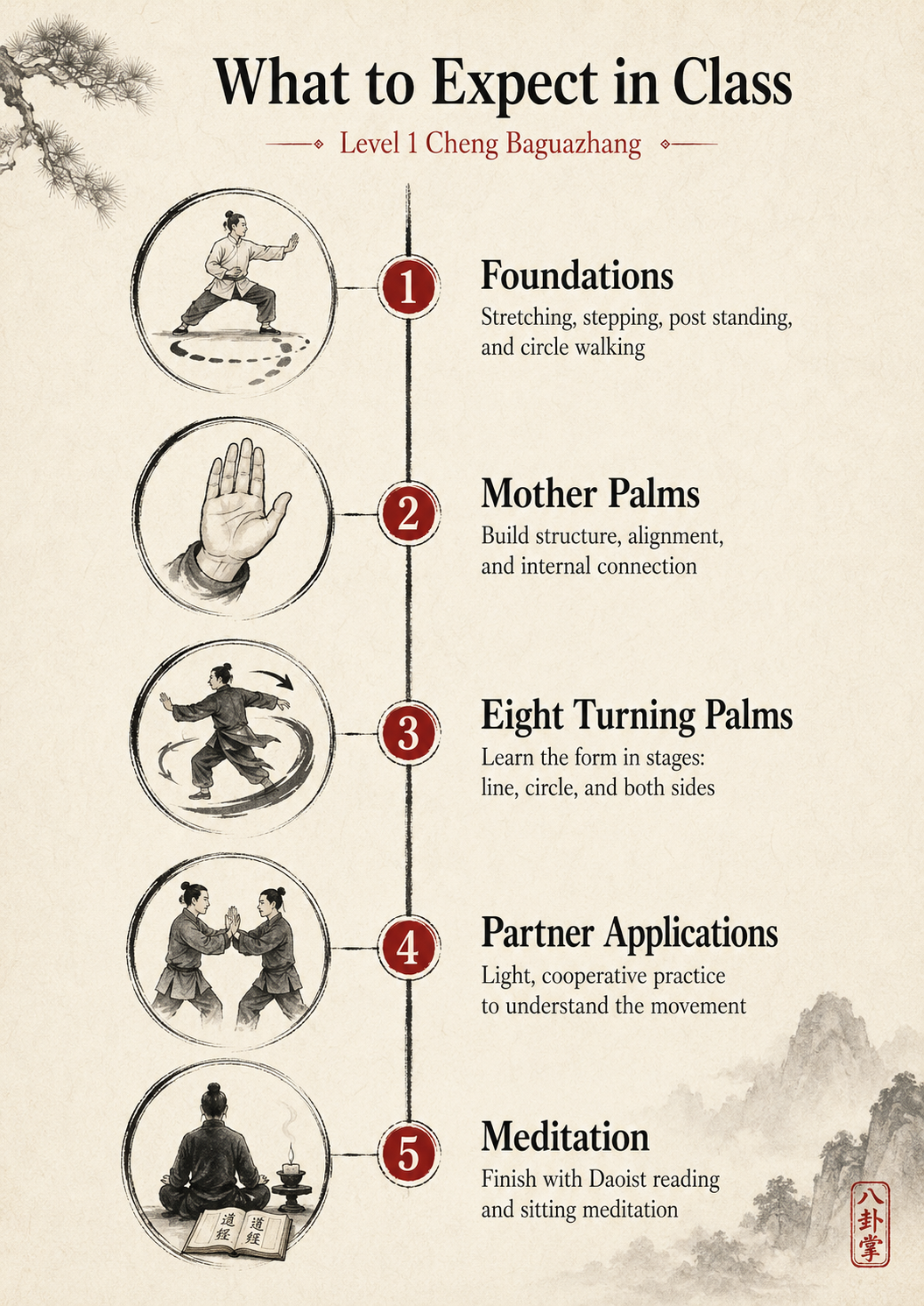
What to Expect in Your First Cheng Baguazhang Class
New students begin in our Level 1 Cheng Baguazhang class on Tuesdays at either 1:00 PM or 5:30 PM.
You do not need previous martial arts experience, and you do not need to wait for a new session to begin. The class is structured so that beginners can join at any time and start building the foundations alongside more experienced students.
Your Class Begins With the Foundations
After light stretching, the first half of class focuses on the fundamental skills that make Baguazhang work:
Bagua stepping
Bagua palm positions
Post standing
Changing directions
Circle walking
These exercises develop balance, coordination, posture, leg strength, mobility, and whole-body connection. They also give students the physical vocabulary needed to understand the forms and applications that follow.
Building the Baguazhang Body
Each class includes practice from one of the Eight Mother Palms.
These foundational postures help students become familiar with the shapes, alignments, and internal connections used throughout the art. Over time, they condition the body for more advanced movement while improving stability, awareness, and movement quality.
Learning the Eight Turning Palms
Students then break into small groups to work on the Eight Turning Palms, the foundational form of the Level 1 curriculum.
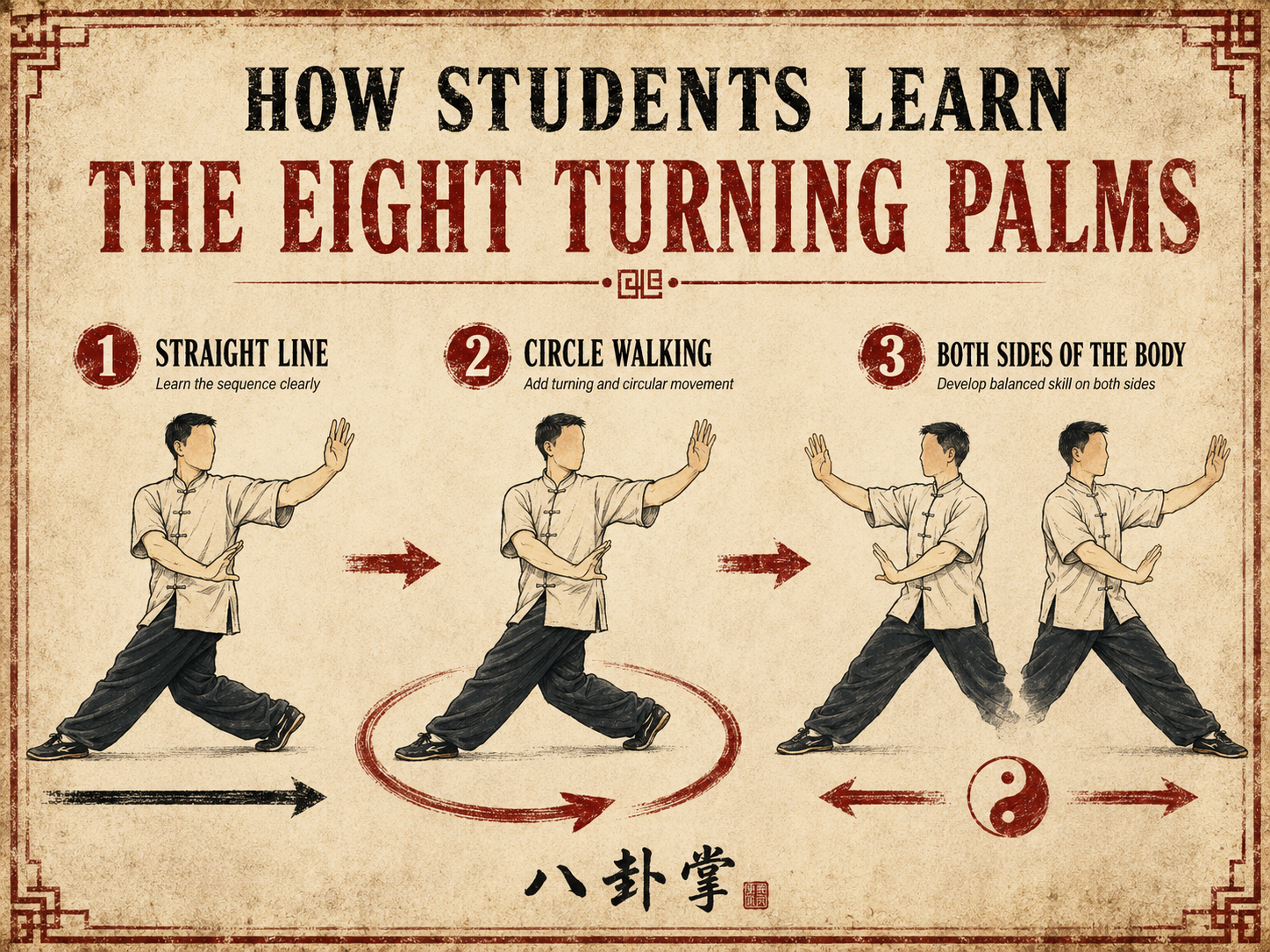
The form is taught in stages:
First in a straight line
Then while walking the circle
Then on both sides of the body
This progressive method makes a sophisticated art easier to understand and gives students time to develop coordination before adding greater complexity.
Safe, Cooperative Partner Practice
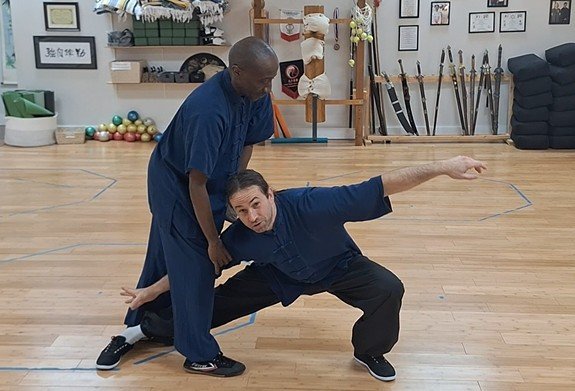
The class also includes light partner applications to help students understand how Baguazhang movements function.
Partner work is controlled and cooperative. The purpose is not to fight or prove toughness. It is to help students see how the movement relates to another person so they can improve their structure, timing, direction, and solo practice.
Deeper application work is introduced later in Level 2.
Daoist Study and Sitting Meditation
Class concludes with a short Daoist reading and sitting meditation.
This gives students time to settle the body and mind, reflect on the principles behind the training, and connect the physical practice with the internal and philosophical dimensions of Baguazhang.
What to Wear
Wear comfortable athletic clothing that allows you to move freely.
A traditional kung fu uniform is recommended for regular students because it offers greater mobility and helps create the right mindset for focused training, but it is not required.
Classes are scheduled for one hour and often continue for an additional 10 to 15 minutes.
The Eight Turning Palms: Building the Baguazhang Body
At the heart of Level 1 training is the Eight Turning Palms, the foundational form that teaches students how to move, turn, coordinate, and generate power through the whole body.
For many beginners, Baguazhang initially feels unfamiliar. The stepping, circular movement, changing directions, palm positions, and coordinated turning require the body to work in new ways.
The Eight Turning Palms provide a clear structure for developing those skills one layer at a time.
A Progressive Way to Learn
Students first learn each palm change in a straight line so they can understand the sequence without the added challenge of walking the circle.
Once the movement becomes familiar, it is practiced on the circle. Students then learn the form on both sides of the body.
This progression allows students to develop:
Better balance and stability
Greater coordination between the upper and lower body
Stronger legs and more mobile hips
Improved posture and alignment
More efficient turning and directional change
Greater awareness of both sides of the body
Whole-body connection
The physical foundation needed for advanced Baguazhang
Foundational and Transformative
The Eight Turning Palms are more than a form to memorize.
They gradually condition the body for the more demanding movement found later in the system. Students learn to remain stable while turning, move without unnecessary tension, coordinate the hands and feet, and maintain structure while changing direction.
With continued practice, movements that once felt complicated begin to feel more natural. The student becomes stronger, more mobile, more coordinated, and more comfortable moving through space.
This is one reason students often describe Baguazhang as remarkable to practice. The art does not simply ask the body to work harder. It teaches the body to move in a more connected and intelligent way.
Health and Martial Skill Develop Together
The same qualities that improve health also support martial ability.
Better balance, posture, timing, coordination, mobility, and whole-body connection help students move with greater control. When applications are introduced, students begin to understand how the turning, stepping, and palm changes function in relation to another person.
In this way, the Eight Turning Palms connect the health, internal, and martial dimensions of Cheng Baguazhang.
They are the beginning of the student’s path toward Level 2, deeper applications, weapons training, and black sash.
Internal Kung Fu for Health, Longevity, and Lifelong Development
Many people begin martial arts when they are young and physically resilient. As the years pass, however, training that depends heavily on speed, muscular tension, impact, or youthful athleticism can become more difficult to sustain.
Cheng Baguazhang offers a different path.
As one of the major internal styles of Chinese martial arts, Baguazhang develops skill through alignment, coordinated movement, balance, timing, spiraling mechanics, relaxed strength, and the intelligent use of the whole body.
The goal is not simply to work harder. It is to learn how to move better.
A Practice That Adapts to the Student
Level 1 can be as physically demanding as the student chooses to make it.
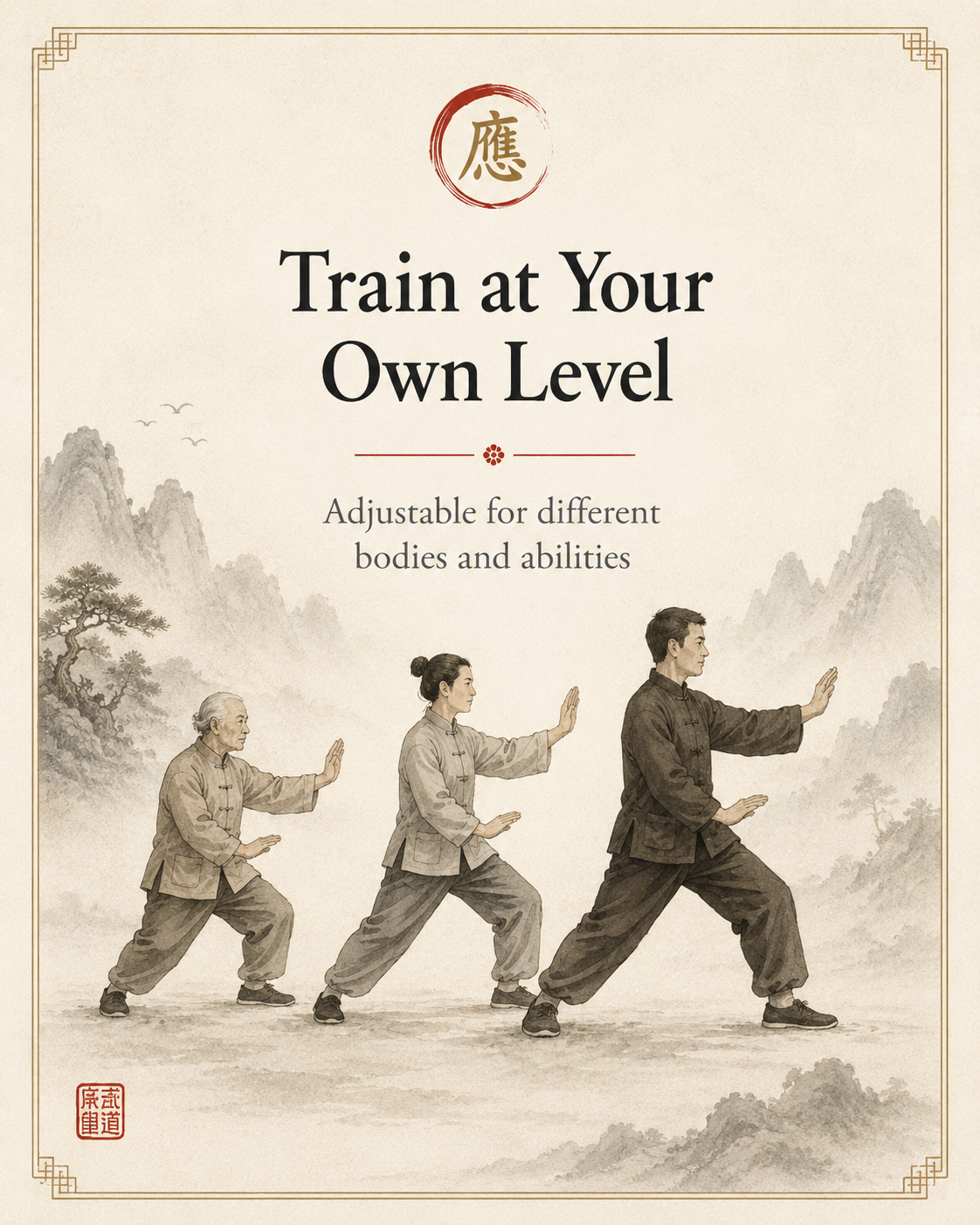
Postures may be practiced higher or lower. Steps may be shortened. Movements may be slowed down, simplified, or adjusted to accommodate different levels of strength, mobility, and experience.
This makes the class appropriate for a wide range of students—from complete beginners to experienced martial artists seeking a deeper internal practice.
Students with previous injuries or physical limitations are welcome. Let the instructor know before class so appropriate adjustments can be made.
Strength Without Unnecessary Strain
Baguazhang training develops the body gradually.
Through stepping, post standing, circle walking, directional changes, and the Eight Turning Palms, students build:
stronger legs and better stability;
improved balance and coordination;
greater mobility through the hips and waist;
healthier posture and body alignment;
increased awareness of tension and relaxation;
more efficient whole-body movement;
greater confidence moving in different directions.
These qualities support both health and martial skill.
The same training that helps a student feel more stable, mobile, and connected also creates the foundation for power, timing, evasive movement, and practical application.
The Eight Turning Palms as Physical Transformation
The Eight Turning Palms are designed to change the way the body moves.
At first, students may feel as though they are coordinating many separate parts: the feet, legs, waist, spine, hands, eyes, and direction of movement.
Over time, those separate pieces begin to function together.
The body becomes more connected. Turning becomes smoother. Stepping becomes more stable. Movements begin to flow without excessive tension or hesitation.
This gradual transformation prepares students for the more difficult movements, applications, and forms taught later in the system.
A Martial Art That Deepens With Age
Internal martial arts are not easy, but they offer a rare advantage: the practice can become more refined as the student matures.
A younger student may initially rely on strength or athleticism. With continued training, the emphasis shifts toward efficiency, timing, sensitivity, coordination, and understanding.
This allows Cheng Baguazhang to remain challenging and rewarding across decades of practice.
Students do not outgrow the art. They grow further into it.
Training the Mind as Well as the Body
Each class concludes with a short Daoist reading and sitting meditation.
This helps students settle after physical training and develop qualities that support long-term practice:
patience;
concentration;
self-awareness;
emotional steadiness;
disciplined attention;
the ability to remain calm while learning something difficult.
For many students, this integration of movement, martial training, philosophy, and meditation is what makes Baguazhang feel like more than exercise.
It becomes a lifelong method of cultivating the body, mind, and character.
A Martial Art With Real Applications
Cheng Baguazhang is known for its circular footwork, changing angles, spiraling power, and ability to move around rather than collide directly with force.
At Dragon Phoenix, applications are introduced in a controlled and progressive way. In Level 1, partner work is used primarily to help students understand the movement more clearly.
The goal is not to overwhelm beginners with fighting techniques. It is to show them why the stepping, turning, palm positions, and body mechanics are practiced the way they are.
Applications Clarify the Form
A movement can be difficult to understand when it is practiced alone.
When students work with a partner, they begin to see:
where the movement is directed;
how the body creates leverage;
how turning changes position and angle;
how the hands and feet coordinate;
how structure affects balance and control;
how relaxation and timing improve effectiveness.
This makes solo practice more intelligent. Students are no longer simply copying a shape—they begin to understand its purpose.
Health and Martial Skill Are Connected
In authentic Baguazhang, health practice and martial practice are not separate systems.
The same qualities that improve posture, mobility, balance, and whole-body coordination also support effective martial movement.
Better alignment creates stronger structure.
Better stepping creates better positioning.
Better relaxation creates faster response.
Better coordination creates more efficient power.
The martial applications reveal how these qualities work under pressure, while the foundational training develops them without unnecessary impact or strain.
Safe, Cooperative Partner Training
Level 1 application practice is light, controlled, and cooperative.
Students are not expected to fight, spar hard, or prove toughness. Partners work together so both people can learn safely.
The purpose is to improve:
structure;
timing;
distance;
balance;
directional awareness;
confidence working with another person.
This makes partner training appropriate even for students with no previous martial arts experience.
Deeper Application Training in Level 2
Level 1 introduces the principles.
Students who progress into Level 2 study applications in greater depth, including more complex entries, controls, takedowns, throws, changes of direction, and tactical use of the Cheng Baguazhang body method.
This progression ensures that students build the necessary movement quality and judgment before working with more advanced material.
The result is a martial art that is neither theoretical nor reckless.
It is practiced with intelligence, control, and respect for the training partner.
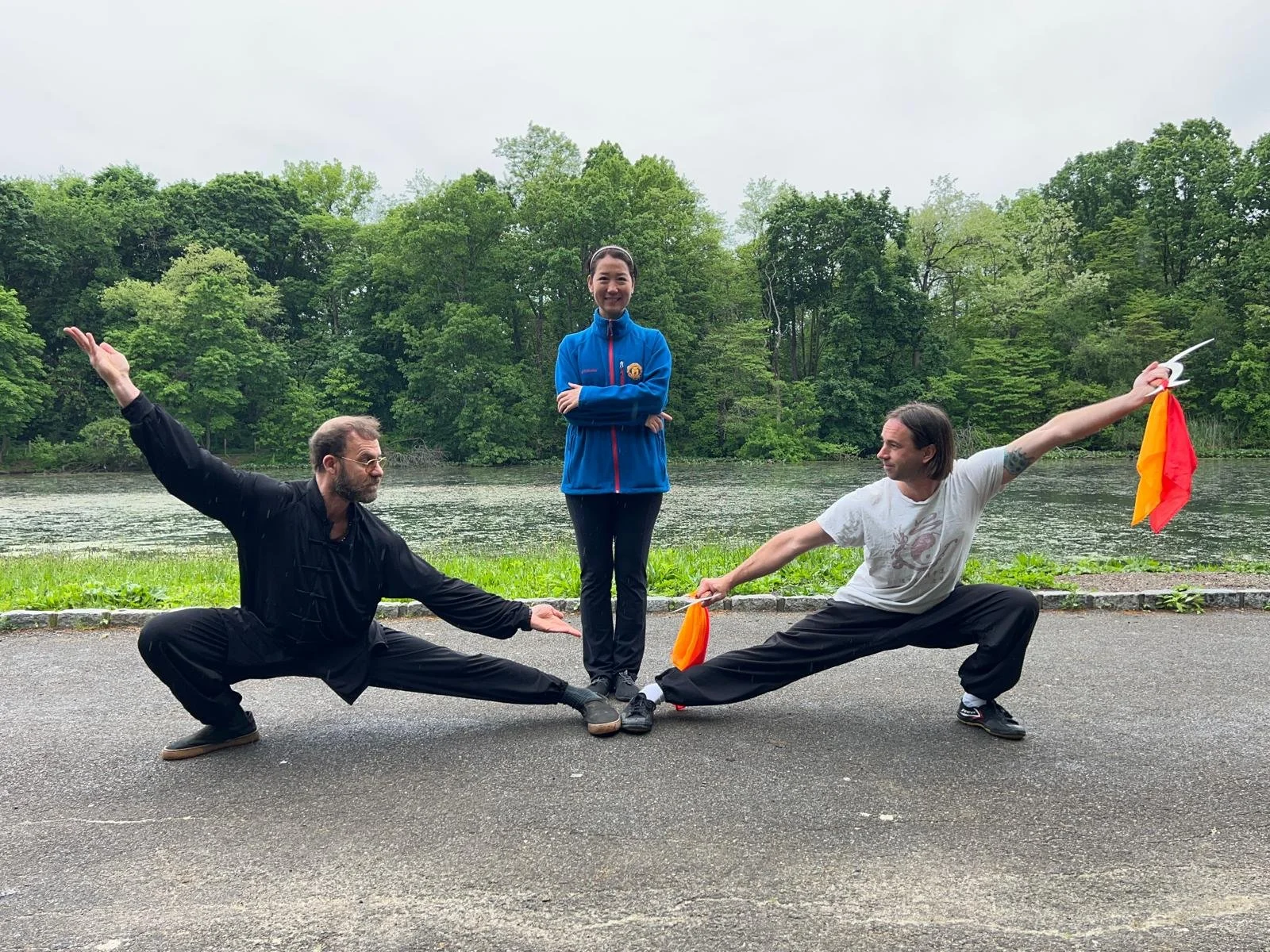
Advanced Material, Explained Clearly
Baguazhang is a sophisticated martial art. Its stepping, spiraling mechanics, changing directions, palm methods, applications, and internal principles can feel overwhelming when they are presented all at once.
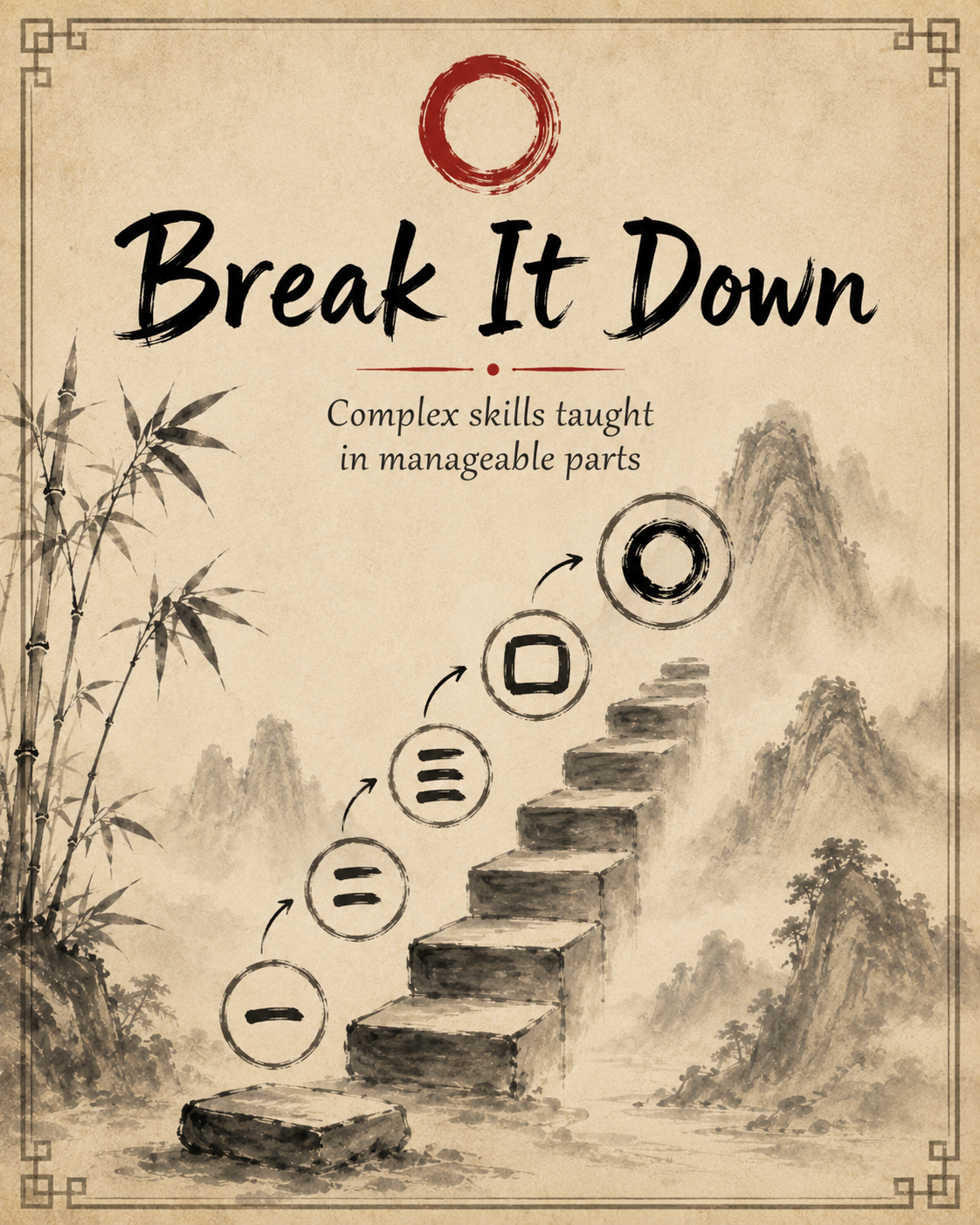
At Dragon Phoenix, difficult material is broken into clear, manageable stages so students can understand what they are doing, why they are doing it, and how each skill connects to the larger system.
Expert Practice and Expert Teaching Are Not the Same
Being highly skilled in a martial art does not automatically make someone an effective teacher.
Shifu Aaron Dison holds a master’s degree in education and brings professional teaching experience into every stage of the curriculum. Complex ideas are explained in plain language, demonstrated from multiple angles, and divided into smaller skills that students can practice successfully.
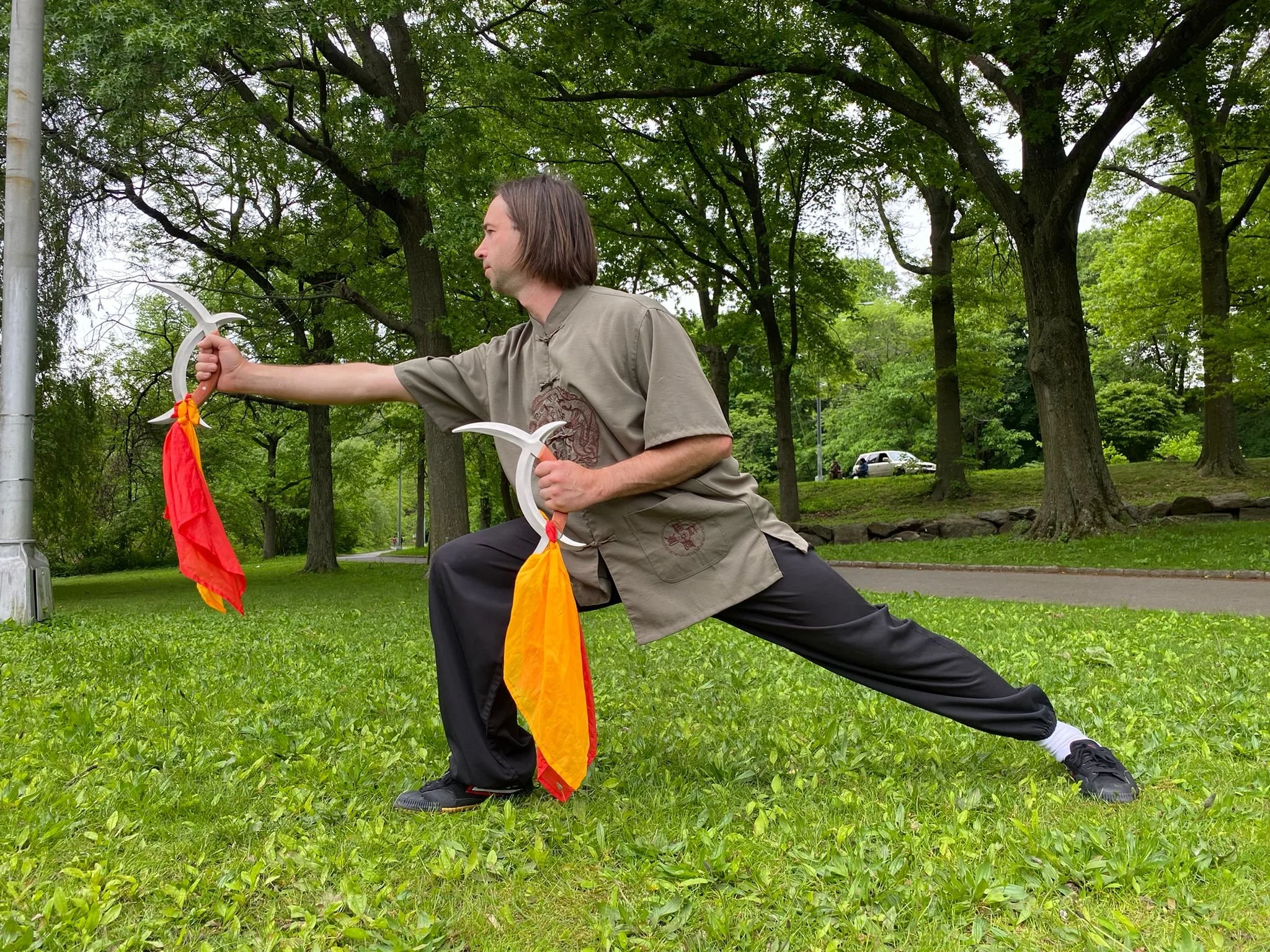
A Progressive Learning Method
Students do not begin by trying to perform the complete art at full complexity.
Instead, skills are developed layer by layer:
Understand the posture
Learn the essential shape, alignment, and purpose.
Practice the stepping
Build balance, placement, and directional control.
Coordinate the body
Connect the hands, feet, waist, eyes, and intention.
Add circular movement
Apply the skill while turning and walking the circle.
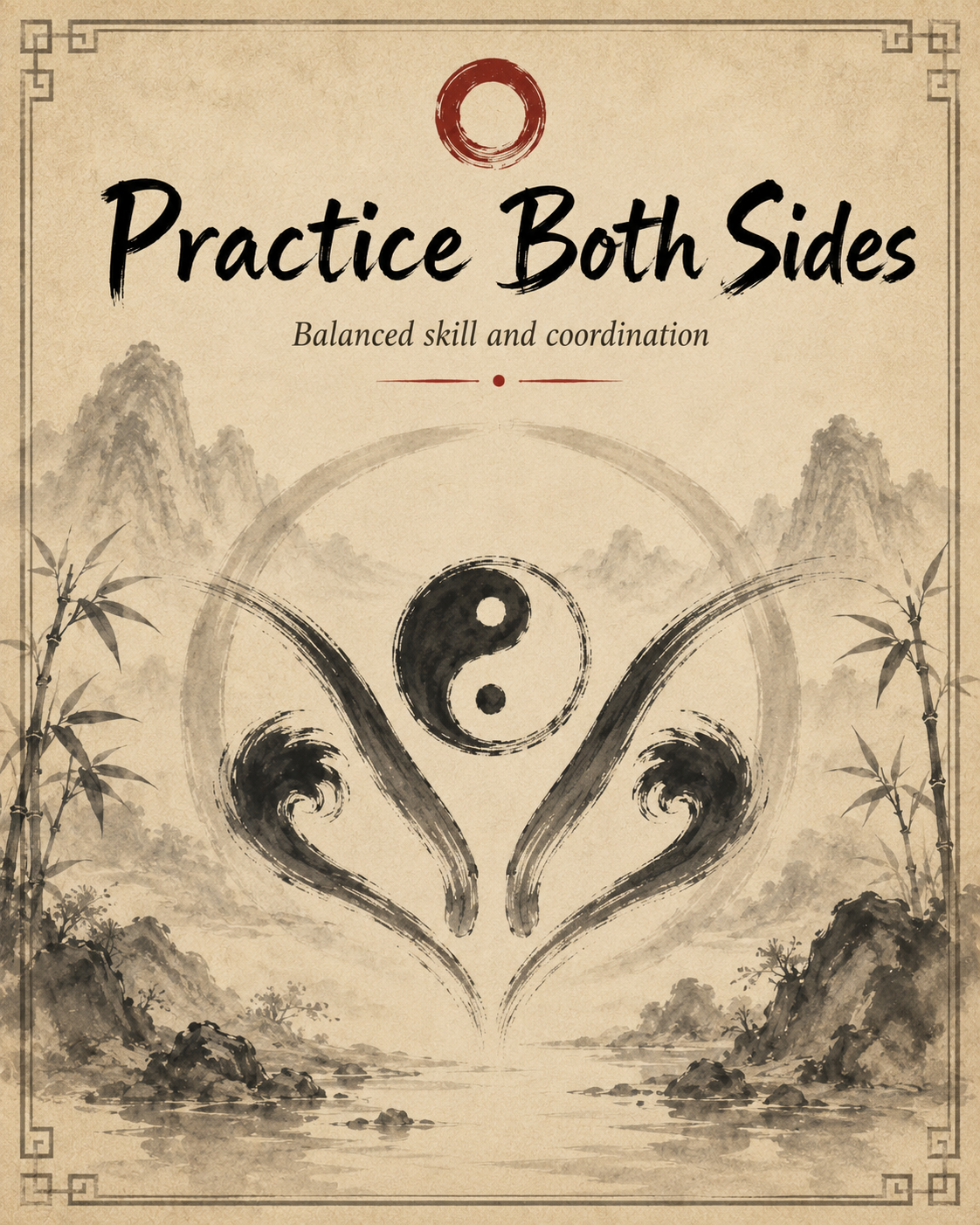
Train both sides
Develop balanced coordination rather than relying on one dominant side.
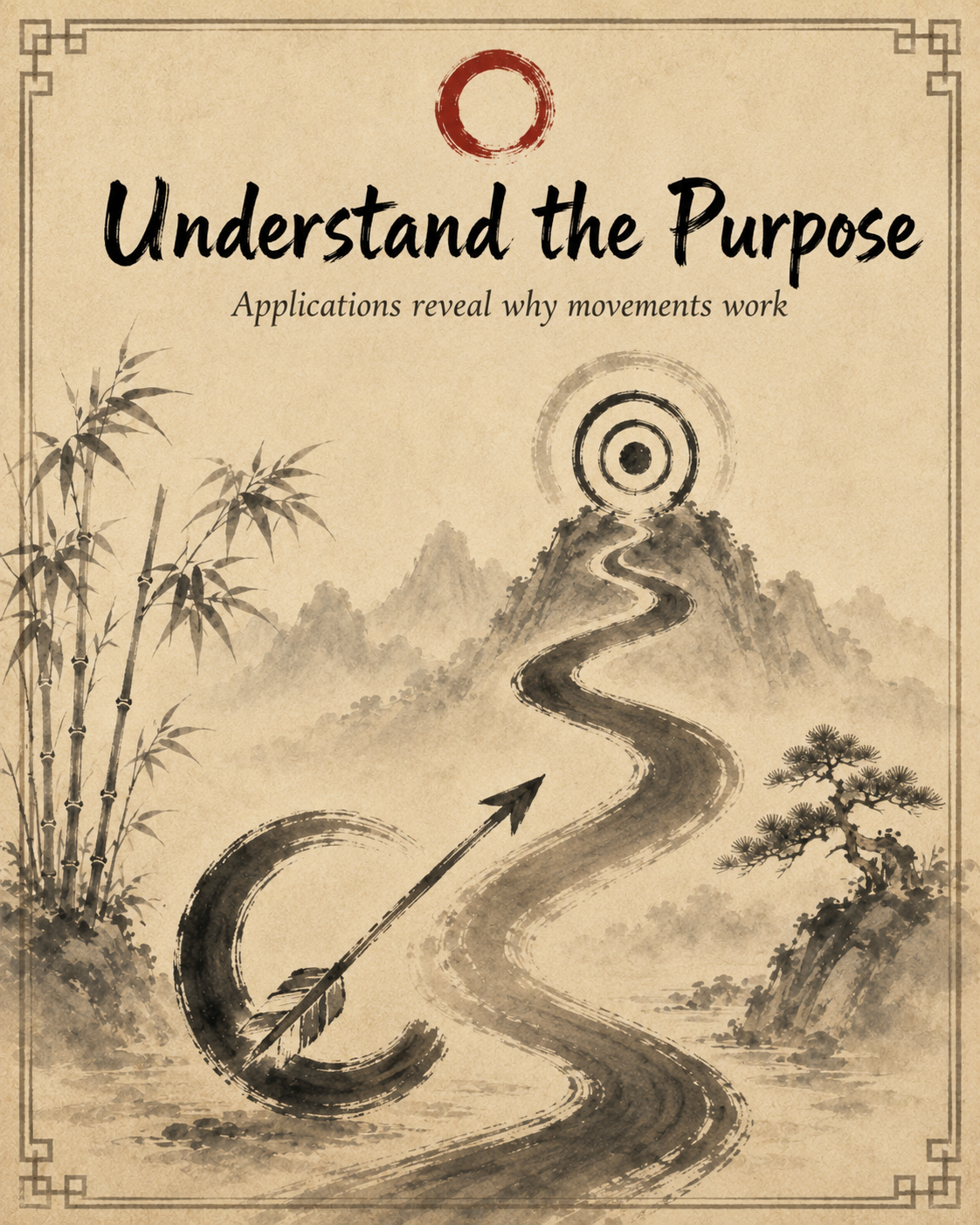
Explore the application
Use cooperative partner work to clarify how the movement functions.
This method allows students to make steady progress without sacrificing the depth of the traditional art.
Different Students Learn in Different Ways
Some students understand a movement by watching it. Others need to feel the correct position, hear a detailed explanation, examine the martial application, or repeat one small component several times.
Instruction may include:
full demonstrations;
slow-motion breakdowns;
verbal explanations;
physical landmarks and alignment cues;
individual corrections;
small-group practice;
cooperative partner applications;
repeated practice on both sides;
comparisons between common mistakes and correct mechanics.
The goal is not to force every student through one rigid learning style. It is to help each person find a clear route into the material.
Deeper Context From Discipleship Training
As a formal Cheng Baguazhang lineage disciple, Shifu Aaron received training beyond the ordinary class curriculum.
That deeper training provides greater context for:
how foundational movements lead into advanced material;
why particular mechanics are preserved;
how forms and applications relate;
what common errors eventually prevent progress;
how weapons training develops the empty-hand system;
how students should be prepared for Level 2, black sash, teaching, and possible discipleship.
Students are therefore not simply learning isolated movements. They are being guided through a complete system by instructors who understand where the curriculum begins, where it leads, and how the pieces connect.
Support Between Classes
Adult curriculum students also receive access to relevant Dragon Phoenix Online Academy material.
These lessons allow students to review movements, revisit explanations, and practice foundational material between in-person classes.
Online material does not replace direct instruction and correction. It reinforces classroom learning and gives dedicated students a practical way to progress more quickly through consistent home practice.

A Complete Path From Beginner to Black Sash
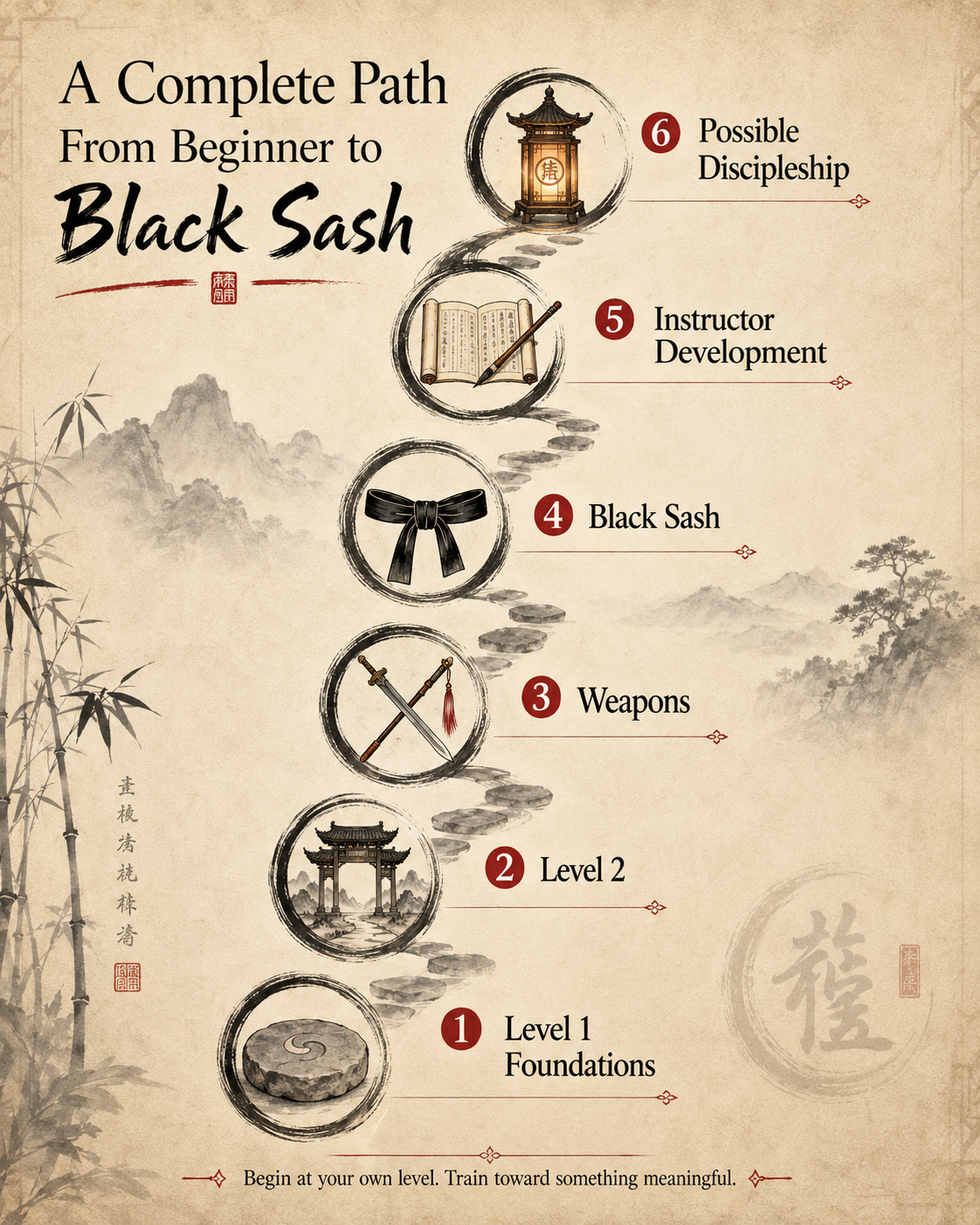
Level 1 Cheng Baguazhang is designed as the beginning of a long-term training path.
Students do not simply attend isolated classes or collect disconnected techniques. Each stage of the curriculum prepares the body, mind, and skill set for what comes next.
The goal is steady development—from the first foundational exercises to advanced forms, applications, weapons, black sash, teaching, and possible discipleship.
Level 1: Build the Foundation
New students begin with the essential body method of Cheng Baguazhang:
Bagua stepping
Palm positions
Post standing
Direction changes
Circle walking
Eight Mother Palms
Eight Turning Palms
Introductory applications
Daoist study and meditation
The Eight Turning Palms form the core of Level 1. Students first learn the movements in a straight line, then on the circle, and finally on both sides of the body.
This stage develops the coordination, strength, mobility, structure, and movement vocabulary needed for the more demanding material that follows.
Traditional Weapons Training
Weapons are an important part of the complete Cheng Baguazhang curriculum.
Weapons training develops qualities that strengthen the empty-hand art, including:
extended whole-body connection;
precision and directional control;
greater awareness of distance;
stronger coordination through the hands and torso;
responsibility, concentration, and self-control;
an understanding of how Baguazhang mechanics extend beyond the body.
New weapons classes generally begin in September after summer travel has settled down. Enrollment remains open for approximately one month and then closes so the group can progress together through the material.
Priority is given to more advanced students, although responsible newer students may occasionally be admitted when space allows.
Instructor Development
Some advanced students may eventually be invited to help newer practitioners, study teaching methods, and prepare for instructor responsibilities.
Learning to teach requires more than being able to perform a form. It requires the ability to:
recognize common errors;
explain concepts clearly;
preserve the essential mechanics;
adapt instruction to different students;
create a safe learning environment;
understand how each level connects to the next;
represent the lineage responsibly.
Instructor development is therefore treated as an extension of advanced training, not simply as a title.
Level 2: Deepen the Art
After students establish a dependable foundation, they may advance into the Tuesday Level 2 class at 6:45 PM.
Level 2 explores Baguazhang in greater depth through:
More advanced forms
More complex directional changes
Refined body mechanics
Deeper martial applications
Controls, throws, and takedowns
Tactical movement and positioning
Greater independence in practice
Preparation for advanced rank
Level 1 teaches students how to enter the system. Level 2 teaches them how the system begins to open.
Earn the Cheng Baguazhang Black Sash
Black sash is awarded specifically within the Cheng Baguazhang curriculum.
It represents substantial development in the art rather than simple attendance or completion of a short sequence. Students must demonstrate competence in the required forms, mechanics, applications, knowledge, and training habits appropriate to the rank.
The path to black sash is demanding, but it is clearly structured. Students always know that the material they are studying belongs to a larger progression.
Chen Taijiquan follows a separate curriculum and has its own black sash rank.
Discipleship: A Deeper Commitment to the Art
Discipleship is a visible long-term possibility for serious students who want to learn the full art and help preserve it.
Students must first progress into Level 2 before they may be considered. Discipleship is not awarded automatically at a certain rank or after a fixed number of years.
It reflects a deeper relationship built through:
consistent training;
responsibility and self-control;
martial character;
commitment to the community;
respect for the lineage;
a sincere desire to understand and preserve Cheng Baguazhang.
A disciple may receive deeper context, advanced material, teaching development, closer guidance, and greater responsibility within the living lineage.
For some students, black sash is the goal. For others, it becomes another step in a much longer journey.
Your Progress Depends on Your Practice
Adult curriculum students receive access to relevant Online Academy lessons so they can review material between classes.
Students who practice consistently outside class usually progress more quickly because they arrive prepared to receive correction and add the next layer of instruction.
There is no artificial rush. Students are encouraged to develop real ability rather than advance before their foundation is ready.
The path is structured, but each student moves through it at an appropriate pace.
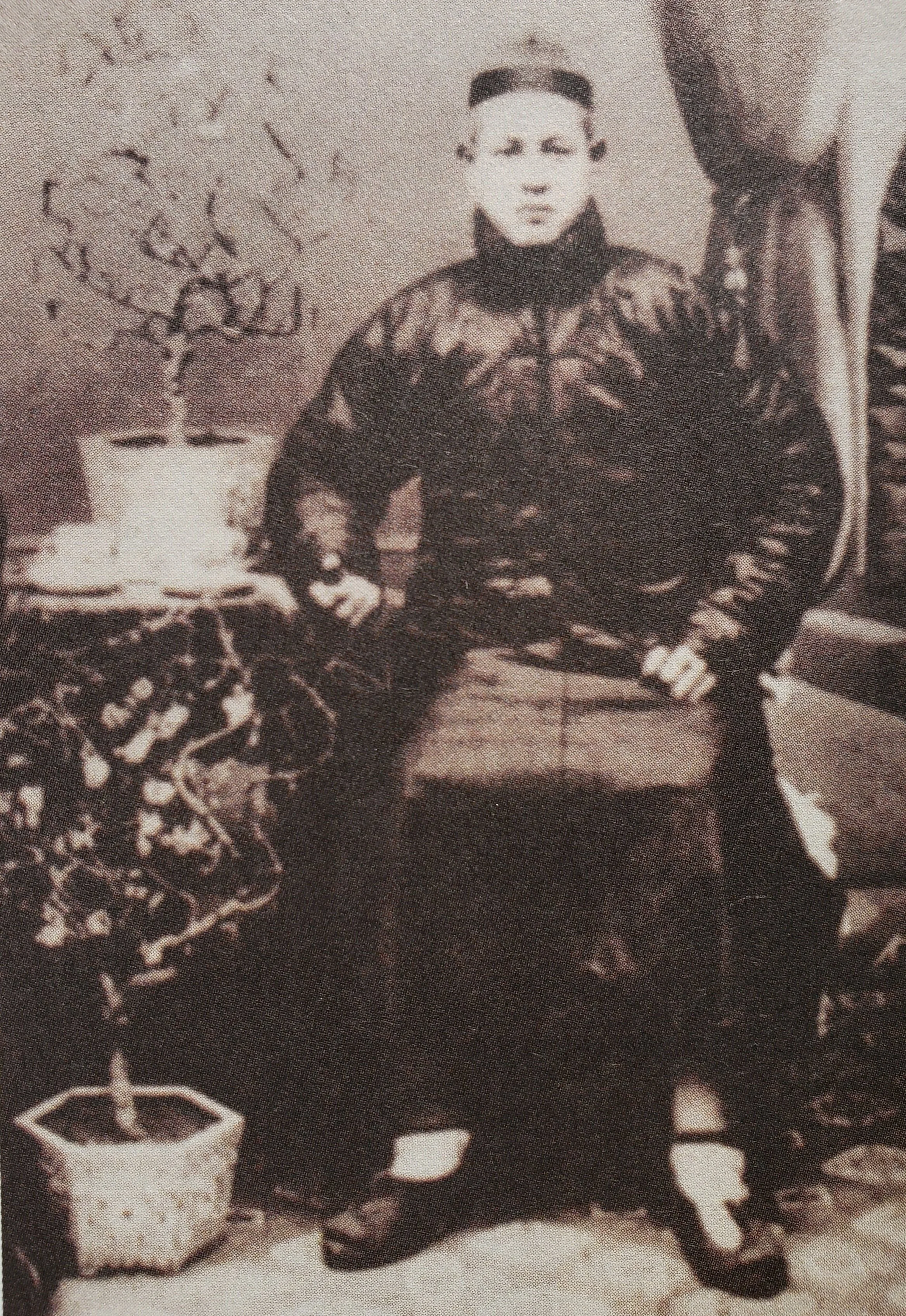
Authentic Lineage and Why It Matters
Cheng Baguazhang is more than a collection of movements. It is a living martial tradition passed from teacher to student through generations of direct instruction.
At Dragon Phoenix, lineage is not used merely as a historical credential. It is part of how the art’s mechanics, applications, teaching methods, and training standards are preserved.
More Than a Family Tree
A lineage chart shows who taught whom, but its real value lies in what was transmitted.
Authentic lineage helps preserve:
tested body mechanics;
progressive training methods;
martial applications;
corrections that prevent common errors;
the relationship between forms and function;
weapons methods;
teaching principles;
the cultural and ethical responsibilities of the art.
Without that continuity, Baguazhang can be reduced to outward shapes copied without a clear understanding of why they are performed.
Lineage Supports Safer Training
Correct mechanics matter for health as well as martial effectiveness.
When posture, stepping, turning, and weight distribution are misunderstood, students may develop habits that create unnecessary strain or limit future progress.
A living lineage provides more than old photographs or historical stories. It provides access to generations of accumulated correction.
Students learn not only what a movement looks like, but:
where the weight should be;
how the joints should align;
how the torso and limbs coordinate;
how tension should be reduced;
how power travels through the body;
how the movement changes in application;
how foundational work prepares the student for advanced material.
This helps keep the art functional, sustainable, and grounded in tested practice.
A Complete Art, Not a Theoretical One
The forms of Cheng Baguazhang were not created as empty choreography.
Their movements contain principles of stepping, angling, evasion, striking, controlling, throwing, and changing position. Lineage preserves the relationship between those movements and their practical use.
This does not mean beginners are thrown immediately into hard combat training. It means the curriculum is connected from beginning to end.
The same movement studied for balance, mobility, and whole-body coordination in Level 1 can later be explored through deeper applications in Level 2.
The Dragon Phoenix Cheng Baguazhang Lineage
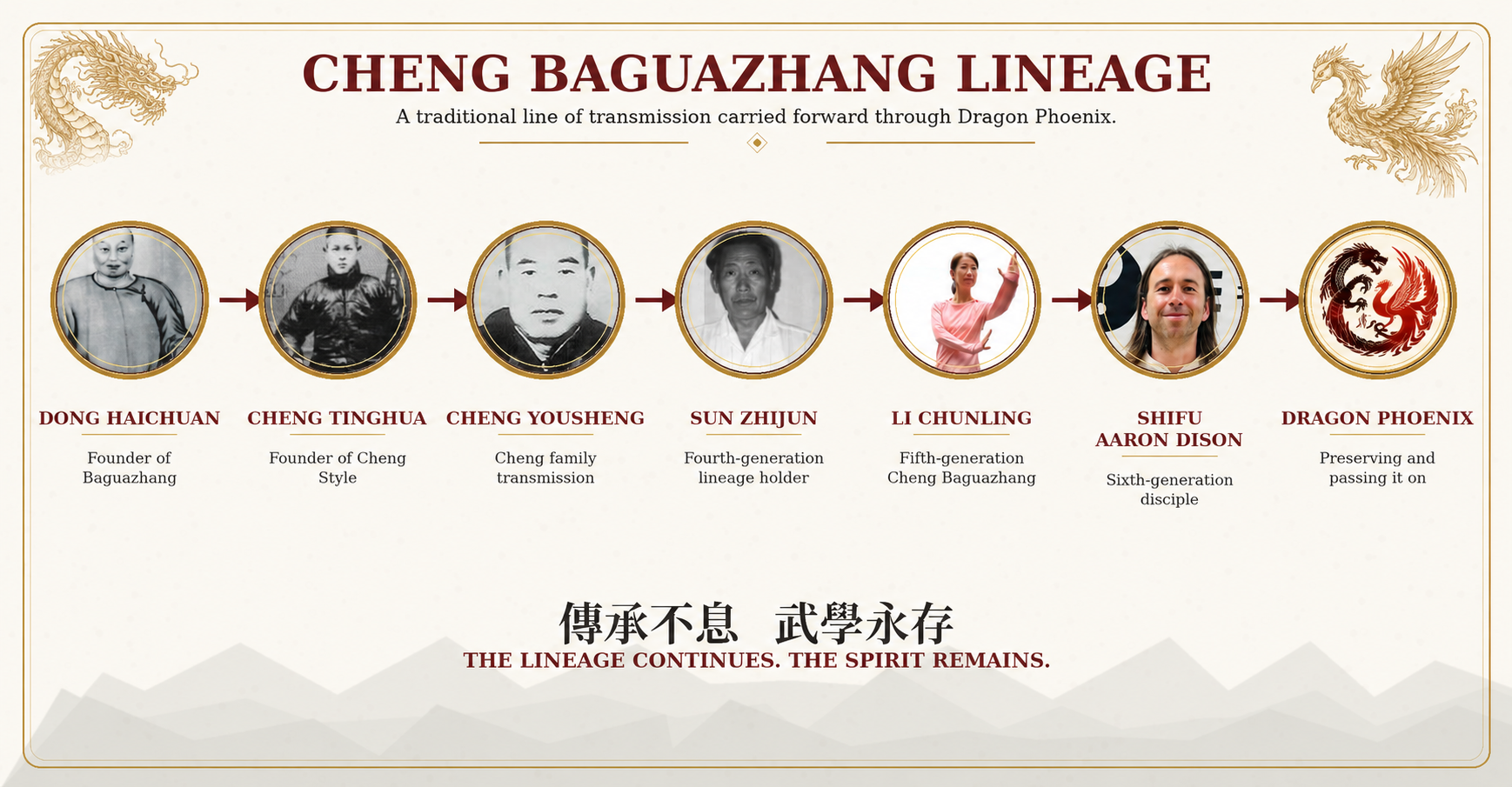
This lineage connects Dragon Phoenix students to one of the principal branches of traditional Baguazhang and to teachers recognized for maintaining its forms, mechanics, applications, and training culture.
The Responsibility of Discipleship
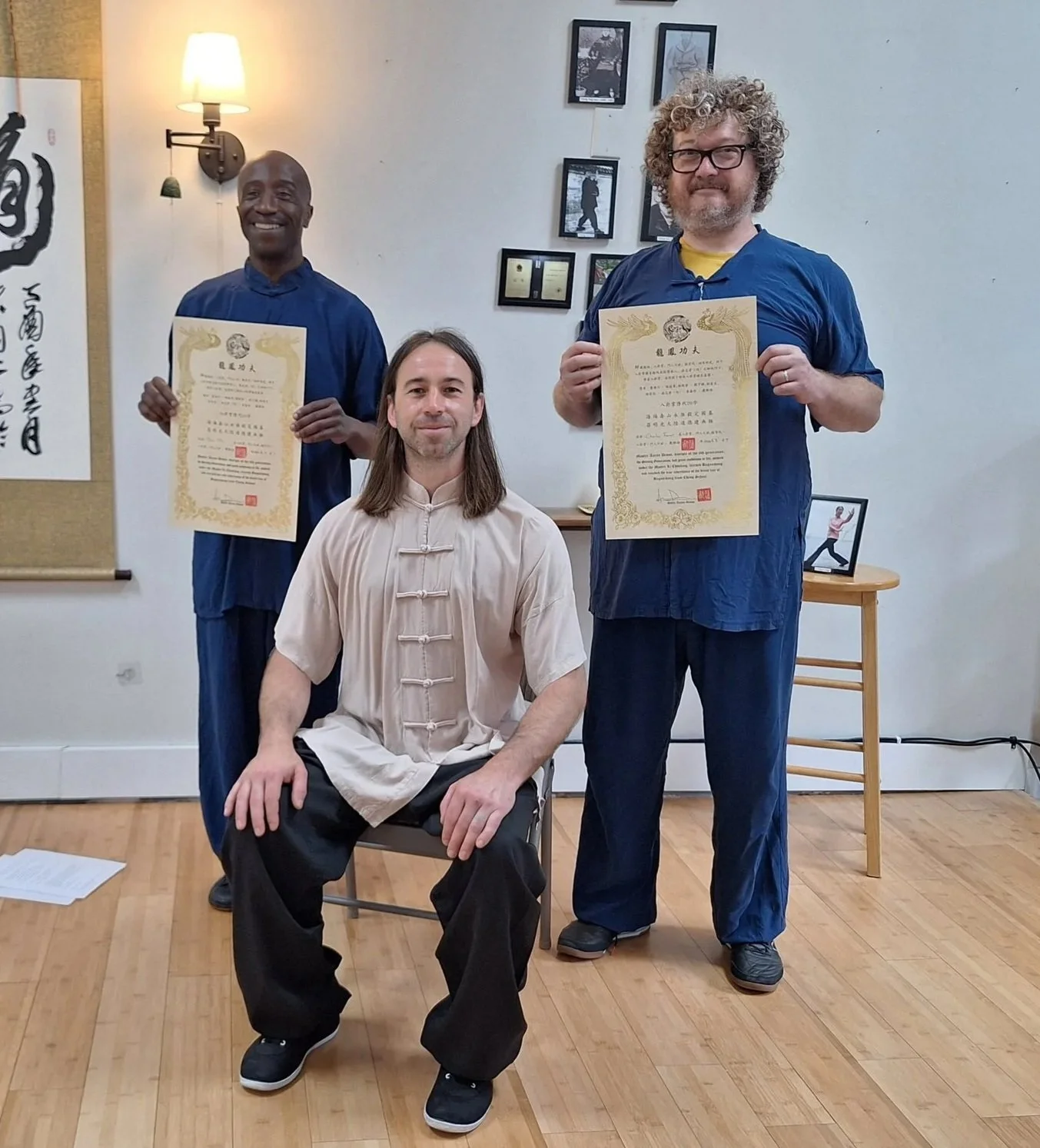
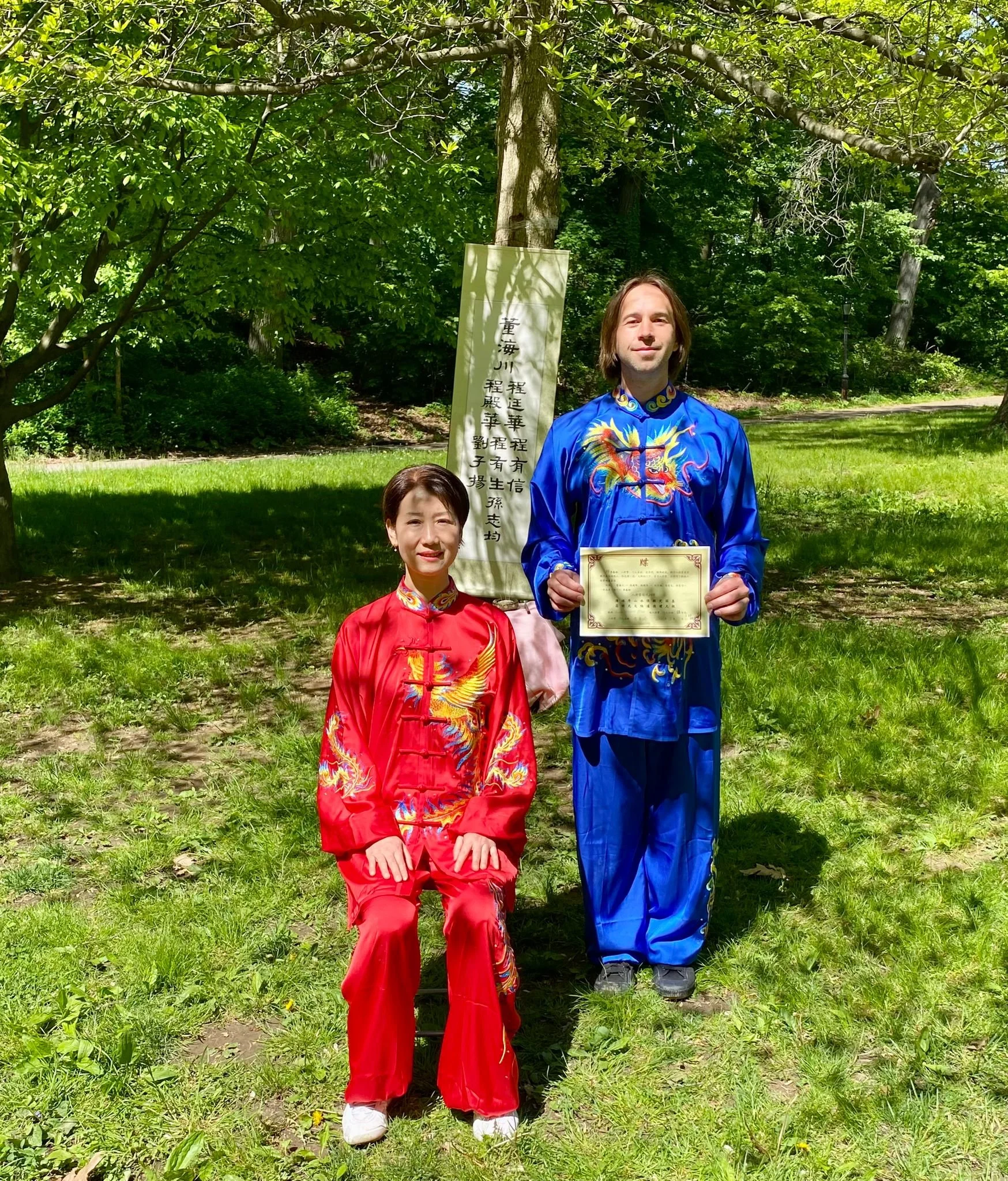
Shifu Aaron Dison is a formal disciple within this lineage.
Discipleship represents more than being a long-term student. It includes a deeper responsibility to understand, preserve, teach, and transmit the art accurately.
That training provides broader context for:
how foundational movements develop;
how forms connect to applications;
how advanced material grows from Level 1;
how mistakes affect later progress;
how weapons support empty-hand mechanics;
how students should be prepared for black sash and teaching;
what should remain intact when the art is passed to the next generation.
Students at Dragon Phoenix are therefore learning within a living system rather than studying isolated movements gathered from unrelated sources.
Become Part of a Living Tradition
For many students, lineage becomes one of the deepest reasons they continue training.
They begin by learning stepping, palms, and circle walking. Over time, they realize that they are participating in something much larger than a weekly exercise class.
They become part of:
a local training community;
a structured school curriculum;
a continuing martial lineage;
a tradition preserved through direct relationships;
a path that may eventually include black sash, teaching, and discipleship.
Prestige is part of that experience, but so is responsibility.
To inherit a serious tradition means learning it carefully, representing it honestly, and helping ensure that it remains available to future generations.
Community, Curiosity, and the Kind of Student Who Thrives Here
People often begin Cheng Baguazhang because they are curious about the art.
They stay because they discover a community, a lineage, and a practice that continues to reveal new layers over time.
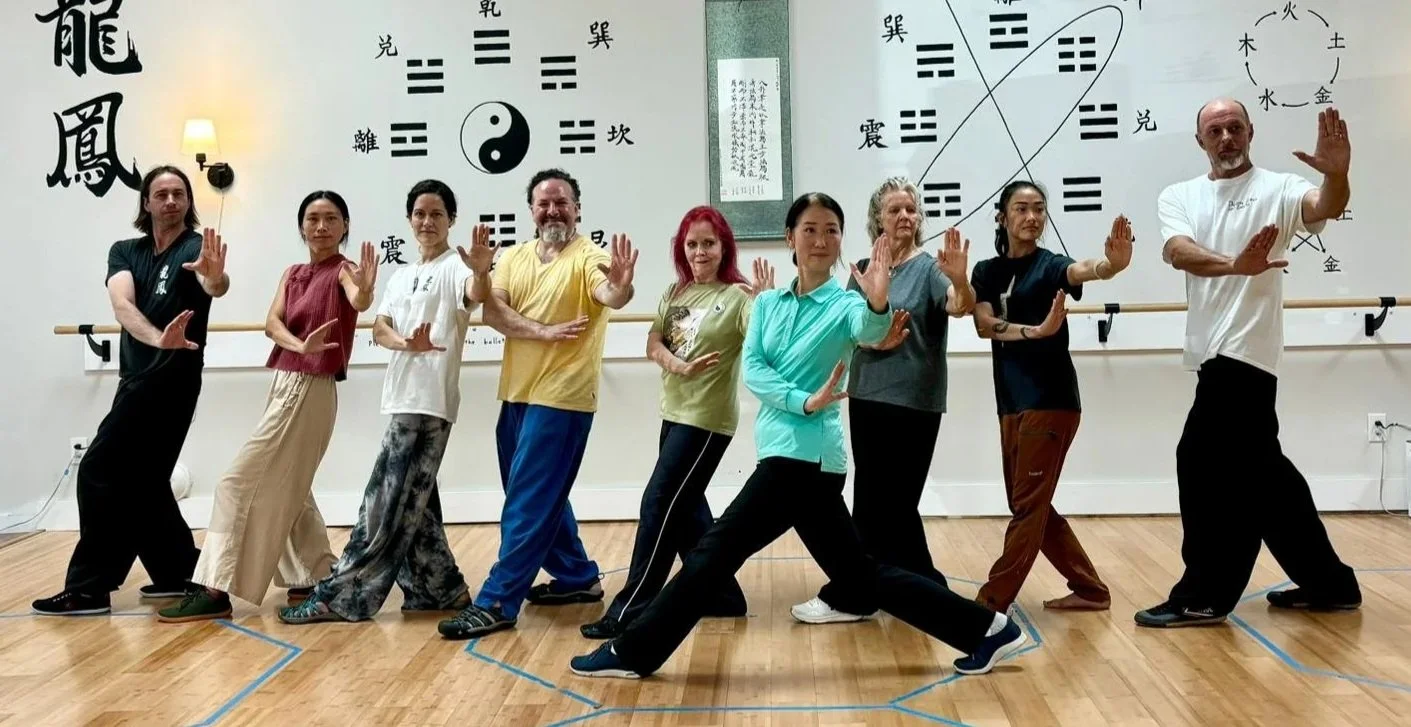
Dragon Phoenix attracts a wide range of students. Some arrive with no martial arts experience at all. Others come from Tai Chi, yoga, dance, meditation, fitness training, or many years in other martial arts.
What matters most is not prior experience. It is the willingness to learn carefully, practice consistently, and remain curious.
A Strong Fit for Thoughtful Beginners
You do not need to be especially flexible, athletic, coordinated, or knowledgeable about Chinese martial arts before beginning.
Level 1 is structured to help students develop those qualities gradually.
This program is a good fit for people who want to:
improve balance, mobility, posture, and coordination;
learn a traditional internal martial art;
understand how movement and application connect;
develop skill they can continue refining as they age;
train within a clear curriculum rather than attend disconnected classes;
become part of a serious but welcoming community;
explore Chinese martial arts history, philosophy, weapons, and lineage;
work toward Level 2, black sash, teaching, or possible discipleship.
A Home for Kung Fu Enthusiasts
Some students are drawn to the practical and health-related benefits of Baguazhang.
Others simply love Kung Fu.
They want to understand why a movement works, where it came from, how the form connects to application, how weapons develop the empty-hand art, and how one generation of teachers transmitted the system to the next.
Cheng Baguazhang offers an unusually rich field of study for students who enjoy:
intricate movement;
circular stepping;
spiraling mechanics;
martial applications;
traditional forms;
Daoist philosophy;
Chinese martial history;
lineage research;
weapons training;
long-term technical refinement.
You do not have to think of yourself as a “Kung Fu nerd” before starting. Many students discover that side of themselves after realizing how much depth the art contains.
Small Classes and Individual Attention
Level 1 classes are limited to 12 students.
This allows instructors to:
observe each student more closely;
make individual corrections;
adapt movements for different bodies and mobility levels;
organize productive small-group practice;
give beginners clear guidance without stopping the entire class;
maintain a safe and supportive partner-training environment.
Classes are taught by Shifu Aaron Dison or by qualified instructors trained under his direction.
Serious Training Without an Aggressive Culture
The program is substantial, but the training environment is not built around intimidation, ego, or proving toughness.
Students are expected to take the art seriously while treating one another with patience and respect.
Partner work is cooperative. Advanced students help newer students. Questions are encouraged. Mistakes are treated as part of learning.
The result is a community in which people can pursue demanding material without feeling that they must already be skilled before they belong.
Who May Not Be a Good Fit
This program may not be the right choice for someone seeking:
occasional drop-in participation without curriculum progression;
rapid promotion without consistent practice;
a purely fitness-based class with no forms, applications, or study;
hard sparring as the main focus from the first day;
techniques collected without attention to fundamentals;
advancement based only on attendance;
a casual experience with no long-term learning expectations.
There is no requirement to pursue black sash or discipleship. Students may train for health, enjoyment, or personal development.
However, the class is designed for people who value real instruction and want their practice to develop over time.
Become Part of Something Meaningful
Baguazhang can be practiced alone, but it is difficult to learn well in isolation.
Progress grows through relationships:
the relationship between teacher and student;
the support of training partners;
the example of advanced students;
the continuity of lineage;
the shared effort of a group developing together.
For many students, the community becomes inseparable from the art itself.
Meet Your Instructor: Shifu Aaron Dison
Learning a sophisticated martial art requires more than access to forms or techniques. Students need an instructor who understands the complete system, recognizes how each stage connects, and can explain difficult material in a way that makes progress possible.
Shifu Aaron Dison brings together three qualities that shape the Cheng Baguazhang program at Dragon Phoenix:
formal training within an authentic Cheng Baguazhang lineage;
experience teaching the art from beginner through advanced levels;
professional expertise in education and curriculum design.
Instruction Supported by a Qualified Teaching Team
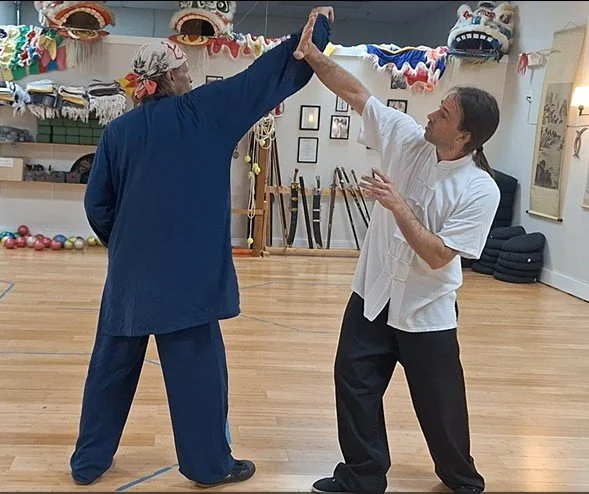
Level 1 classes are taught by Shifu Aaron or by qualified instructors trained under his direction.
Assistant instructors follow the same curriculum and teaching standards so students receive consistent instruction regardless of who leads a particular class.
More advanced students may also help newer practitioners during small-group practice. This gives beginners additional attention while helping advanced students deepen their understanding through supervised teaching experience.
Serious Standards, Supportive Instruction
Students are expected to practice carefully, listen, ask questions, and take responsibility for their development.
They are not expected to arrive already coordinated, flexible, athletic, or knowledgeable.
A good teacher meets the student where they are while continuing to show them where the path leads.
That balance—high standards combined with patient instruction—is central to the Dragon Phoenix approach.
A Formal Disciple in the Cheng Lineage
Shifu Aaron is a formal disciple in the lineage transmitted through:
Dong Haichuan → Cheng Tinghua → Cheng Yousheng → Sun Zhijun → Li Chunling → Aaron Dison
Discipleship provided access to deeper instruction, applications, teaching context, and responsibility for preserving and transmitting the art.
This broader perspective helps students understand not only the movement they are learning today, but also how it prepares them for Level 2, weapons training, black sash, teaching, and possible discipleship.
A Teacher Trained to Make Difficult Material Understandable
Shifu Aaron holds a master’s degree in education and previously worked as an elementary school teacher.
That background influences how Baguazhang is taught at Dragon Phoenix.
Complex skills are broken into manageable stages. Explanations are adjusted to the student. Movements are approached visually, physically, conceptually, and through application so students have multiple ways to understand the material.
The goal is not to make the art shallow or easy. The goal is to make authentic depth learnable.
Students may receive:
clear step-by-step demonstrations;
explanations in plain language;
individual posture and alignment corrections;
small-group instruction;
comparisons between common mistakes and correct mechanics;
applications that clarify the form;
guidance adapted to different mobility and experience levels;
Online Academy lessons for review between classes.
What Students Say About Training at Dragon Phoenix
“I have been involved in martial arts for decades. Sifu Aaron and the classes at Dragon Phoenix were some of the best martial arts training in my life. He teaches from both the heart and the mind. He explains, and demonstrates in a way that is enlightening.”
— Laurent
“I’ve studied several styles over the years. Aaron is authentic as you can get in a kung-fu teacher. Highly recommend his school.”
— Larry
“Dragon Phoenix Kung Fu is the best class I could have wished for. Mr. Dison never pushes us further than we can go, and he’s always got new things to teach us in his class. I would recommend his school to anyone wanting to learn Kung Fu, as it has always been a fun experience for me and my friends, especially with its wonderful technique and lineage.”
— Isabelle
“Learning Tai Chi as an adult has been challenging and rewarding. Aaron Dison and Bonner as the co-teacher have been patient, and generous of spirit. The lessons we learn during the classes spill into our everyday lives. I have been with this school for over 2 years and have made great friends in the classes due to the small class size. I highly recommend this program.”
— Rachel
Class Schedule, Pricing, and What to Expect Before You Begin
New students begin in the Level 1 Cheng Baguazhang class on Tuesdays.
You may start at any time. The curriculum is structured so beginners can learn the foundational material while continuing students work at the appropriate stage of the Eight Turning Palms.
Your first class is free, giving you an opportunity to experience the training, meet the instructors, and decide whether the program feels like a good fit.
Choose Your Tuesday Class
Tuesday Afternoon - 1:00 PM
A strong option for students with flexible daytime schedules, remote workers, retirees, and those who prefer an afternoon training environment.
Tuesday Evening - 5:30 PM
A convenient option for students training after work or school.
Students normally choose one time as their regular weekly class. When scheduling needs arise, they are welcome to attend the other Level 1 session instead.
Classes are scheduled for approximately one hour and frequently continue for an additional 10 to 15 minutes.
Ages: 15 and older
Class capacity: 12 students
Location: Dragon Phoenix in the Asheville and Woodfin area
What Happens After You Book?
After selecting your Tuesday class time, you will receive the information needed for your first visit.
When you arrive:
Check in and introduce yourself to the instructor.
Share any injuries or physical limitations.
Join the opening stretching and foundational exercises.
Receive beginner-level instruction suited to your experience.
Observe or participate in controlled partner work as appropriate.
Conclude with the Daoist reading and sitting meditation.
Ask questions about the curriculum and membership after class.
There is no expectation that you will already know the terminology or movements.
Your purpose during the first class is simply to experience the training.
Adult Curriculum Membership
Cheng Baguazhang is part of the Dragon Phoenix Adult Curriculum Program.
One Curriculum Class Per Week - $100 per month
A good choice for students beginning with one regular weekly Cheng Baguazhang class.
Two Curriculum Classes Per Week - $185 per month
Suitable for students combining Cheng Baguazhang with another eligible curriculum class or increasing their weekly training.
Three or More Curriculum Classes Per Week - $270 per month
Designed for highly committed students training across multiple curriculum classes each week.
Membership gives Cheng Baguazhang students access to the relevant Online Academy material for reviewing lessons and practicing between in-person classes.
The Adult Curriculum Program may also include Chen Taijiquan and Shuai Jiao. Each art follows its own curriculum and progression.
Injuries and Physical Limitations
Students with previous injuries, joint concerns, or mobility limitations are welcome.
Most foundational exercises can be adjusted by changing:
stance height;
step length;
range of motion;
training speed;
repetition volume;
the depth of turns and postures.
Please tell the instructor about relevant limitations before class. This allows the lesson to be adapted appropriately and helps prevent avoidable strain.
The program cannot guarantee that every exercise will be suitable for every condition, but the goal is to make responsible adjustments whenever possible.
What to Wear
For your first class, wear comfortable athletic clothing that allows you to move freely.
Suitable options include:
a T-shirt or comfortable training shirt;
loose athletic pants or flexible workout pants;
clean, supportive indoor training shoes.
A traditional kung fu uniform is recommended for regular students but is not required.
The uniform provides freedom of movement and can help create a focused training mindset—the martial-arts equivalent of dressing for the work you intend to do.
Avoid restrictive jeans, heavy clothing, or anything that limits your ability to step, turn, or raise your arms comfortably.
No experience required. Choose the time that works best for your schedule.
Frequently Asked Questions About Cheng Baguazhang
Do I need previous martial arts experience?
No. Complete beginners are welcome, and new students may begin at any time.
Level 1 is structured so you can learn the foundations progressively, even while more experienced students work on later portions of the curriculum.
Am I too old or out of shape to begin?
Probably not.
Students range from their teens through their 60s, and the class can be adjusted for different levels of strength, mobility, coordination, and endurance.
Postures may be practiced higher, steps may be shortened, and movements may be slowed or simplified as needed.
Is Cheng Baguazhang physically demanding?
It can be, but the intensity depends greatly on how you practice.
A student may begin with higher postures, smaller steps, and a moderate pace. As strength, mobility, and coordination improve, the same exercises can become much more demanding.
The goal is progressive development rather than forcing every student to train at the same intensity.
Can I participate if I have an old injury?
In many cases, yes.
Please tell the instructor about injuries, surgeries, joint concerns, or mobility limitations before class. Most foundational exercises can be adjusted, although no class or modification can be guaranteed suitable for every medical condition.
Consult an appropriate healthcare professional when you are uncertain whether martial arts training is appropriate for you.
Is this primarily a health class or a fighting class?
It is a complete internal martial arts program.
Level 1 emphasizes foundational movement, health development, coordination, circle walking, the Eight Turning Palms, and controlled applications that help students understand how the movements function.
Deeper martial applications are studied in Level 2.
Will I have to spar?
Hard sparring is not part of the beginner experience.
Level 1 partner work is light, cooperative, and controlled. Its purpose is to improve structure, timing, distance, direction, and understanding—not to prove toughness or place students at unnecessary risk.
What is circle walking?
Circle walking is one of Baguazhang’s defining training methods.
Students walk around a circular path while maintaining specific posture, palm position, alignment, and attention. It develops balance, directional awareness, leg strength, coordination, turning ability, and the capacity to move while preserving whole-body structure.
Beginners are taught the method gradually.
What are the Eight Turning Palms?
The Eight Turning Palms are the foundational form of the Level 1 curriculum.
Students first learn the movements in a straight line, then while walking the circle, and finally on both sides of the body.
The form conditions the body for later training while developing balance, posture, coordination, turning, directional change, and whole-body connection.
Do I have to memorize everything immediately?
No.
The material is introduced in manageable stages and reviewed repeatedly. You will receive corrections based on your current level rather than being expected to master the complete form at once.
Relevant Online Academy lessons are also available to support review between classes.
How quickly will I advance?
Progress depends on attendance, practice, coordination, previous experience, and the amount of time you spend reviewing outside class.
Dedicated students who practice consistently usually advance more quickly, but there is no artificial rush. The goal is dependable skill rather than promotion before the foundation is ready.
Can I attend both Tuesday Level 1 classes?
Students normally choose either the 1:00 PM or 5:30 PM class as their regular weekly time.
You are welcome to attend the other session when a scheduling issue prevents you from attending your usual class, subject to space and normal attendance procedures.
What should I wear?
Wear comfortable athletic clothing and clean, supportive training shoes.
A kung fu uniform is recommended for regular students because it provides good mobility and helps establish a focused training mindset, but it is not required.
Do I need to buy equipment?
No equipment is required to begin Level 1.
Weapons training is offered separately when a new annual weapons group opens. The instructor will explain any equipment requirements before students enter that program.
When can I begin weapons training?
New weapons classes generally open in September and accept new students for approximately one month. Enrollment then closes so the group can progress together.
Priority is given to advanced students, although responsible newer students may sometimes be admitted when space allows.
What does black sash represent?
Black sash is earned specifically within the Cheng Baguazhang curriculum.
It represents substantial development in the required forms, mechanics, applications, knowledge, and training habits. It is not awarded simply for attendance or for remaining enrolled for a fixed length of time.
Chen Taijiquan has a separate curriculum and separate black sash.
Can I eventually become an instructor?
Some advanced students may be invited into instructor development.
Teaching requires demonstrated skill, sound judgment, clear communication, safety awareness, and the ability to preserve the curriculum accurately. It is not an automatic result of rank alone.
Can I become a disciple?
Discipleship is a possible long-term path for serious students seeking the full art.
Students must first advance into Level 2 before they may be considered. Selection depends on sustained training, character, responsibility, commitment to the community, and a sincere desire to preserve and transmit Cheng Baguazhang.
Where are classes held?
Classes are held at Dragon Phoenix in the Asheville and Woodfin area of Western North Carolina.
The program draws students from across the greater Asheville region, including people willing to travel up to approximately one hour for specialized instruction.
How do I try a class?
Choose either the Tuesday 1:00 PM or Tuesday 5:30 PM Level 1 class and reserve your free first visit.
No previous experience is required.
Begin Your Cheng Baguazhang Journey
You do not need previous martial arts experience, unusual flexibility, or a high level of fitness to begin.
You only need curiosity and a willingness to learn.
Your first Level 1 class will introduce you to the foundational stepping, palm positions, circle walking, Eight Turning Palms, controlled applications, Daoist study, and supportive community that define Cheng Baguazhang at Dragon Phoenix.
The first class is free so you can experience the training before deciding whether the program is right for you.
What You Will Find at Dragon Phoenix
Authentic Cheng Baguazhang transmitted through a living lineage
Clear, progressive instruction for complete beginners
Small classes limited to 12 students
Training adaptable to different mobility and fitness levels
Health development connected to genuine martial mechanics
A path toward Level 2, weapons, black sash, teaching, and possible discipleship
Online Academy support between classes
A serious but welcoming community without an aggressive atmosphere

Choose Your Free Class
Tuesday at 1:00 PM
A daytime option for students with flexible schedules.
Tuesday at 5:30 PM
An evening option for students training after work or school.

