

ONE TRADITION. MANY WAYS TO PRACTICE.
Yang Tai Chi Classes in Asheville, NC
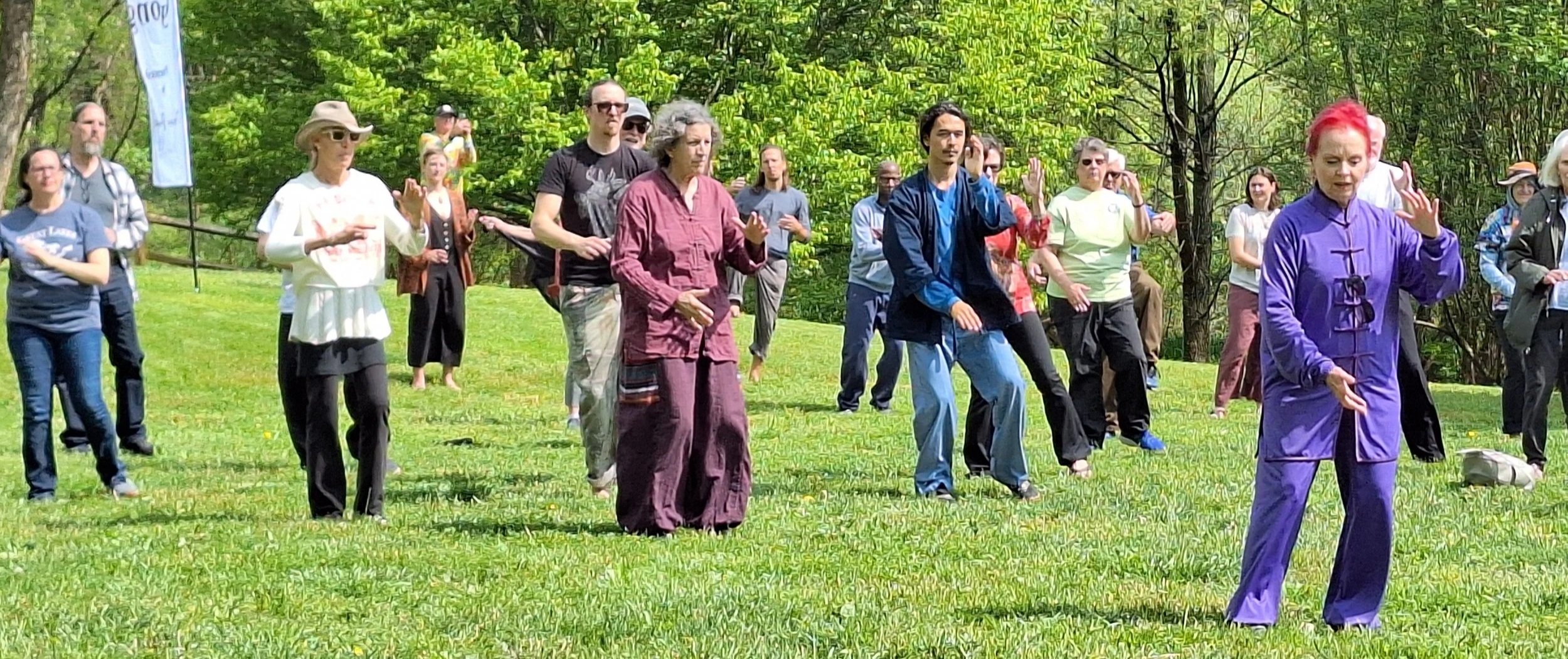
Dragon Phoenix offers beginner-friendly Yang Tai Chi classes in Woodfin, just north of Asheville. Students learn relaxed, coordinated movement through accessible forms designed to develop balance, body awareness, focus, and confidence in movement.
New students may begin with Yang 10 and continue into Yang 24, Yang 37, and Tai Chi Fan as their interest and experience develop. No previous Tai Chi experience is required.
Book a Yang Tai Chi Class
Experience: Beginners welcome
Programs: Yang 10, Yang 24, Yang 37, and Tai Chi Fan
Format: Drop-in classes
Location: Reynolds Village, Woodfin
Price: $20 per class
Class pass: 10 classes for $180
FOUR DISTINCT CLASSES. ONE FLEXIBLE PRACTICE.
Explore the Yang Tai Chi Classes
Each class offers a different way to experience Yang-style Tai Chi. You may follow the natural progression from Yang 10 through Yang 24 and Yang 37, begin with whichever form interests you most, or attend several classes together.
Choose the Practice That Draws You In
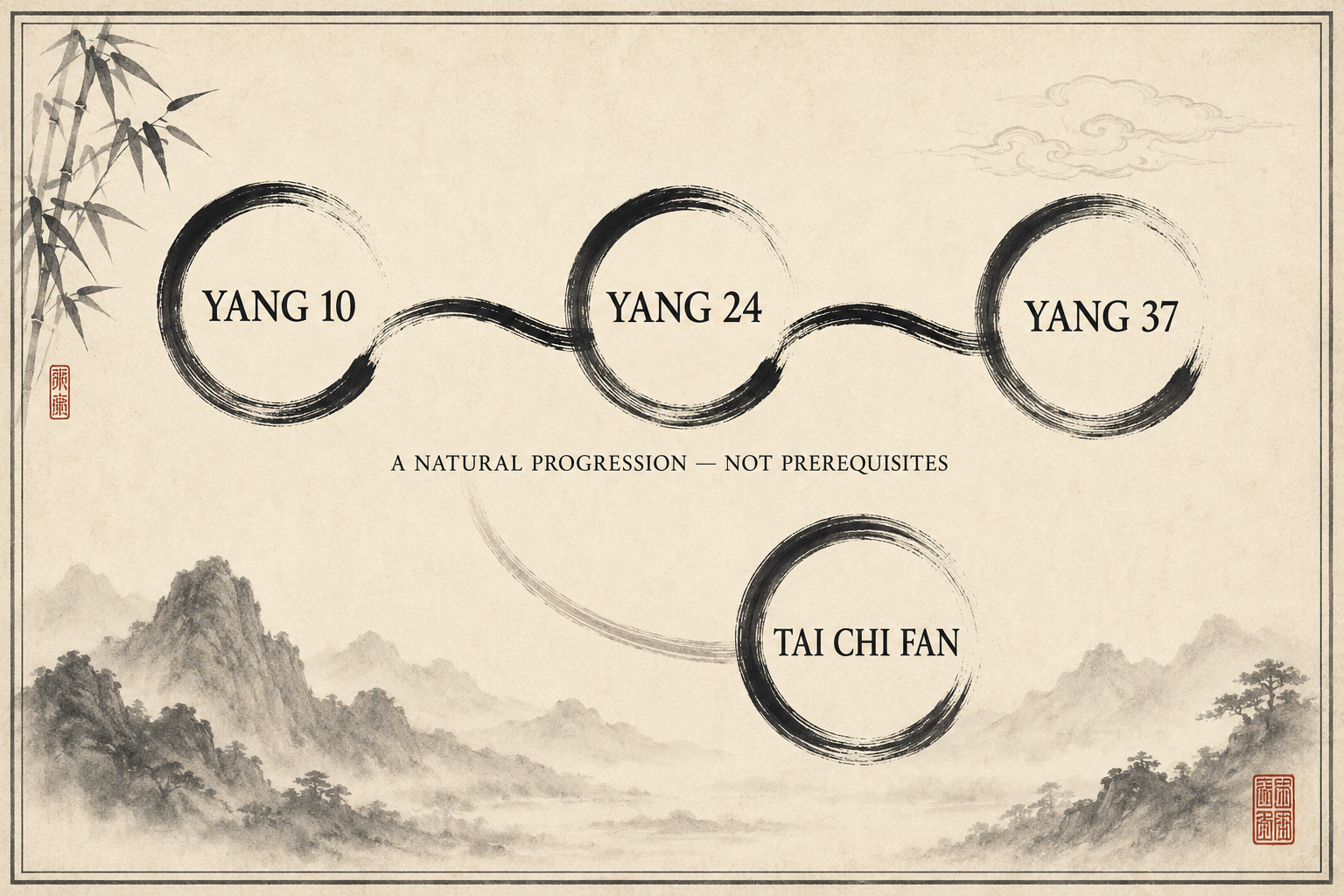
Yang 10, Yang 24, and Yang 37 offer a natural progression from a shorter introductory form toward increasingly detailed study. Tai Chi Fan adds a complementary practice with its own movement vocabulary and character.
This progression is entirely flexible. There are no prerequisites, tests, or restrictions on moving between classes. Begin wherever you like, attend more than one class, and allow your practice to develop in the way that feels right for you.
A NATURAL PROGRESSION—WITHOUT RIGID LEVELS
Follow the Path—or Begin Wherever You Like
Beginner’s Yang 10, Yang 24, and Yang 37 form a natural progression through Yang-style Tai Chi. Each form offers more time and variety for exploring the principles of relaxed, coordinated movement.
This progression can help guide your practice, but it does not determine where you are allowed to begin.
There are no prerequisites, advancement tests, or requirements for moving between classes. You may start with any form that interests you and attend as many of the classes as you like.
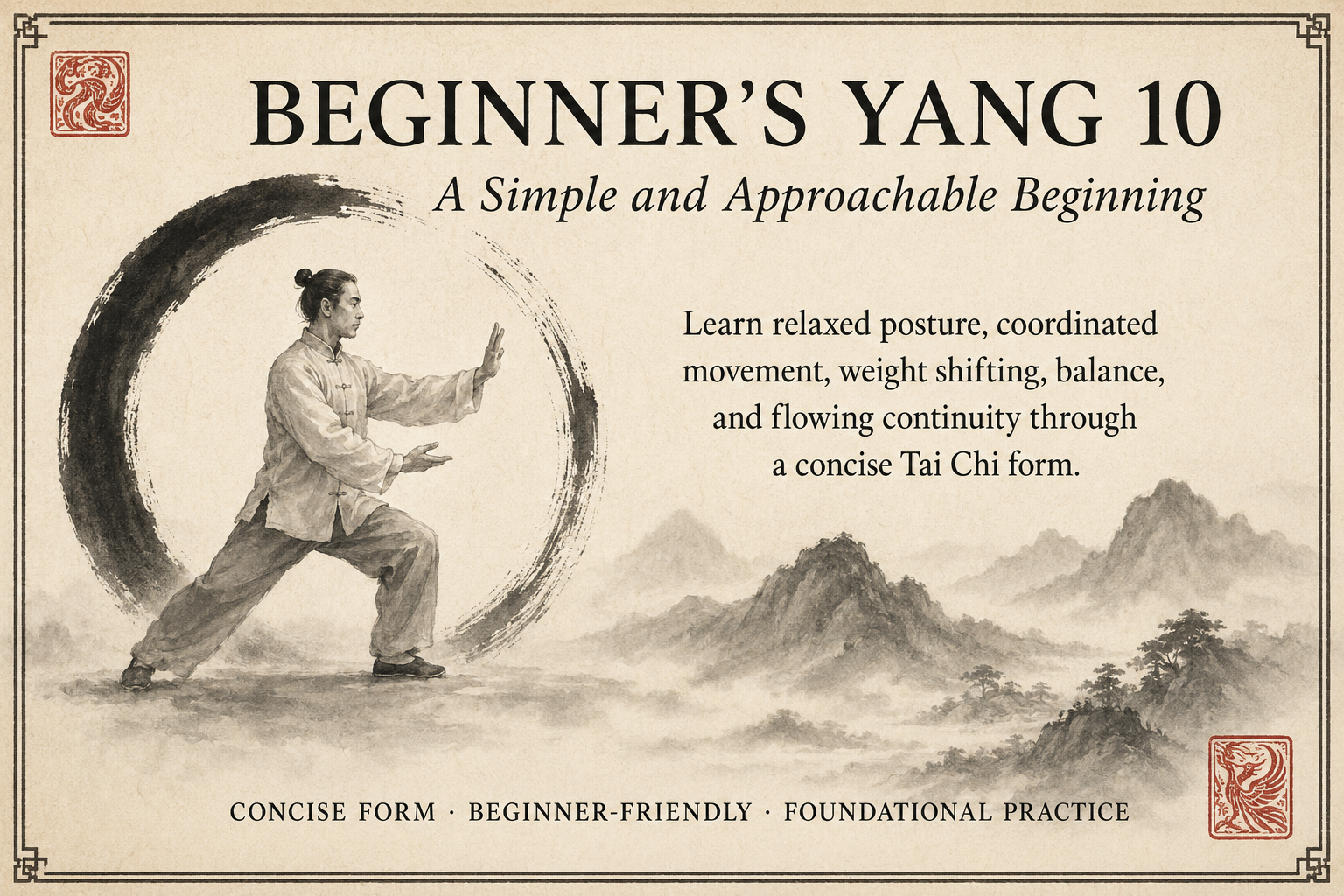
Beginner’s Yang 10
Establish a Comfortable Foundation
The concise Yang 10 form gives you an approachable way to experience the essential qualities of Tai Chi without first learning a long sequence.
Its smaller number of movements allows more attention to relaxed posture, balance, weight shifting, coordination, and continuous movement.
For many students, this is the most comfortable introduction to Yang-style Tai Chi.
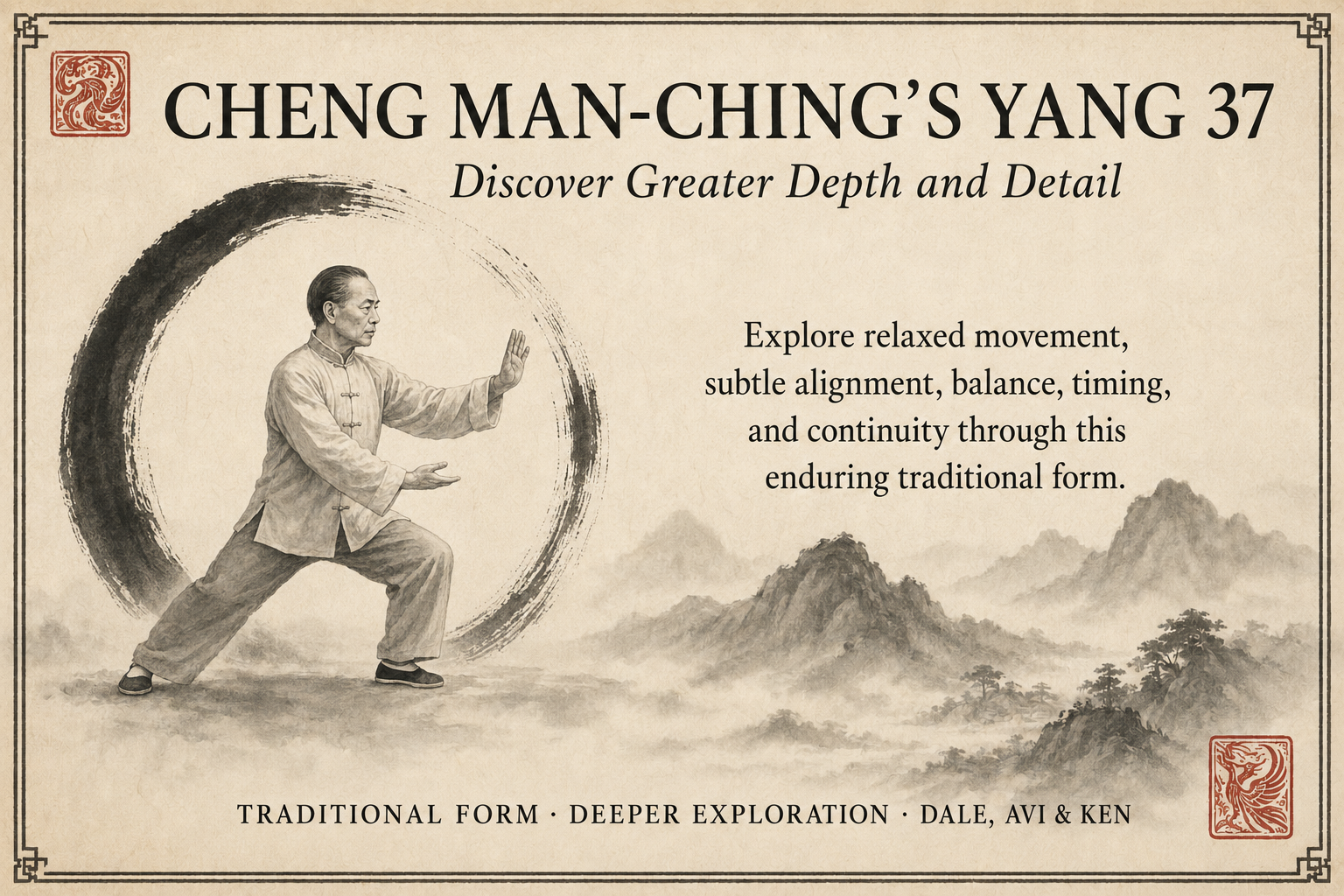
Cheng Man-Ching’s Yang 37
Explore Greater Depth and Detail
Yang 37 offers an extended traditional practice with room for increasingly subtle exploration.
As the form becomes familiar, students can devote greater attention to alignment, timing, relaxation, continuity, and the relationships connecting one posture to the next.
Some students arrive after practicing Yang 10 or Yang 24, while others begin their Yang Tai Chi journey here. Both approaches are welcome.
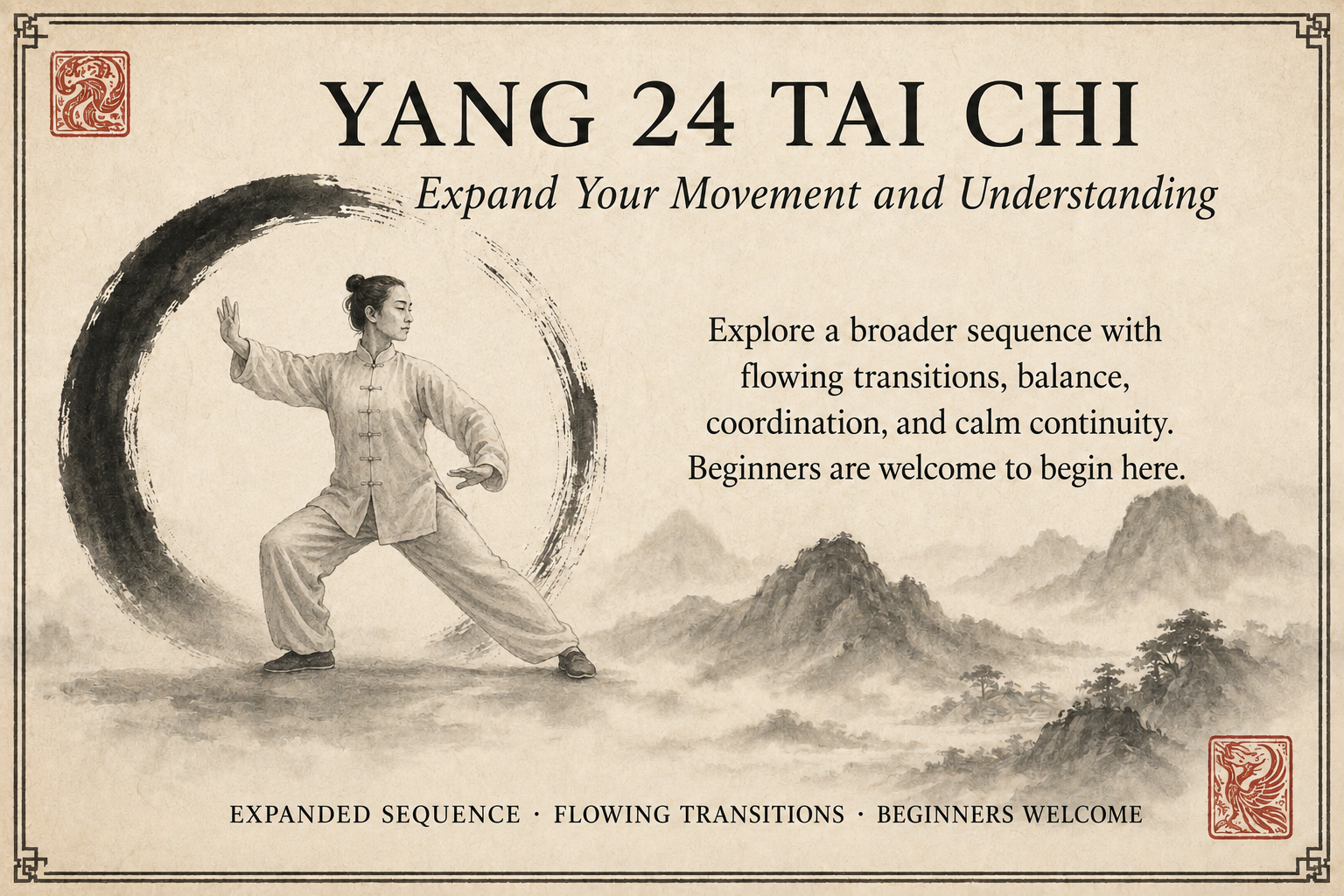
Yang 24
Broaden the Practice
Yang 24 expands the sequence with additional postures, transitions, and changes of direction.
The longer form gives you more opportunities to explore how individual movements connect while developing greater familiarity with balance, coordination, and sustained flow.
Yang 10 can provide a helpful foundation, but you are equally welcome to begin directly with Yang 24.
Tai Chi Fan
A Complementary Path
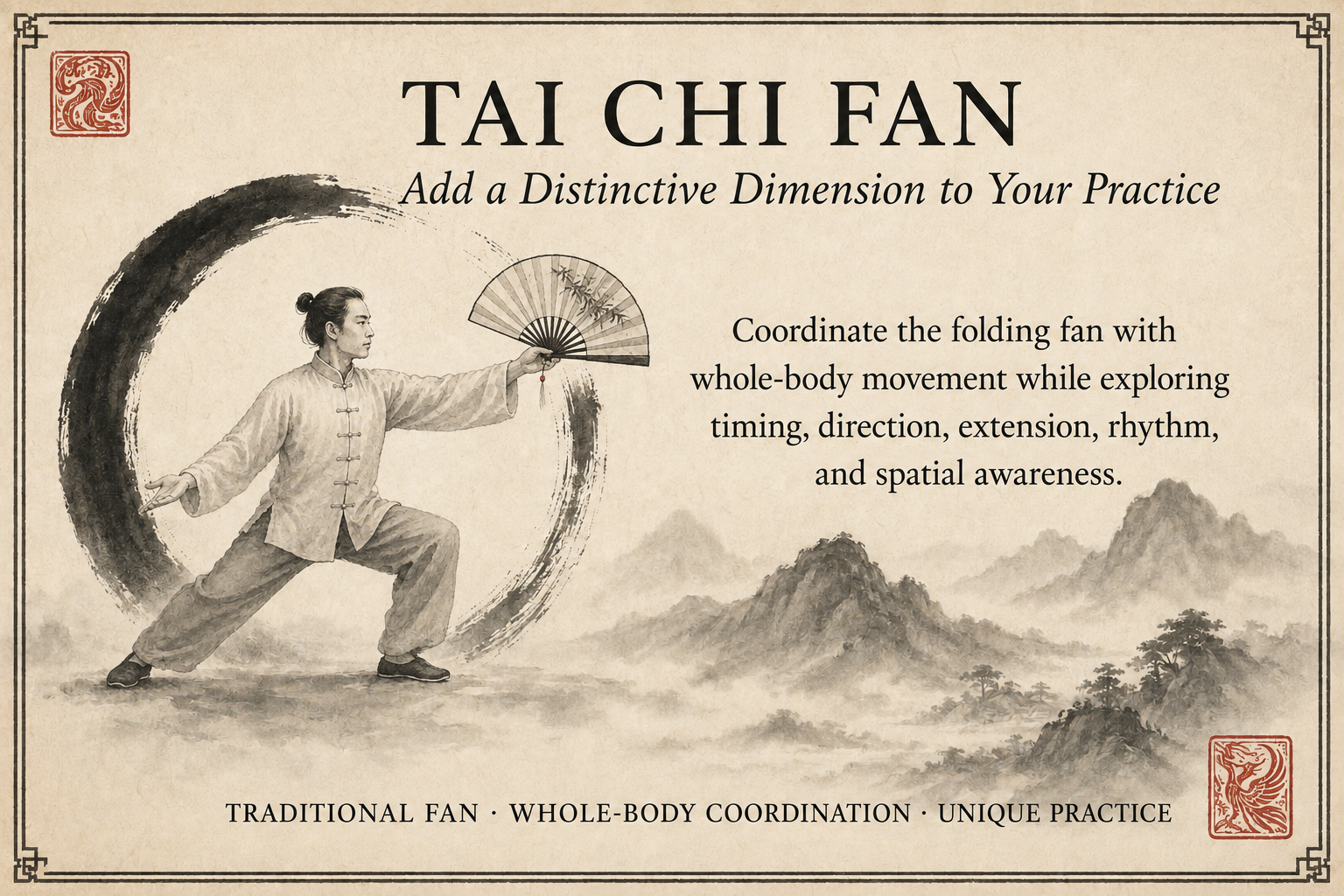
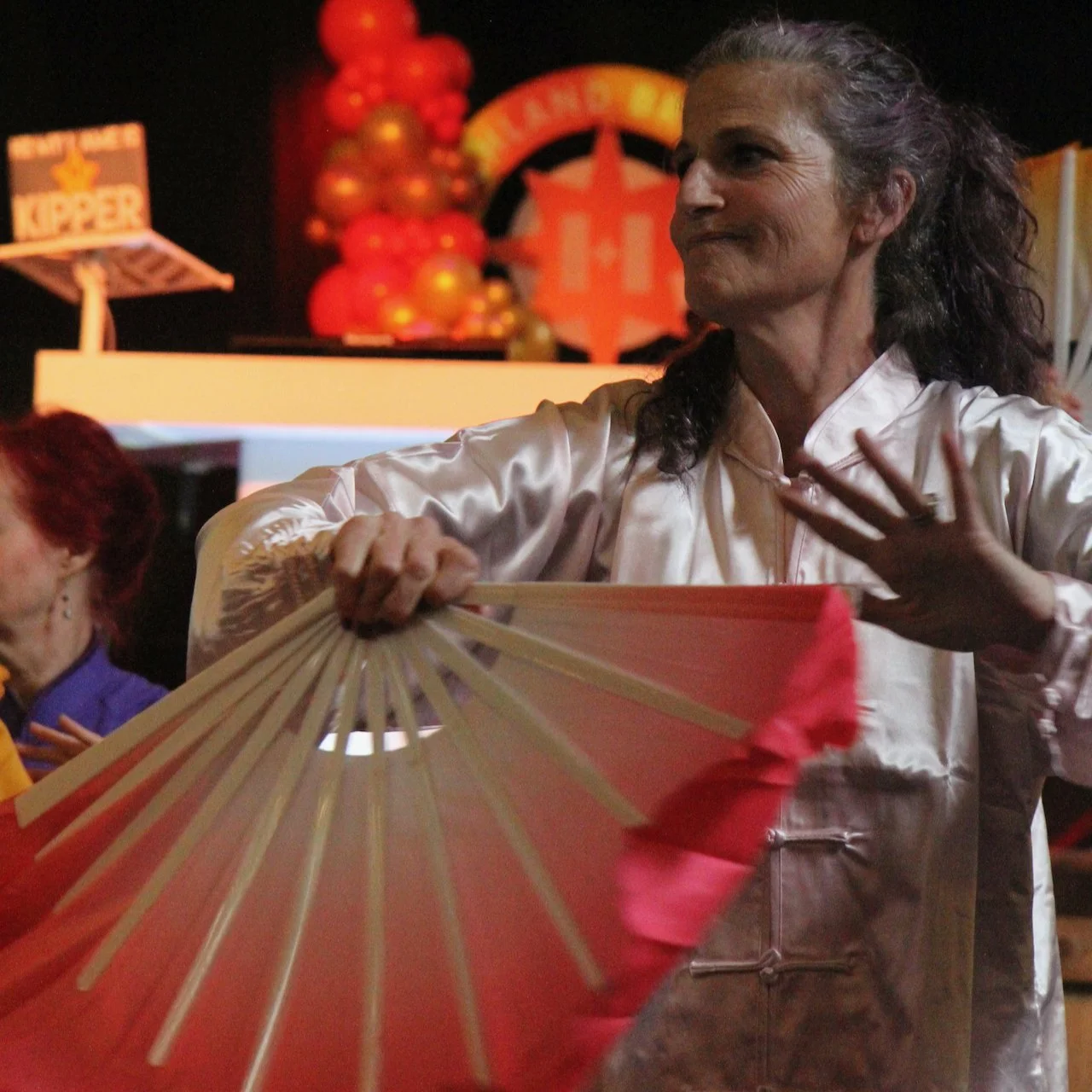
Tai Chi Fan is not another level in the Yang 10–24–37 progression. It is a complementary practice that adds the movement, structure, and expressive character of a traditional folding fan.
The fan introduces different challenges involving coordination, timing, extension, rhythm, and spatial awareness. It can enrich an existing Tai Chi practice while also providing an engaging place for a new student to begin.
Let the Classes Strengthen One Another
You do not need to finish one form before exploring another. Practicing more than one can help you recognize shared principles in different movements and contexts.
You might use Yang 10 to refine the essentials, Yang 24 to explore a broader sequence, Yang 37 for deeper study, and Tai Chi Fan to encounter those same underlying qualities through a distinctive new medium.
Choose one class or combine several. Your path through the program can develop according to your interests, schedule, and pace.
DIFFERENT FORMS. SHARED PRINCIPLES.
The Qualities at the Heart of Yang Tai Chi
Yang 10, Yang 24, Yang 37, and Tai Chi Fan each have their own sequence, character, and challenges. Beneath those differences, however, they share the same essential approach to movement.
Across the four classes, students gradually learn to move with greater relaxation, stability, coordination, attention, and continuity. These qualities are not mastered all at once. They develop through patient repetition and continued exploration.
Relaxed, Natural Movement
Tai Chi does not rely on unnecessary muscular tension or force. Students learn to release excess effort while maintaining the structure needed to move with control.
Relaxation does not mean becoming limp or collapsing. It means discovering how to remain supported without holding more tension than the movement requires.
Balanced Posture and Alignment
Each form provides opportunities to explore how the head, torso, hips, legs, and feet work together.
Developing clearer alignment can help the body feel more connected and supported as you shift, turn, extend, and change direction.
Deliberate Weight Shifting
Tai Chi places careful attention on how weight moves from one leg to the other.
Slow practice gives you time to recognize where your weight is, establish stability, and complete one transition before beginning the next. These skills appear throughout Yang 10, Yang 24, Yang 37, and Tai Chi Fan.
Whole-Body Coordination
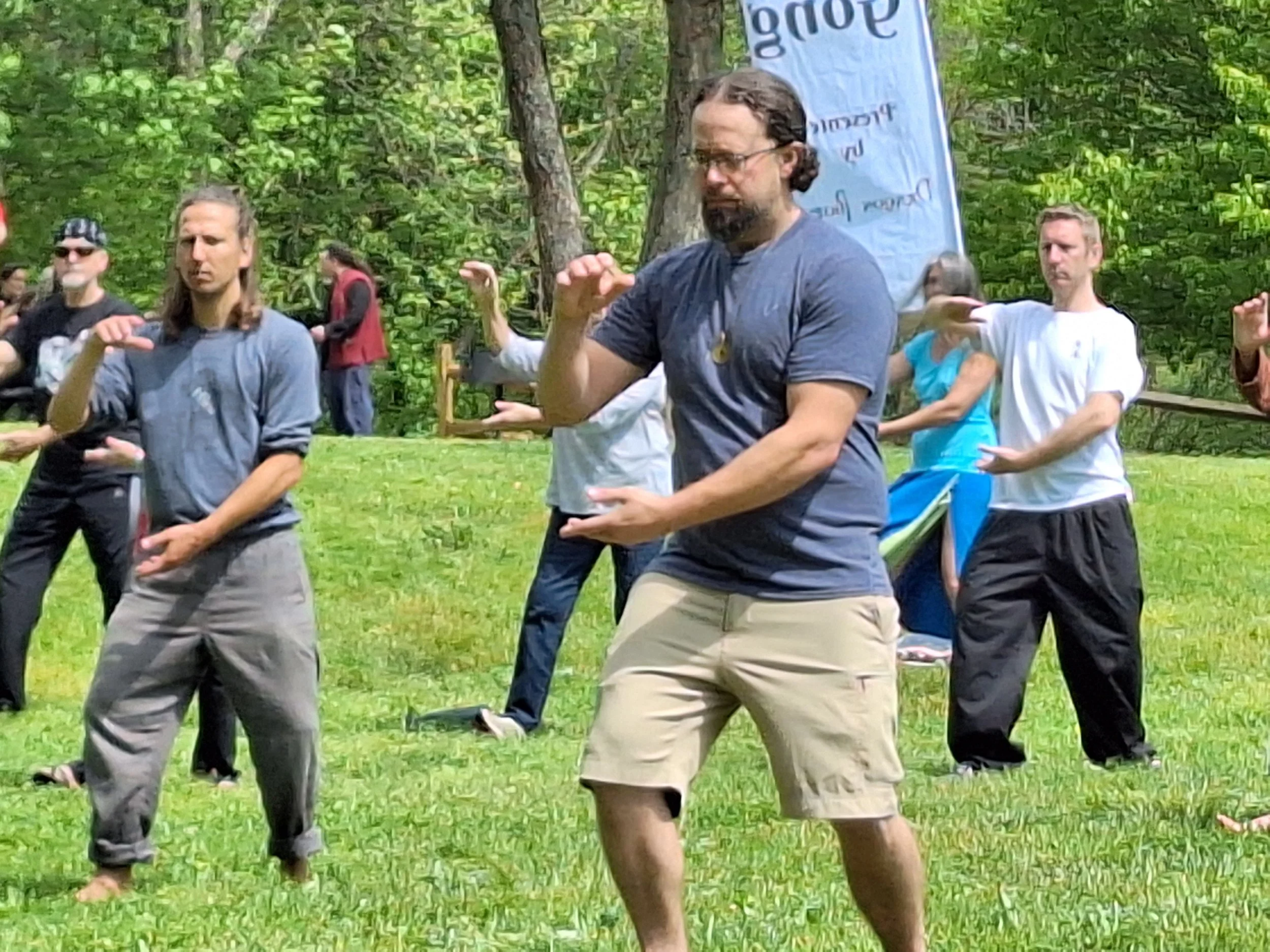
The arms do not move independently from the rest of the body. Each gesture is connected with the feet, legs, waist, torso, and direction of attention.
Tai Chi Fan makes this relationship especially visible: the fan must become part of the coordinated movement rather than something carried only by the hand.
Continuous Flow
A Tai Chi form is more than a collection of separate postures. Students learn how one movement develops into the next without unnecessary pauses, abrupt changes, or loss of awareness.
As the sequence becomes more familiar, the practice can feel increasingly smooth, connected, and unhurried.
Calm Attention
Remembering a sequence is only one part of learning Tai Chi. The practice also asks you to notice your posture, balance, breathing, direction, and quality of movement.
This sustained attention can turn even a familiar form into an ongoing process of discovery.
The Principles Deepen as You Practice
A shorter form is not necessarily a simpler or less meaningful practice. Yang 10 can provide a clear setting for refining the same qualities explored through the longer Yang 24 and Yang 37 forms.
Tai Chi Fan approaches those principles through an additional challenge: coordinating the body with a traditional folding fan.
Whichever class you choose, the underlying practice remains the same—move with awareness, reduce unnecessary effort, and allow coordination and understanding to develop over time.
Greater Balance and Stability
Tai Chi gives careful attention to posture, weight placement, and controlled transitions between the legs.
Practicing these skills slowly can help you become more aware of where your weight is and how to remain supported while stepping, turning, or changing direction.
Calm and Mental Focus
Tai Chi invites you to place your attention on one movement at a time.
Following the form can provide a welcome pause from hurried thoughts and daily distractions. Coordinating movement, breathing, balance, and direction encourages a calm but attentive state of mind.
A Sustainable Form of Exercise
Tai Chi does not depend on speed, competition, or exhausting effort. Movements can be made smaller, and students are encouraged to work within a range that feels appropriate for their bodies.
This makes Yang Tai Chi a practice that can continue evolving with you through different stages of life.
GENTLE MOVEMENT. LASTING DEVELOPMENT.
Benefits That Grow Through Regular Practice
Yang Tai Chi offers a calm, low-impact way to care for both body and mind. Its movements can be adapted to different experience levels, allowing students to practice comfortably while continuing to discover greater depth over time.
Every person’s experience is different, and progress develops gradually. With regular practice, students may notice meaningful changes in how they move, focus, and respond to the demands of everyday life.
Improved Coordination
Each movement asks the arms, legs, torso, eyes, and attention to work together.
As the forms become more familiar, students often develop a stronger sense of how the body moves as one connected whole. Tai Chi Fan adds another engaging coordination challenge by extending that connection through the fan.
Stronger Legs and Postural Support
The forms require the legs to support gradual weight shifts while the upper body remains upright and relaxed.
Over time, this repeated practice can help develop the strength and endurance needed to move with greater control while encouraging a more supported and balanced posture.
Comfortable Mobility
Yang Tai Chi explores reaching, turning, shifting, and stepping through smooth, unhurried movement.
Regular practice can help maintain mobility and encourage a more comfortable range of motion without forcing the body into extreme positions.
Memory and Continued Learning
Learning a Tai Chi form provides an ongoing mental challenge as you remember movements, recognize patterns, and refine transitions.
Yang 10 offers a concise sequence, while Yang 24 and Yang 37 provide progressively more material to explore. Tai Chi Fan adds a different movement vocabulary and another rewarding way to keep learning.
More Than Learning a Sequence
The benefits of Tai Chi do not come from memorizing a form as quickly as possible. They develop through returning to the movements, noticing new details, and allowing greater comfort and coordination to emerge gradually.
Whether you practice Yang 10, Yang 24, Yang 37, Tai Chi Fan, or a combination of all four, each class offers another opportunity to move with greater awareness and care.
A WELCOMING PRACTICE WITH ROOM TO GROW
Begin with the Class That Speaks to You
Yang Tai Chi welcomes people with many different interests, abilities, and levels of experience. Some students are looking for a gentle way to become more active. Others are drawn to the forms themselves, the meditative quality of practice, or the opportunity to continue exploring Tai Chi over many years.
You do not need to be flexible, athletic, coordinated, or familiar with Chinese martial arts before beginning. The movements are learned gradually, and each class gives you room to work at your own pace.
Experienced Tai Chi Practitioners
Students with prior experience are welcome to explore another form, revisit foundational principles, or learn from a different teaching perspective.
A shorter form such as Yang 10 can offer valuable opportunities to refine posture, relaxation, weight shifting, and continuity. Longer forms and Tai Chi Fan introduce additional sequences, challenges, and details to investigate.
Students Who Enjoy Continued Learning
Tai Chi can begin as a gentle movement practice and gradually become a lifelong field of study.
Yang 10 provides a concise sequence to refine, while Yang 24 and Yang 37 offer progressively more material to remember and explore. Tai Chi Fan introduces another layer of coordination through the use of a traditional folding fan.
There is always another detail to notice, question to ask, or quality of movement to develop.
People Looking for Calm, Focused Time
Tai Chi asks you to slow down and give sustained attention to the movement in front of you.
For students whose daily lives feel hurried or mentally crowded, class can provide a regular opportunity to move without rushing, set aside distractions, and return attention to the body.
Complete Beginners
Every class welcomes new students, including people who have never practiced Tai Chi before.
Beginner’s Yang 10 offers the shortest and most approachable sequence, but it is not the only suitable starting point. You may begin with Yang 24, Yang 37, or Tai Chi Fan if one of those practices interests you more.
Students Seeking Gentle, Low-Impact Movement
Yang Tai Chi uses slow, deliberate movements that can be adjusted to suit different bodies and experience levels.
The practice offers an opportunity to explore balance, posture, coordination, mobility, and comfortable movement without the speed or intensity found in many other forms of exercise.
Older Adults
Many older adults appreciate Tai Chi because it allows them to remain active while moving carefully and attentively.
You do not need to keep pace with younger students or perform every movement at its fullest range. Your instructor can help you explore smaller or more comfortable versions when appropriate.
Returning Students
If you practiced Tai Chi in the past, these classes offer a welcoming way to begin again.
You may return through the concise Yang 10 form, revisit Yang 24, explore Cheng Man-Ching’s Yang 37, or encounter the principles through the distinctive movement of Tai Chi Fan. Previous experience does not need to be recent.
You Are Not Expected to Arrive Prepared
You do not need to memorize movements before attending, purchase special clothing, or decide how far you intend to progress.
Choose the class that best fits your curiosity and schedule. You may remain with one form, explore several, or allow your interests to change as your experience grows.
The most important qualification is simply a willingness to begin.
PATIENT INSTRUCTION. STEADY REPETITION.
What Happens in a Yang Tai Chi Class?
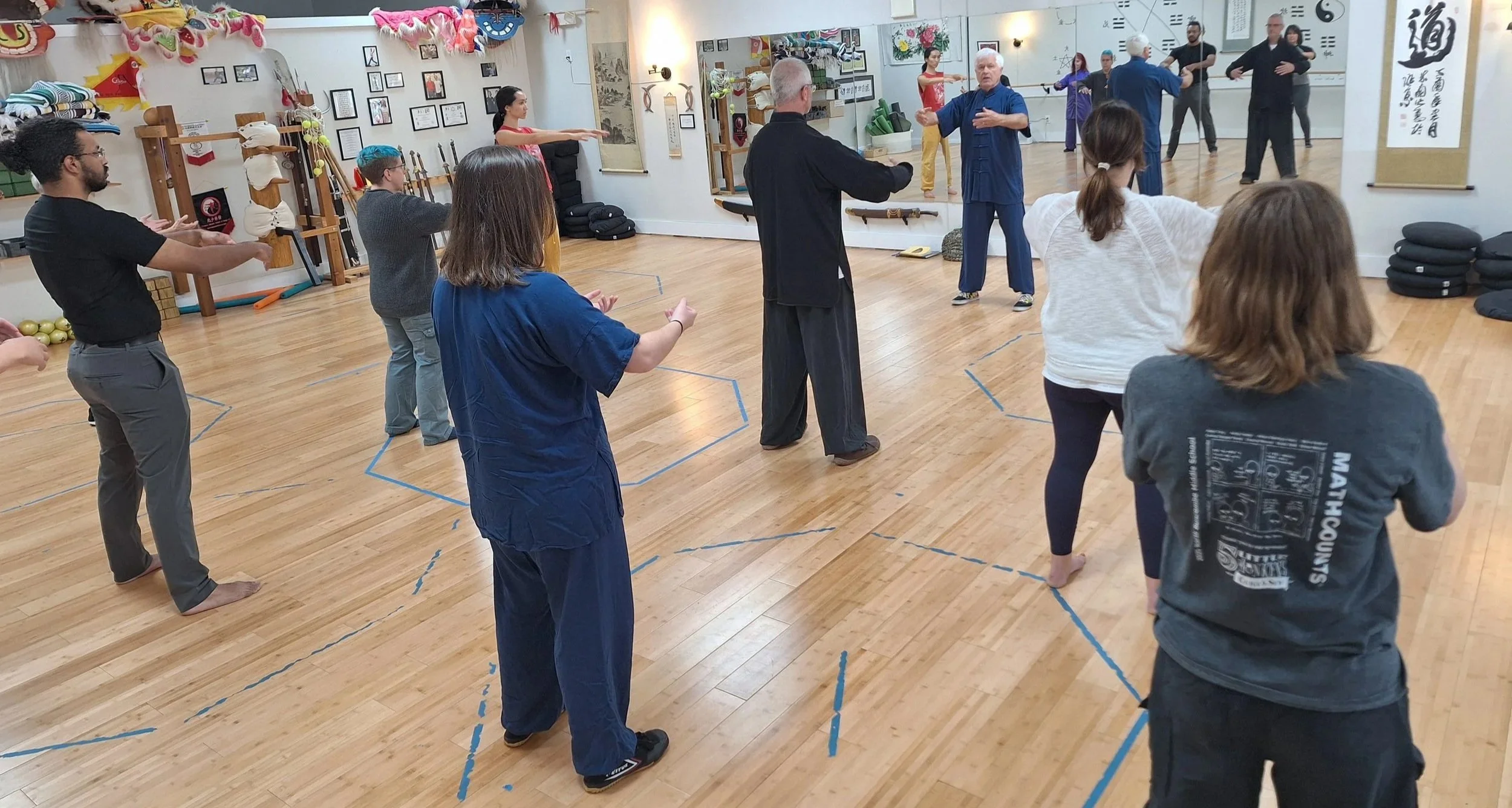
Each Yang Tai Chi class has its own form and teaching emphasis, but all four offer a patient environment where movements are introduced gradually and explored through repetition.
You are not expected to arrive knowing the sequence. Your instructor will demonstrate the movements, help you understand how they fit together, and give you time to become familiar with them at your own pace.
Arrive and Settle In
Class begins with time to become present and prepare the body for attentive movement.
Depending on the class and instructor, this may include comfortable standing, gentle warm-ups, foundational exercises, or simple movements that encourage relaxation, posture, balance, and awareness.
Follow Along Without Pressure
New and experienced students often practice together. Returning students use repetition to refine familiar movements, while newcomers begin learning the portion that is currently being taught.
It is perfectly acceptable if you cannot remember everything immediately. Following along, observing, and becoming more comfortable with the movement are all meaningful parts of learning.
Practice the Form
Classes include time to connect individual movements into longer passages or practice the form as a continuous sequence.
In Yang 10, this may allow frequent repetition of the complete shorter form. Yang 24 and Yang 37 offer progressively longer sequences, while Tai Chi Fan combines Tai Chi movement with the handling and coordination of a traditional folding fan.
Learn One Part at a Time
Rather than expecting students to absorb an entire form at once, instructors break the sequence into manageable sections.
You may work with a single posture, transition, or short series of movements before connecting it with material you have already practiced.
Explore the Details
As movements become more familiar, your instructor may draw attention to details such as:
Posture and alignment
Relaxation without collapsing
Weight placement and shifting
Coordination of the upper and lower body
Direction and quality of attention
Smooth connections between movements
These principles can be explored at every stage of practice. Even a movement you have performed many times can continue revealing something new.
Receive Individual Guidance
Your instructor may offer corrections, answer questions, or suggest a more comfortable way to approach a movement.
Corrections are part of the learning process, not a judgment of your ability. They help you develop greater clarity, comfort, and coordination over time.
Tai Chi Fan Adds Another Layer
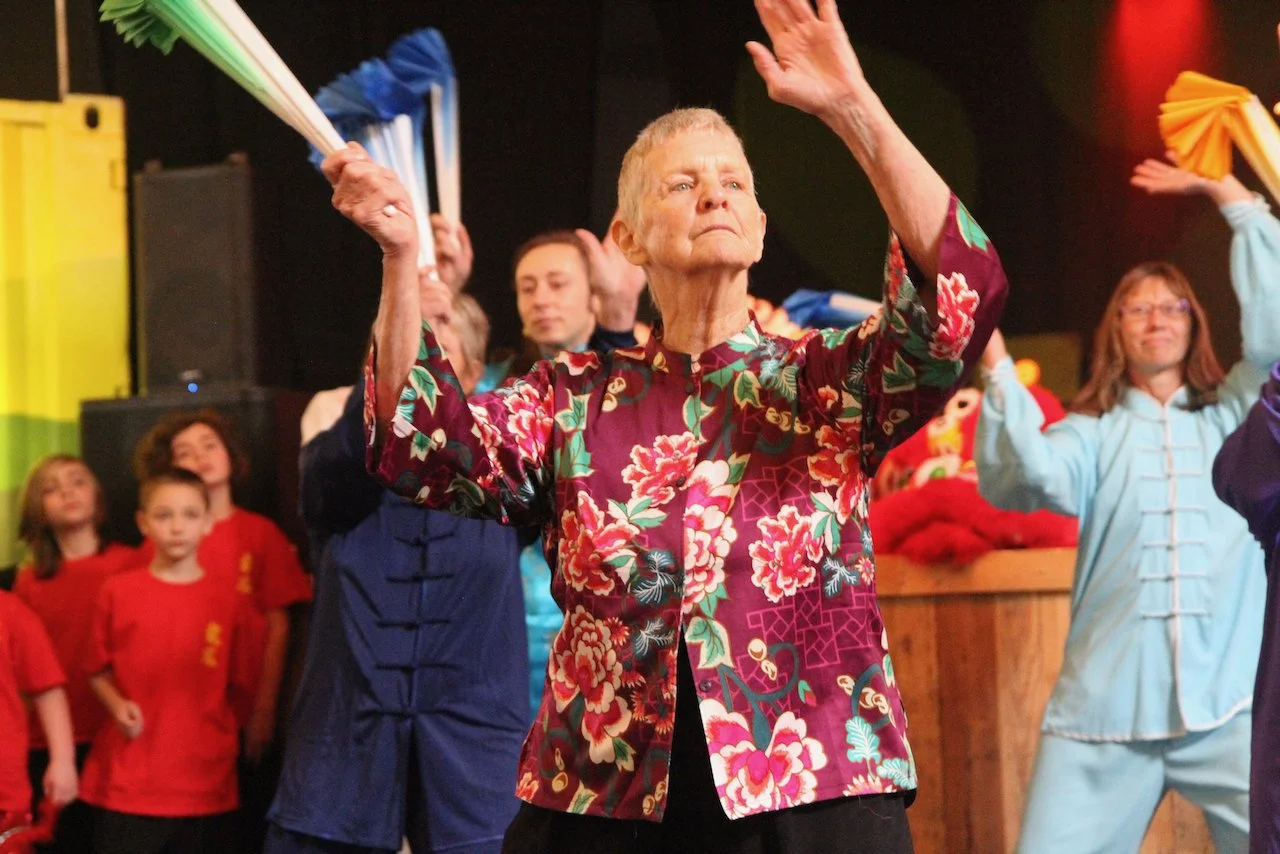
Tai Chi Fan classes include the same patient process of demonstration, repetition, and gradual refinement, along with learning how the fan relates to the movement of the whole body.
Students explore how to hold, position, open, close, and direct the fan while maintaining balance, continuity, and coordinated movement.
Work at Your Own Pace
You are welcome to make movements smaller, pause when needed, and ask questions when something is unclear.
There is no competition and no expectation that everyone move identically. Each student works with the same underlying principles while respecting their own experience and physical abilities.
Repetition Is Part of the Practice
Tai Chi is learned through returning to the movements again and again. You do not need to master everything quickly or perform the sequence perfectly.
With each class, the movements can become more familiar—and that familiarity creates room for deeper attention, greater ease, and continued discovery.
EXPERIENCED TEACHERS. WELCOMING GUIDANCE.
Meet Your Yang Tai Chi Instructors
Each Yang Tai Chi class is guided by an instructor who brings personal experience, careful observation, and a distinct teaching voice to the practice.
Whether you begin with a shorter form, explore a longer sequence, or add the traditional fan, you will receive patient instruction and room to learn at your own pace.

Liz Ridley
Tai Chi Fan
Liz has studied Chinese martial arts since the late 1990s and has taught Tai Chi in community, medical, university, martial arts, yoga, and retirement settings throughout the Asheville area.
Her background also includes Qigong, Pilates, aquatic exercise, and several styles of Tai Chi. In Tai Chi Fan, she combines traditional principles with the graceful and expressive movement of single- and double-fan forms.
Liz creates an accessible environment where beginners can enjoy the artistry of the fan while gradually developing balance, concentration, coordination, and fluidity.
Traditional fan forms · Expressive movement · Beginners welcome



Susan Francis
Beginner’s Yang 10 and Yang 24
Susan teaches Yang-style Tai Chi as a conscious movement practice that brings the body, breathing, and attention together.
Her instruction emphasizes grounding, posture, relaxed weight shifting, coordination, and continuous movement. She helps beginners become comfortable with the essential qualities of Tai Chi while giving returning students opportunities to refine familiar movements more deeply.
Through Yang 10 and Yang 24, Susan offers students a welcoming path from their first movements into a broader and more detailed form.
Patient instruction · Conscious movement · Strong foundations
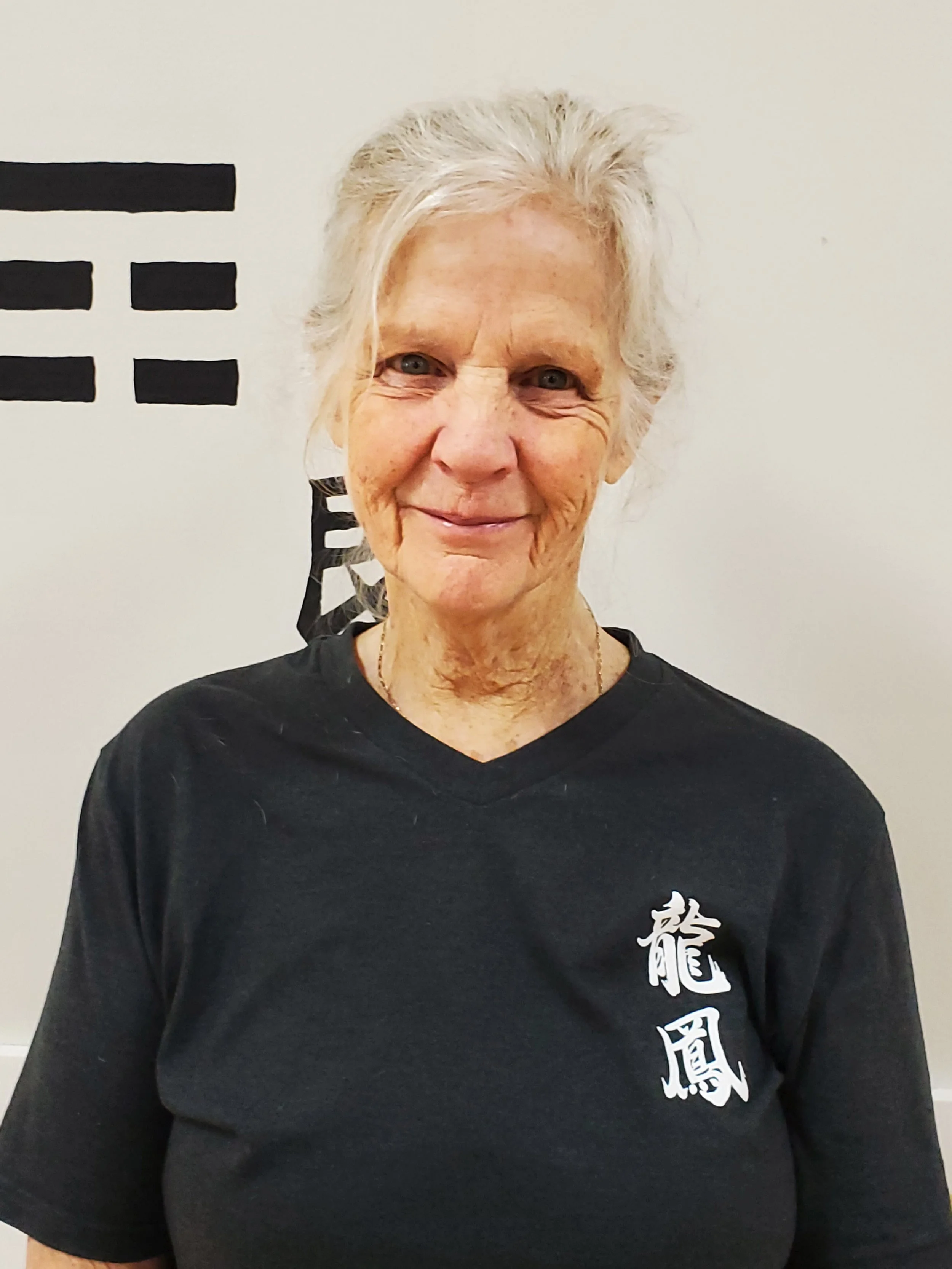
The Yang 37 Teaching Team
Dale Kent, Avi, and Ken Ryder
Cheng Man-Ching’s Yang 37 is led by Dale, Avi, and Ken. Sharing the instruction allows students to encounter different observations, explanations, and perspectives while continuing to explore the same form.
Dale Kent
Dale began exploring Qigong in 1997 while living in a Zen Buddhist monastery and has taught Tai Chi and Qigong for approximately 17 years.
His relaxed and encouraging teaching style emphasizes grounded movement, mind-body connection, and patient practice. Dale’s experience with Cheng Man-Ching-lineage Tai Chi and moving meditation contributes a calm, thoughtful perspective to the study of Yang 37.
Avi Schneier
Avi shares the teaching of Yang 37 with Dale and Ken, helping students work through the form through steady repetition, attentive observation, and continued refinement.
Having several instructors gives students more than one way to understand a movement and creates additional opportunities for individual guidance.
Ken Ryder
Ken began practicing Qigong and Shaolin Kung Fu in 2010 while rehabilitating his body from significant pain. In 2014, he began studying Yang 37 with Paul Summey and eventually became one of his senior students, helping newer students learn the form.
Ken teaches from personal experience of how consistent internal-arts practice can support resilience, mobility, and a renewed relationship with the body. His instruction encourages students to explore posture, continuity, breathing, meditation, and internal awareness within the longer Yang 37 sequence.
Different Voices, One Supportive Practice
Every instructor brings a different history and way of explaining Tai Chi. Experiencing these perspectives can help students discover new details, find explanations that resonate with them, and recognize the principles shared across all four classes.
You are welcome to learn from several instructors and allow the different classes to strengthen one another. Wherever you begin, you will find thoughtful guidance and a supportive place to continue growing.
FOUR CLASSES. ONE FLEXIBLE DROP-IN PROGRAM.
Choose Your Yang Tai Chi Class
All four Yang Tai Chi classes are part of the Dragon Phoenix Drop-In Program. No ongoing membership is required, and beginners may join any class.
Beginner’s Yang 10
Thursdays · 11:30 AM–12:30 PM
Taught by Susan Francis
An approachable introduction to Yang-style Tai Chi through a concise form, foundational exercises, and patient instruction.
Yang 24 Tai Chi
Fridays · 10:00–11:00 AM
Taught by Susan Francis
A broader sequence offering additional postures, transitions, and opportunities to explore the details of continuous movement.
Cheng Man-Ching’s
Yang 37
Saturdays · 8:30–9:45 AM
Taught by Dale, Avi, and Ken
An extended traditional form offering greater depth while remaining open to students who are completely new to the practice.
Attend One Class—or Explore All Four
You are not restricted to a single class or level. Choose the practice that interests you, follow the natural progression from Yang 10 through Yang 24 and Yang 37, or combine the hand forms with Tai Chi Fan.
Book a Single Class
$20 per class
Choose your class and date through the live schedule and complete the reservation directly.
You do not need to purchase a membership or visitor pass first. The booking system will charge the regular $20 rate when you reserve your place.
Please do not purchase a separate visitor pass before booking a single class. Doing so may result in an unnecessary duplicate charge.
Tai Chi Fan
Wednesdays · 1:00–2:00 PM
Taught by Liz Ridley
A distinctive practice combining Tai Chi principles with graceful single- and double-fan movement. Fans are available for students who do not have their own.
Choose the Flexible 10-Class Pass
$180 for 10 classes · $18 per class
The flexible pass:
Does not expire
Works across participating Dragon Phoenix drop-in classes
May be shared within the same Gymdesk family account
Saves $20 compared with purchasing ten individual classes
Purchase the pass through Gymdesk first, then return to the live schedule whenever you are ready to reserve a class.
Begin with the Option That Works for You
Many new students begin with one class and purchase the pass later after deciding which practices they would like to attend regularly.
Advance booking is strongly recommended. The live schedule displays the most current availability, including any changes around holidays, events, or instructor absences.
QUESTIONS BEFORE YOUR FIRST CLASS
Yang Tai Chi Frequently Asked Questions
I have never practiced Tai Chi. Which class should I choose?
You are welcome in any of the four classes.
Beginner’s Yang 10 provides the shortest and most approachable introduction, but you may begin with Yang 24, Yang 37, or Tai Chi Fan if another practice interests you more or better fits your schedule.
Do I need to complete Yang 10 before attending Yang 24 or Yang 37?
No. Yang 10, Yang 24, and Yang 37 form a natural progression, but they are not restricted levels.
There are no prerequisites, advancement tests, or requirements for moving between the classes. You may begin wherever you like.
Can I attend more than one Yang Tai Chi class?
Yes. You may focus on one form or attend several classes together.
Practicing multiple forms can help you recognize the same principles—relaxation, balance, coordination, weight shifting, and continuity—in different sequences and movement patterns.
What is the difference between Yang 10, Yang 24, and Yang 37?
Yang 10 is the shortest sequence and provides a concise introduction to Yang-style Tai Chi.
Yang 24 expands the practice with additional postures, transitions, and changes of direction. Cheng Man-Ching’s Yang 37 offers a longer traditional form with greater room for detailed exploration.
A longer form is not necessarily more advanced in every respect. Each sequence can become a deep and rewarding practice in its own right.
Is Tai Chi Fan part of the Yang 10–24–37 progression?
Tai Chi Fan is a complementary practice rather than another level in the progression.
It applies Tai Chi qualities through the use of a traditional folding fan, introducing additional challenges involving timing, rhythm, coordination, extension, and spatial awareness.
Previous Tai Chi experience is not required.
Do I need to bring my own fan?
No. Fans are available for students who do not have their own.
Your instructor will introduce how to hold, position, open, close, and move the fan as part of the form.
Do I need to be flexible, coordinated, or in good physical condition?
No. You do not need to arrive with any particular level of flexibility, balance, strength, or coordination.
The movements are introduced gradually and can be made smaller when needed. Students are encouraged to work within a comfortable range and allow their abilities to develop through regular practice.
If you have a health condition or specific concern about participating, consult your healthcare professional when appropriate and let the instructor know before class.
What should I wear?
Wear comfortable clothing that allows you to step, turn, and move your arms freely. No uniform or special Tai Chi clothing is required.
Choose secure, comfortable footwear appropriate for gentle indoor movement.
How much does a class cost?
A single class is $20 and can be reserved directly through the live schedule.
Students who plan to attend regularly may purchase the $180 flexible 10-class pass. The pass does not expire, works across participating Dragon Phoenix drop-in classes, and may be shared within the same Gymdesk family account.
Do I need to purchase a membership?
No ongoing membership is required.
You may book individual classes for $20 each or purchase the flexible 10-class pass. If booking a single class, reserve it directly through the live schedule without purchasing a separate visitor pass first.
Should I reserve my place in advance?
Advance booking is strongly recommended.
The live schedule confirms availability and provides the most current information about class dates, holidays, events, and instructor absences.
Will I be expected to memorize the form before joining?
No. Your instructor will demonstrate the movements and guide the class through patient repetition.
New and returning students often practice together. You can begin by following along and learning the portion currently being taught. Familiarity and memory develop gradually.
BEGIN WHERE YOU ARE. GROW AT YOUR OWN PACE.
Your Yang Tai Chi Practice Can Begin Here
You do not need previous experience, special preparation, or a long-term plan before attending your first class.
Simply choose the practice that interests you most:
Begin comfortably with Yang 10
Explore a broader sequence through Yang 24
Discover the depth of Cheng Man-Ching’s Yang 37
Experience the distinctive movement of Tai Chi Fan
There is no wrong place to begin. Each class offers patient instruction, steady repetition, and the freedom to learn at a pace that feels right for you.
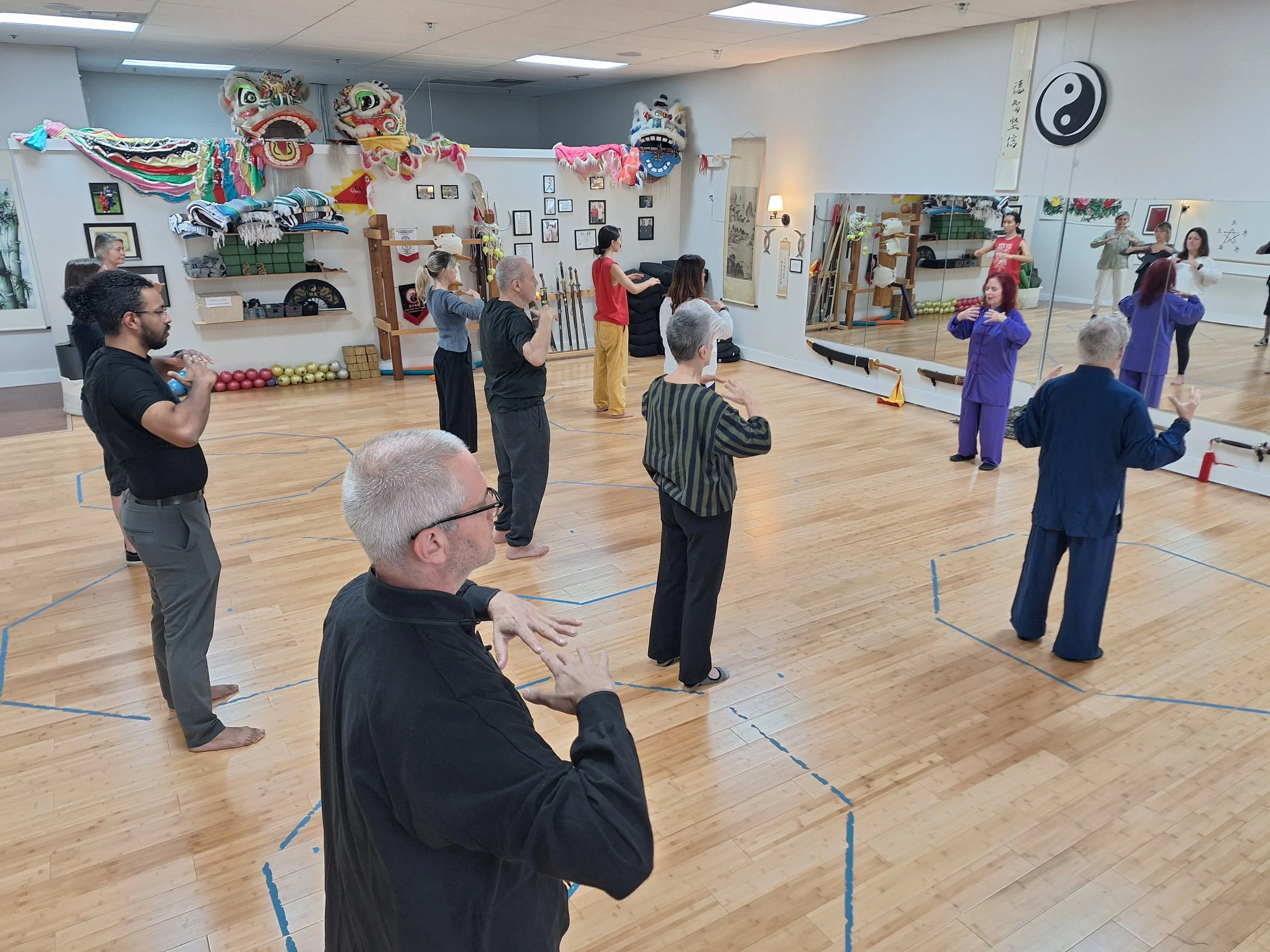
Come Experience a Class
Your first visit is an opportunity to meet the instructor, experience the teaching environment, and discover how Yang Tai Chi feels in your own body.
Book a single class for $20 with no ongoing membership required. If you decide to attend regularly, the flexible 10-class pass gives you the freedom to explore these and other participating Dragon Phoenix drop-in classes.
Whether you are beginning Tai Chi for the first time or returning to a practice you have known for years, you are warmly invited to join us.