

PLAYFUL MOVEMENT. REAL KUNG FU.
Kung Fu for Kids Ages 5–7 in Asheville
A Fun First Step into Kung Fu
Through movement, imagination, and patient practice, young children develop coordination, balance, focus, confidence, and positive learning habits while experiencing genuine kung fu foundations at a pace designed especially for them.

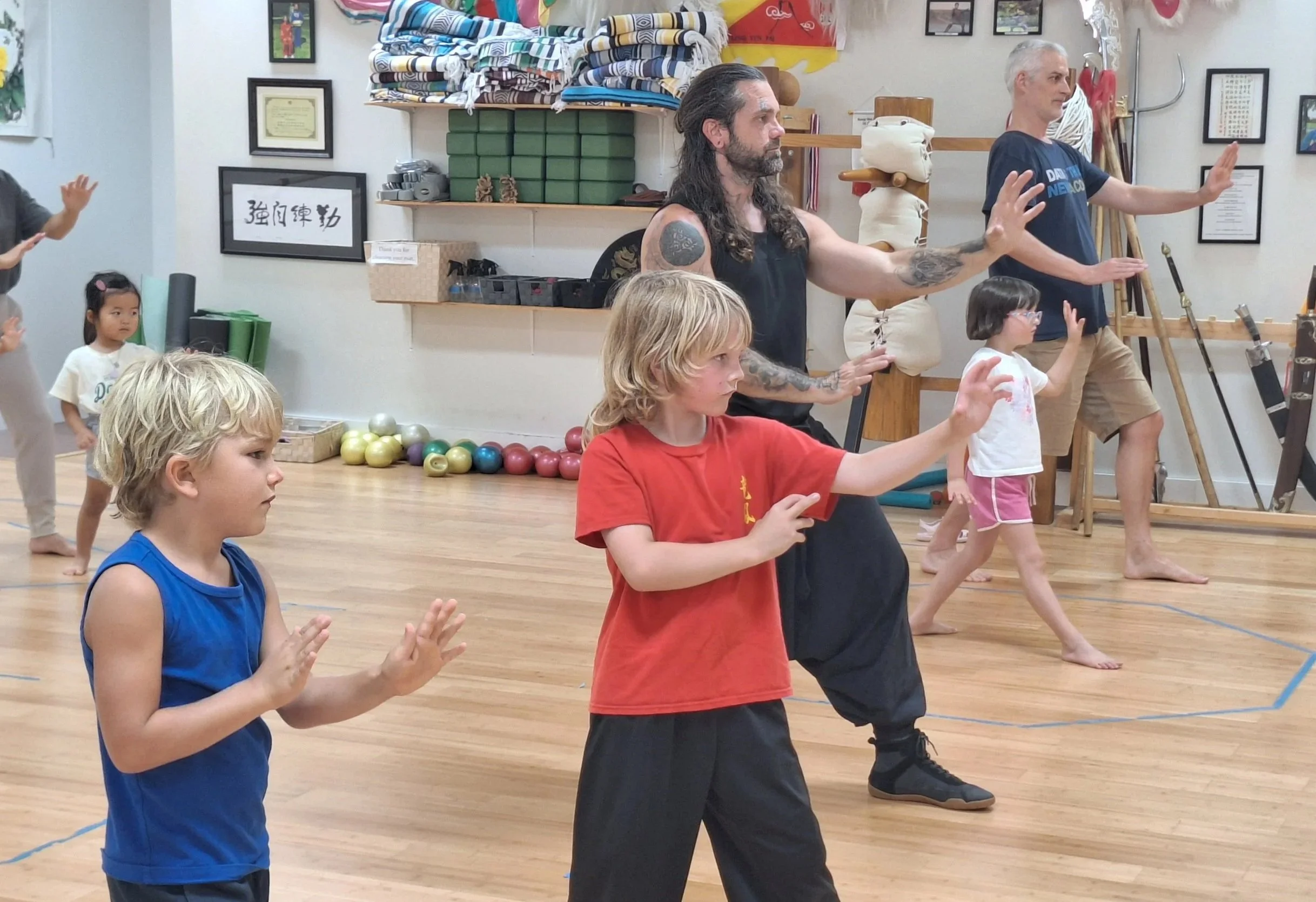
Wednesdays · 3:00–3:45 PM
$20 per class · Beginners welcome
Parents and caregivers are welcome to join the class at no additional charge, participate as much or as little as they like, or simply watch.
THE RIGHT CHALLENGE AT THE RIGHT AGE
A Kung Fu Class Created for Young Children
Five-, six-, and seven-year-olds do not learn in quite the same way as older children. They need opportunities to move, imagine, experiment, repeat, and succeed through activities that hold their interest.
This class was created specifically for them. It is not simply the older children’s curriculum shortened to fit into 45 minutes.
Short Activities Keep Children Engaged
The class moves through a variety of focused activities rather than asking children to concentrate on one exercise for an extended period.
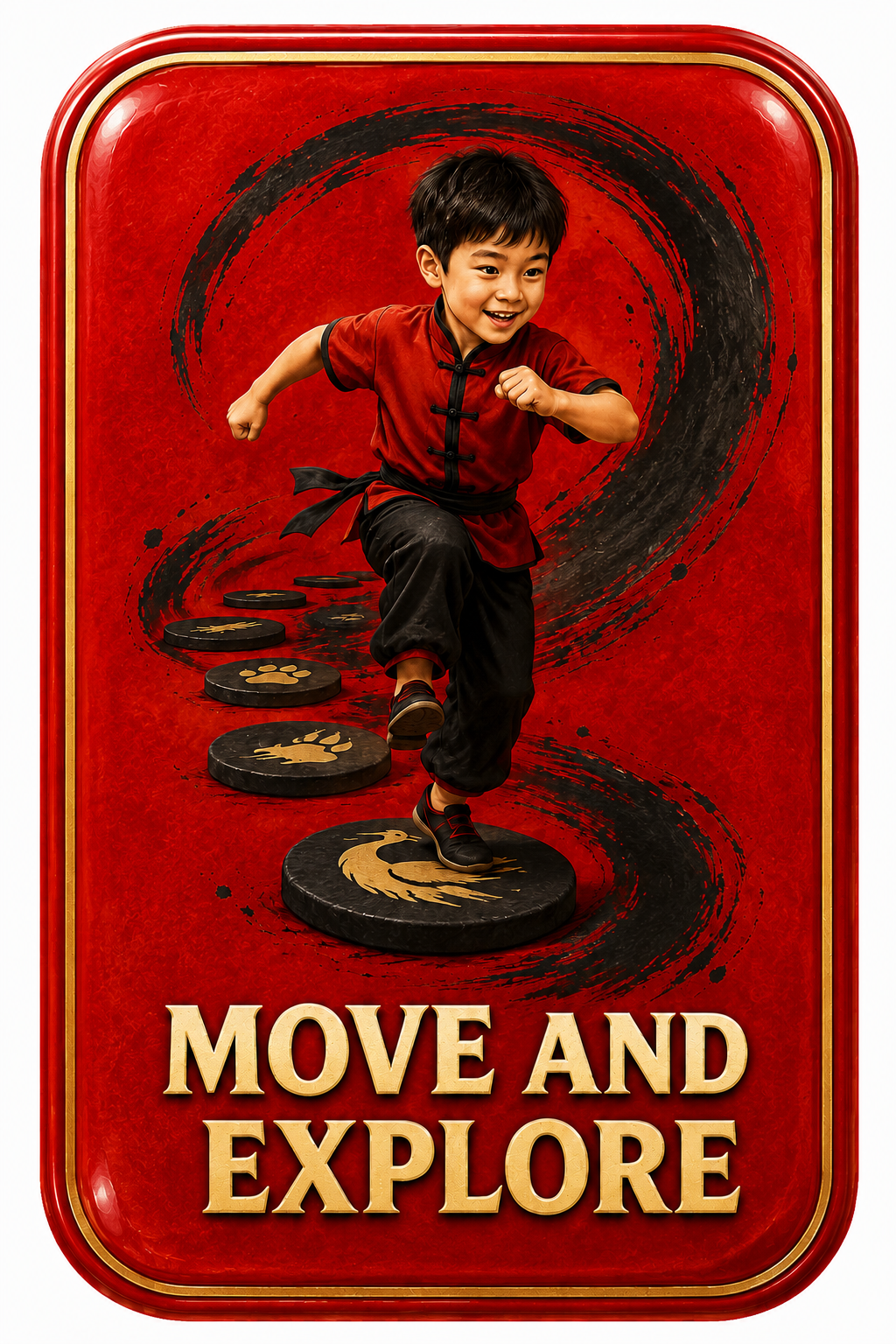
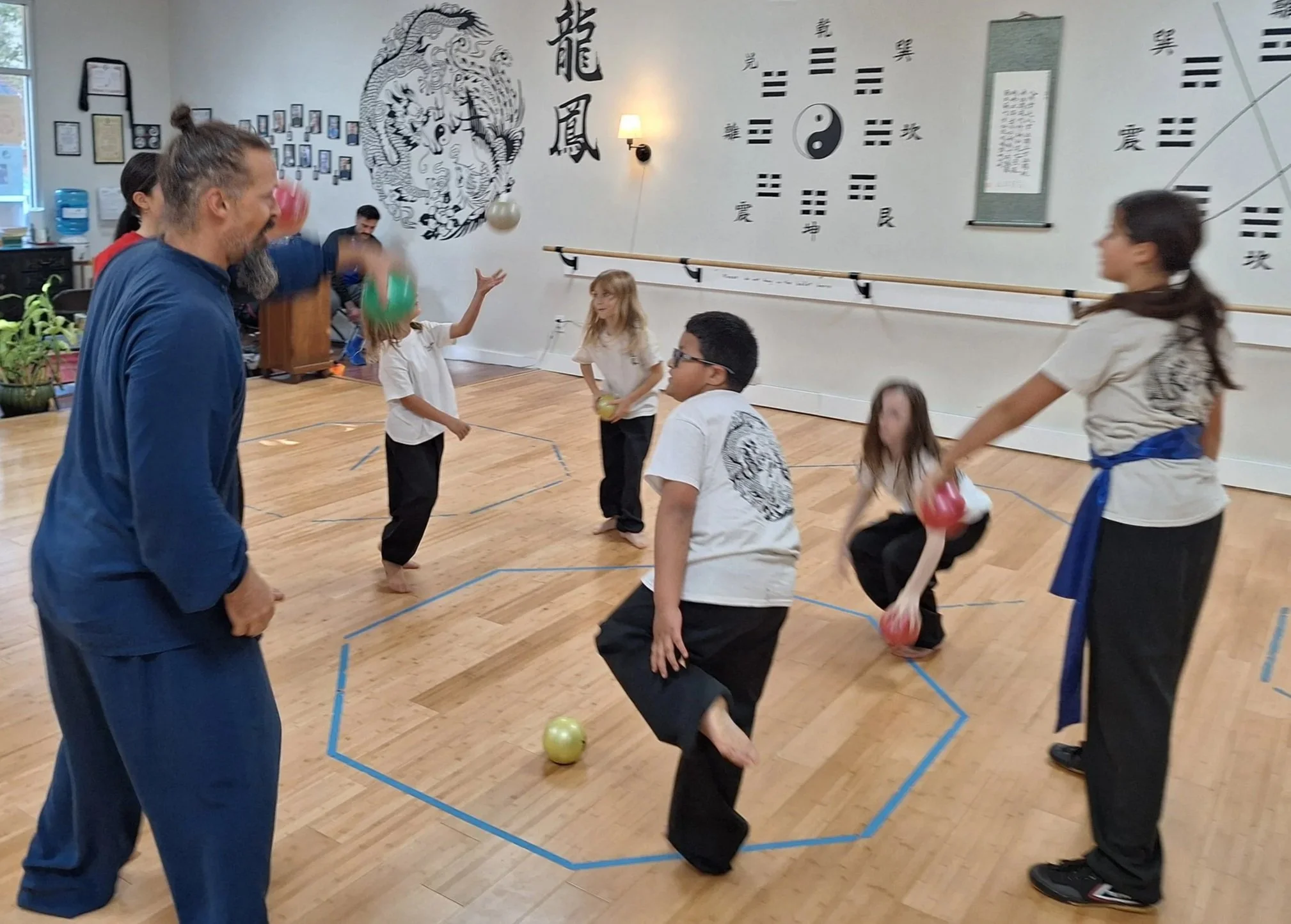
They may practice stances, imitate animal movements, work with a ball, strike the wooden man, explore a Xing Yi technique, or race across the floor like crabs, frogs, snakes, and monkeys.
Each activity gives them a new way to practice coordination, attention, effort, and control.
The Lesson Adapts to the Children
The instructors begin with a consistent lesson plan, but they do not force every group through an identical class.
Activities may be adjusted according to the children present, the energy of the group, and individual needs that day. Some children participate immediately, while others may need time to observe, become comfortable, and join at their own pace.
The goal is not perfect performance. It is to help each child practice working hard, trying again, and doing their very best.
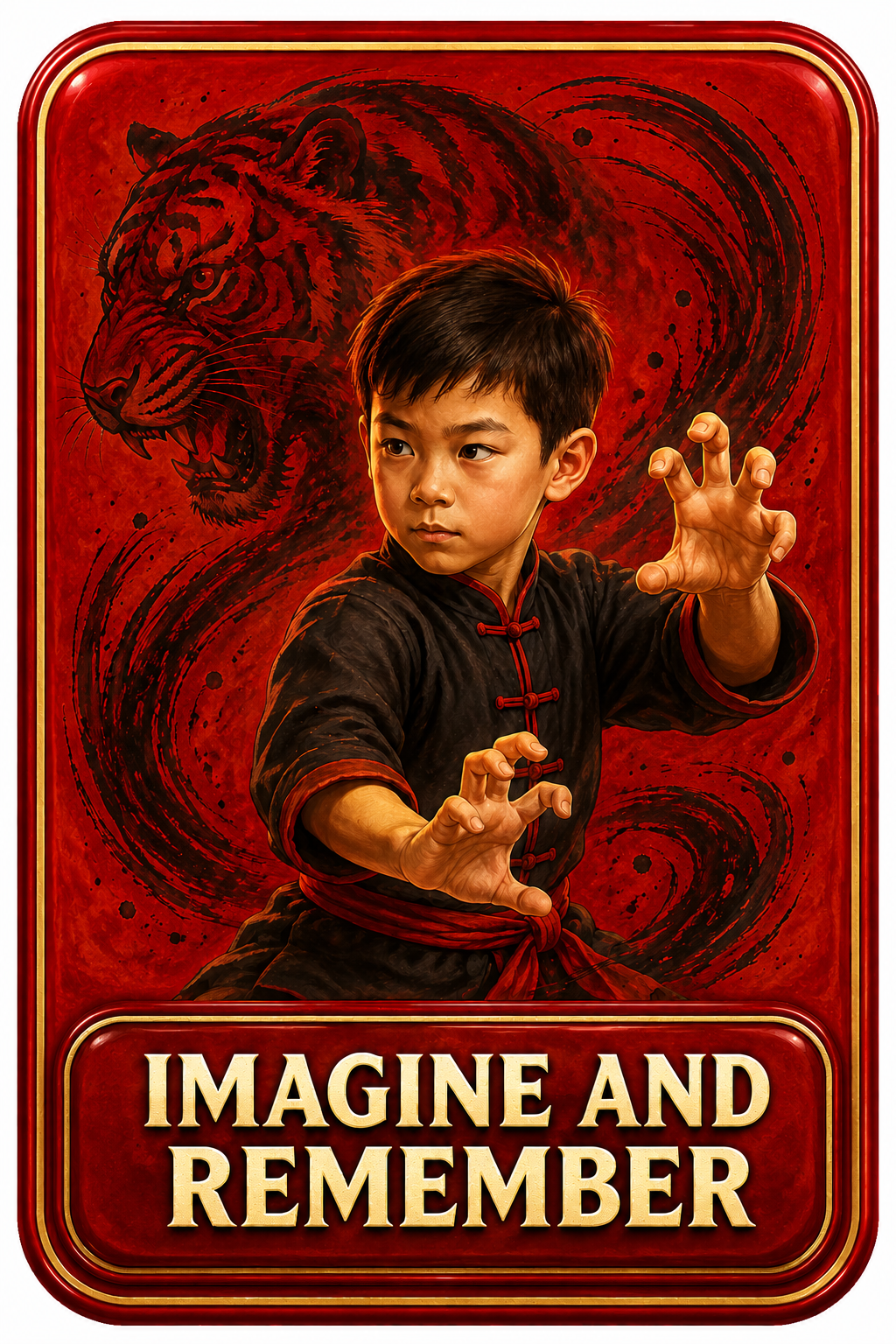
Imagination Makes the Movements Meaningful
Young children often understand an idea more easily when they can see it, feel it, or imagine it.
Standing meditation becomes a game of pretending to be invisible. Martial hand positions become the crane, tiger, mantis, eagle, snake, monkey, and phoenix eye. Movement races invite children to explore how different animals travel.
The play has a purpose: it helps children connect martial arts skills with experiences they can understand and remember.
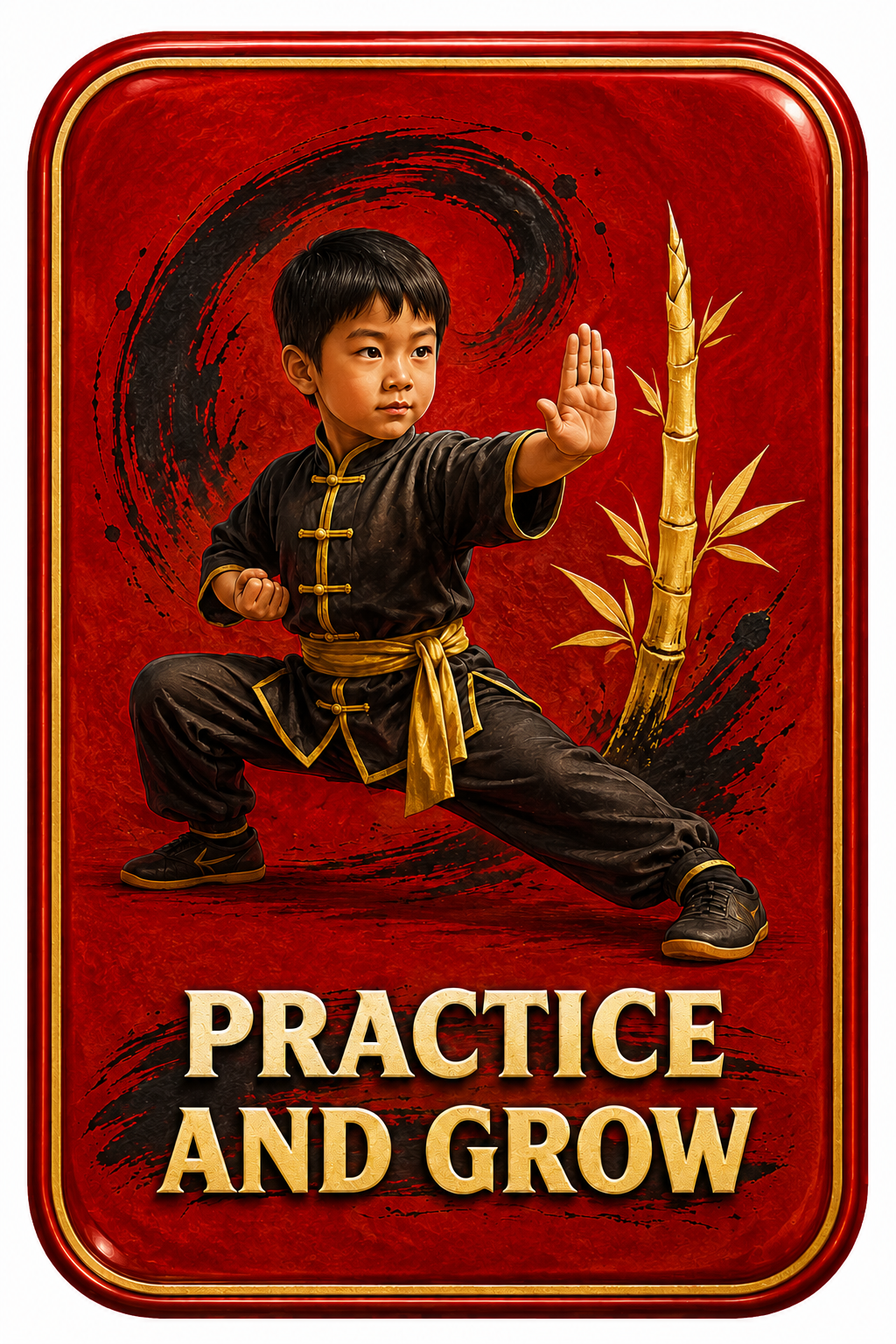
Repetition Builds Familiarity
The class follows a recognizable rhythm, including bowing in, saying the mission statement, stretching, meditation, stances, kung fu practice, coordination activities, animal movement, and a calm closing.
Returning to these elements each week helps children become more comfortable with the class, recognize what comes next, and gradually improve through practice.
Playful Does Not Mean Aimless
Every game, movement, and imaginative exercise supports a larger purpose.
Children are introduced to genuine kung fu foundations while developing the coordination, focus, confidence, and learning habits that will support them both inside and outside the training hall.
Whole-Body Coordination
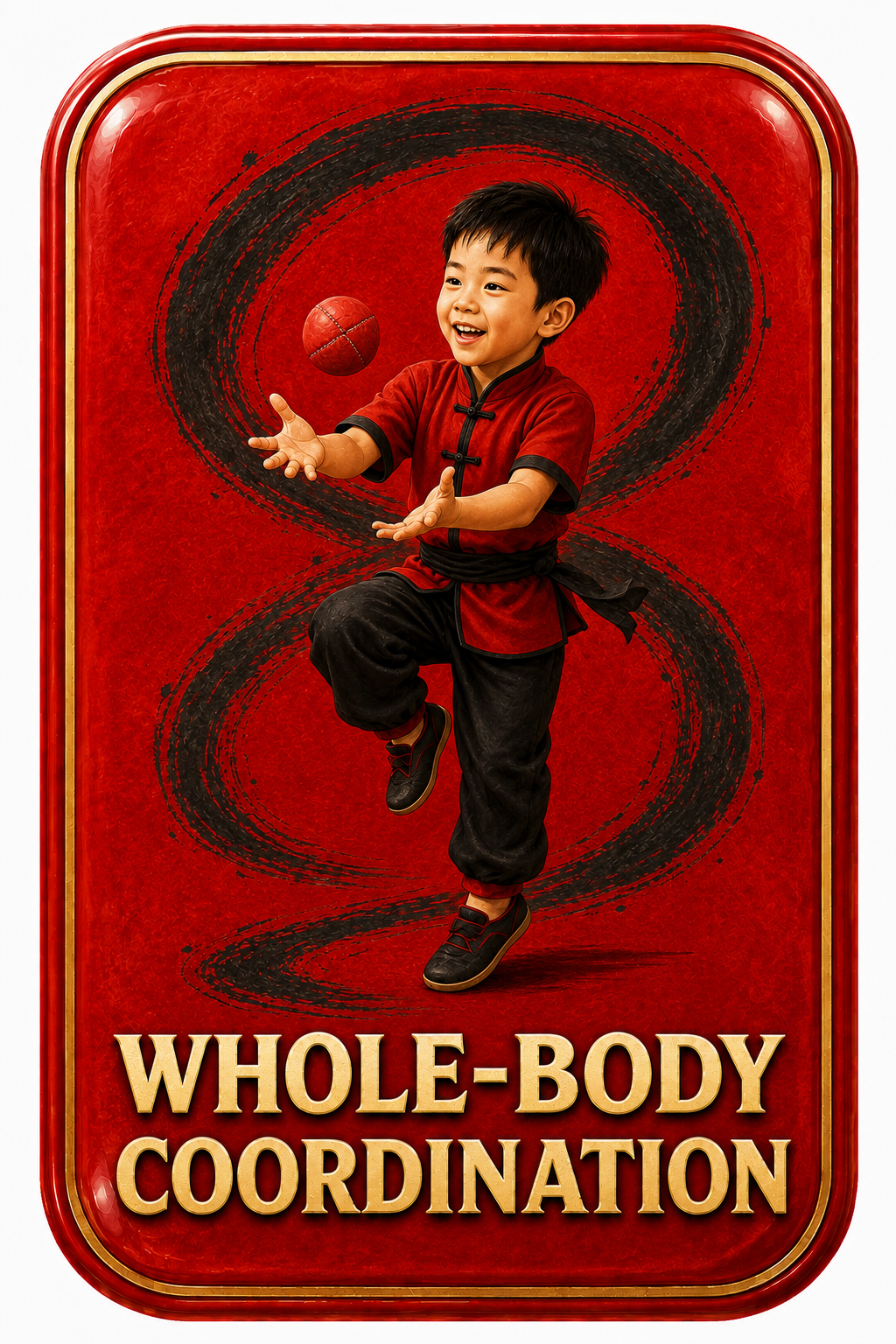
Ball exercises, animal movements, Rooster Stepping, hand shapes, and Xing Yi techniques ask children to coordinate their hands, feet, eyes, and attention.
Rolling, circling, catching, stepping, reaching, and changing direction help children become more comfortable organizing their bodies in motion.
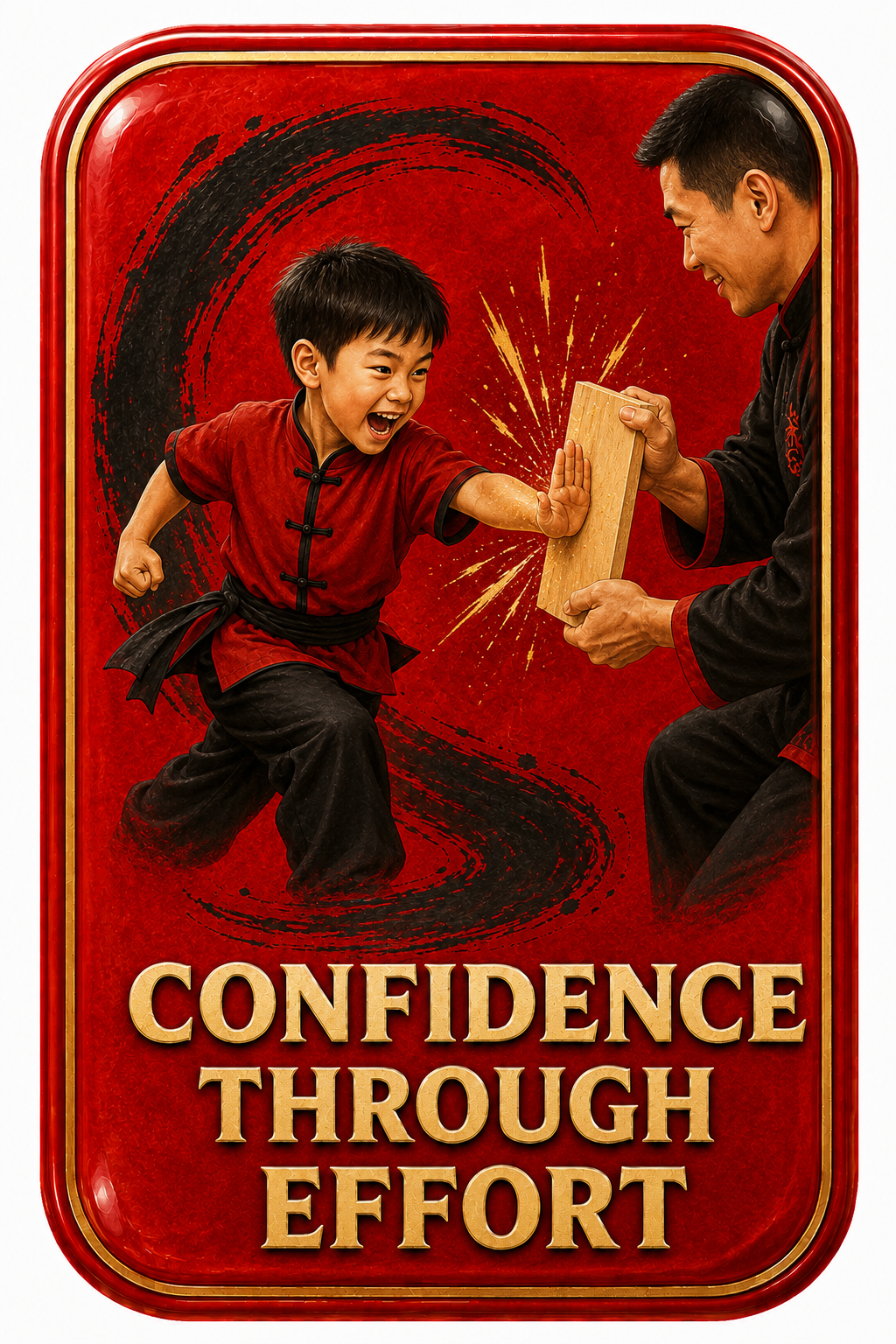
Confidence Through Effort
Children build confidence by attempting something unfamiliar, practicing it, and recognizing what they can do.
Success may mean holding a stance a little longer, catching a ball more quietly, remembering an animal hand, striking the wooden man with control, or simply joining an activity they previously preferred to watch.
Occasional supervised board breaking can provide an especially memorable way to celebrate courage, effort, and commitment.
SMALL STEPS. MEANINGFUL GROWTH.
More Than Learning Kung Fu Movements
Children come to class to move, play, and learn kung fu. Along the way, each activity gives them opportunities to develop qualities that can support them in many parts of life.
These changes do not happen all at once. They grow through participation, repetition, encouragement, and the experience of trying again.
Focus and Listening
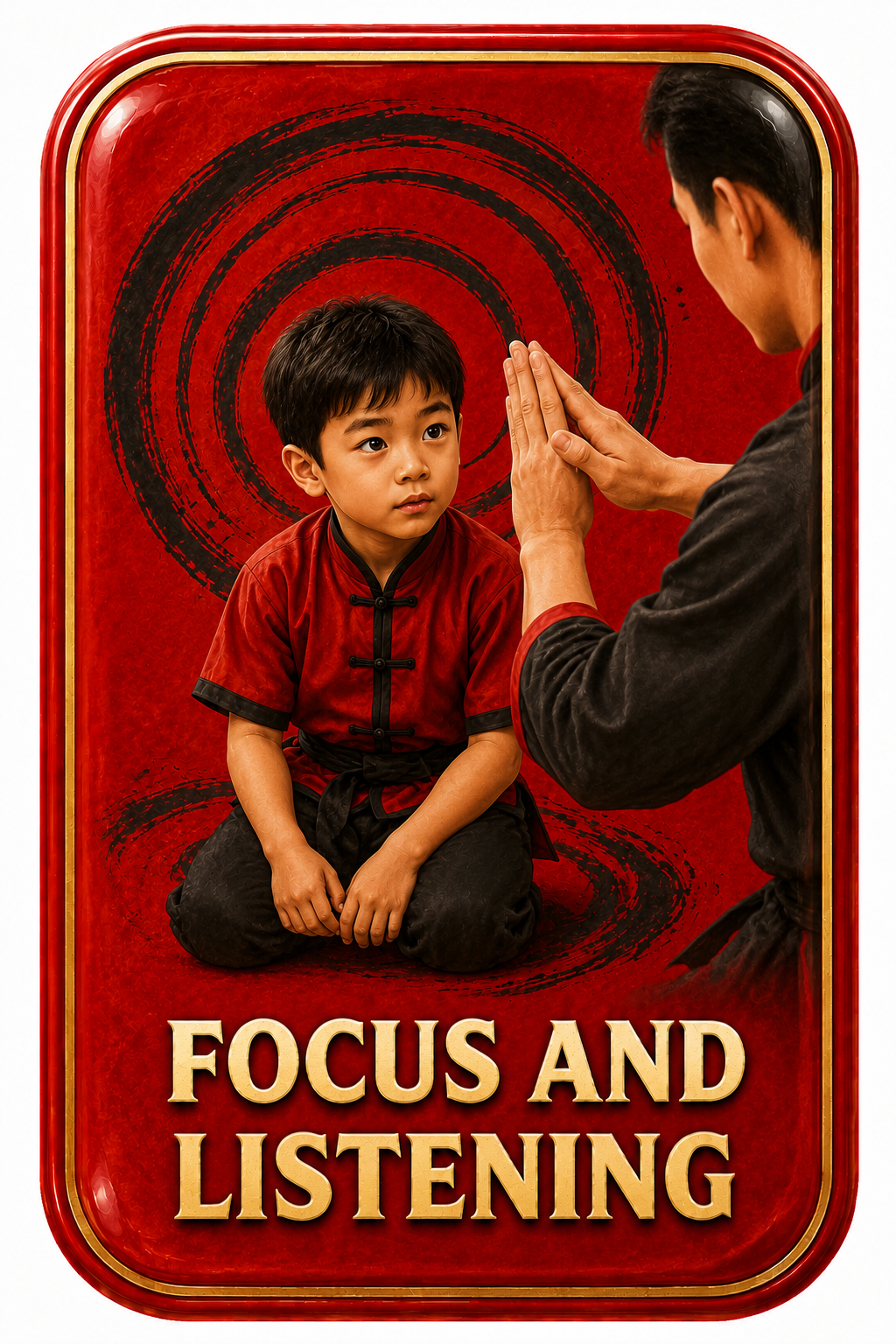
The class alternates between active movement and moments of stillness.
Following demonstrations, remembering a sequence, counting stance holds in Mandarin, and listening for the next direction give children short, manageable opportunities to practice paying attention.
Comfort Learning with Others
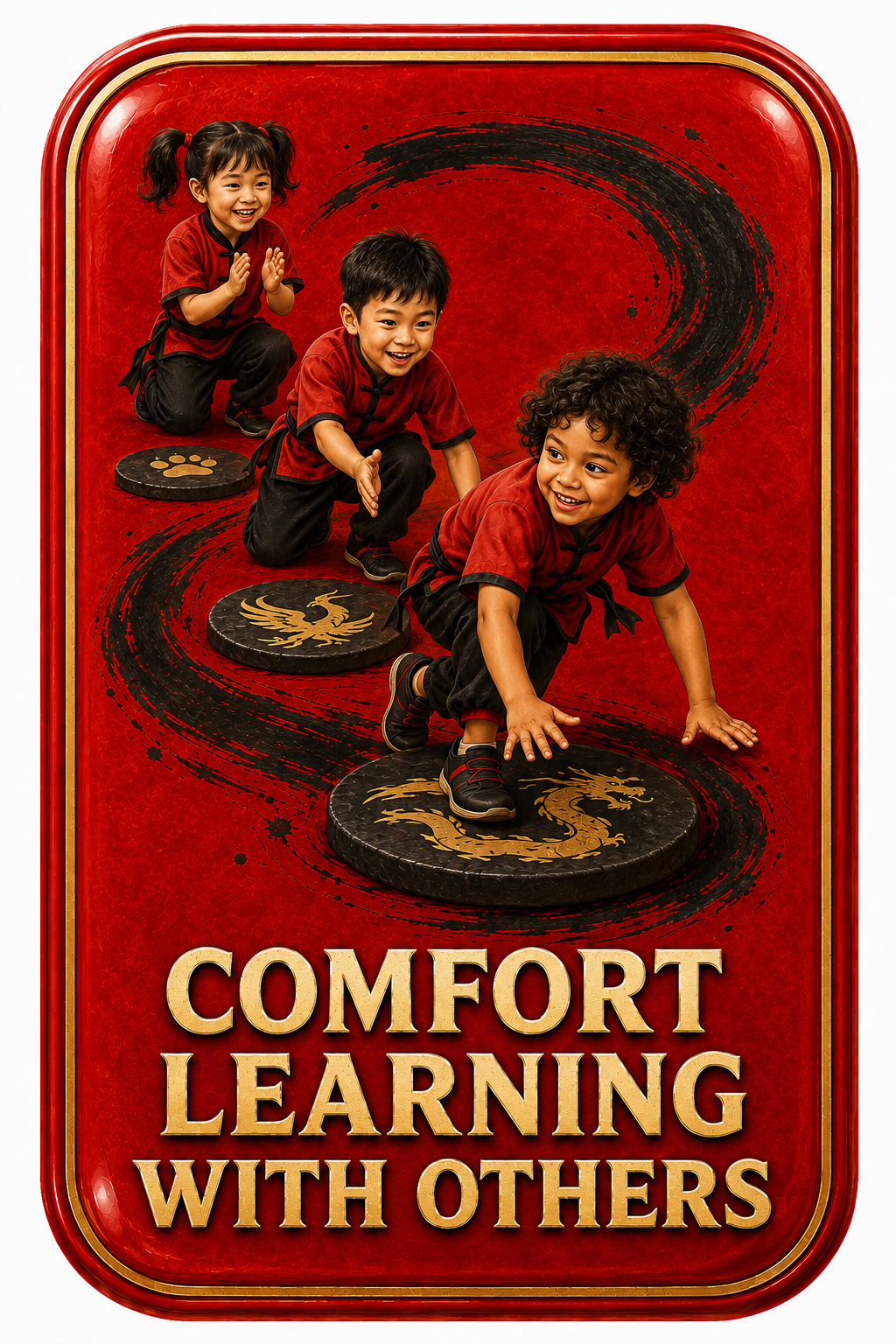
Children practice taking turns, sharing space, following a group, and enjoying activities without needing every moment to become a competition.
During animal races, the goal is to “win by having fun.” This helps create a class culture where participation, effort, and shared enjoyment matter more than finishing first.
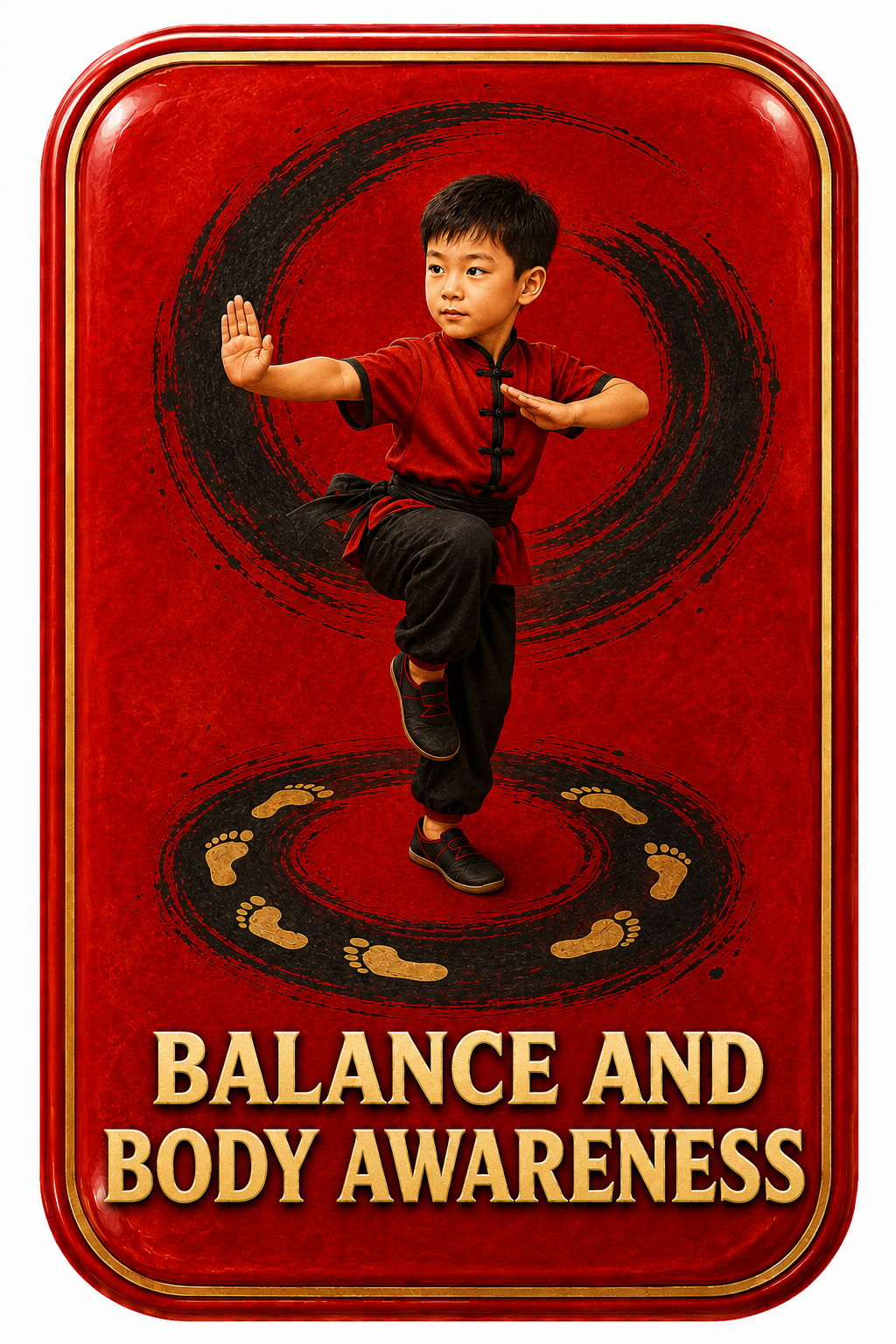
Balance and Body Awareness
Kung fu stances introduce children to different ways of standing, lowering, shifting, and supporting their weight.
Balance exercises and animal races encourage them to notice where their bodies are in space and how changing one part affects the rest.
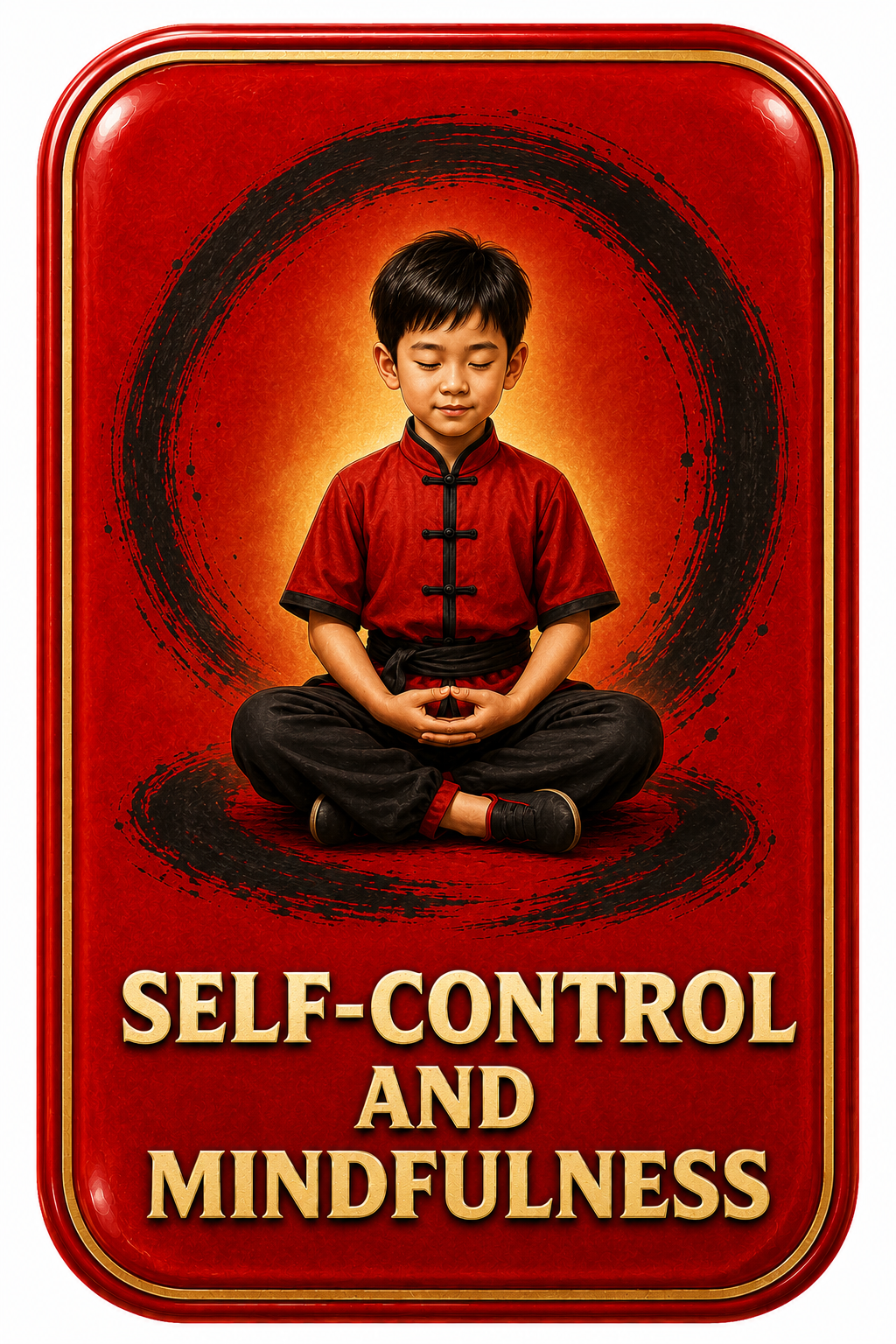
Self-Control and Mindfulness
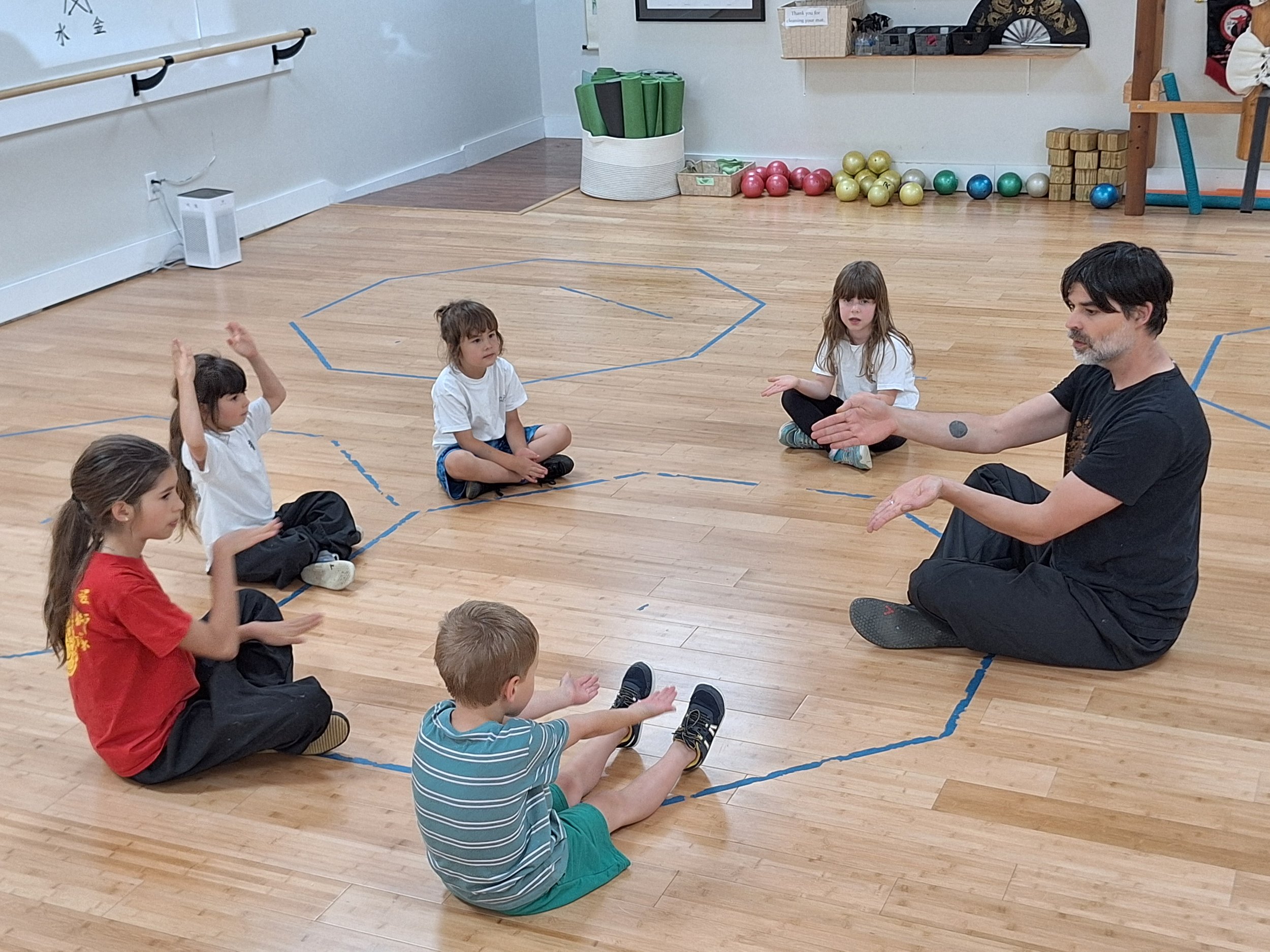
Standing and sitting meditation help children experience brief moments of stillness within an energetic class.
Controlled striking, careful movement, and the monthly discussion of how an element can help or harm introduce the idea that strength and skill should be guided by awareness and good judgment.
Progress Looks Different for Every Child
One child may quickly embrace the movement games. Another may enjoy the quiet exercises, become absorbed in the animal hands, or need several visits before participating fully.
Growth is not measured by comparing children with one another. The instructors look for each child’s increasing willingness to try, listen, move with care, and do their very best.
FORTY-FIVE MINUTES OF MOVEMENT, LEARNING, AND PLAY
What Does a Typical Class Look Like?
Each class follows a familiar rhythm that balances movement and stillness, instruction and imagination, individual practice and shared play.
The lesson plan provides consistency, but it is not rigid. Instructors may shorten, rearrange, or adapt activities according to the group’s energy and the needs of the children present.
1. Bow In and Make a Commitment
Class begins with a bow and the mission statement:
“I will work hard and do my very best.”
This simple promise establishes the purpose of class. Children are not expected to perform everything perfectly—they are asked to participate, make an honest effort, and keep trying.
4. Explore the Element of the Month
Each month introduces one of the Five Elements and a simple question:
How can this element help—and how can it harm?
Children then practice the corresponding Xing Yi fist: Pi Quan, Zuan Quan, Beng Quan, Pao Quan, or Heng Quan.
This connects physical practice with an age-appropriate lesson about awareness, balance, and using strength responsibly.
7. Move Like an Animal
Animal races bring the class’s playful energy to life.
Children may travel like crabs, snakes, frogs, lizards, or monkeys—or move through hopping, ninja steps, and giant steps.
The goal is to “win by having fun.” Children enjoy moving together without making speed or finishing first the only measure of success.
2. Stretch, Settle, and Become “Invisible”
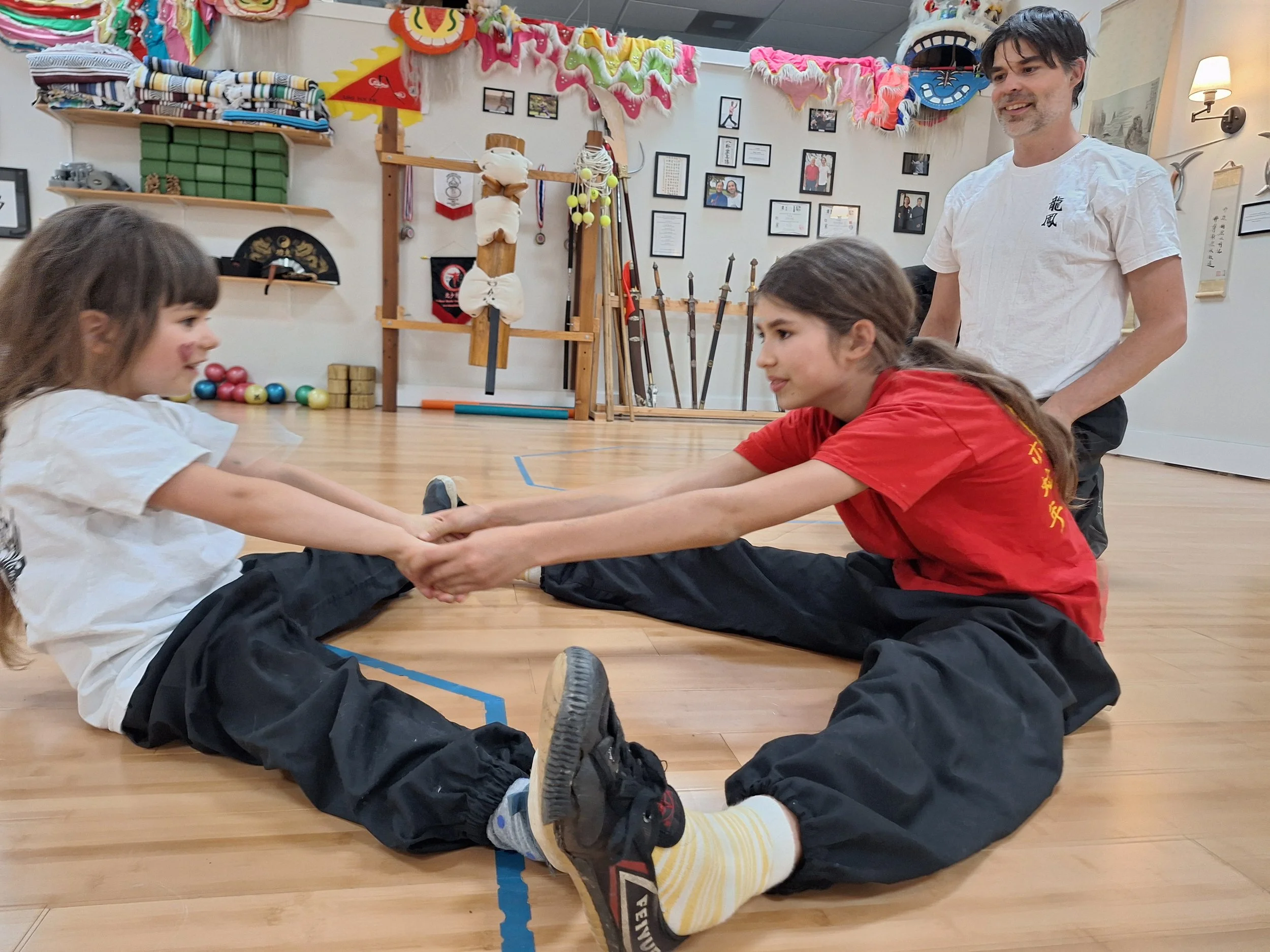
Gentle stretching helps children prepare for movement.
During standing meditation, children practice remaining still by pretending to become invisible. They hold each position for about eight seconds, turning a quiet exercise into an imaginative and manageable challenge.
5. Learn Through Animals and Coordination Games
Animal hand positions introduce the crane, phoenix eye, mantis, tiger, eagle, snake, and monkey.
Ball exercises may include rolling, circling around the waist, moving behind the head or ankles, tracing figure eights, catching silently, tossing with a partner, and practicing tiger-claw circles.
These activities make coordination practice playful while asking children to guide their hands, eyes, feet, and attention together.
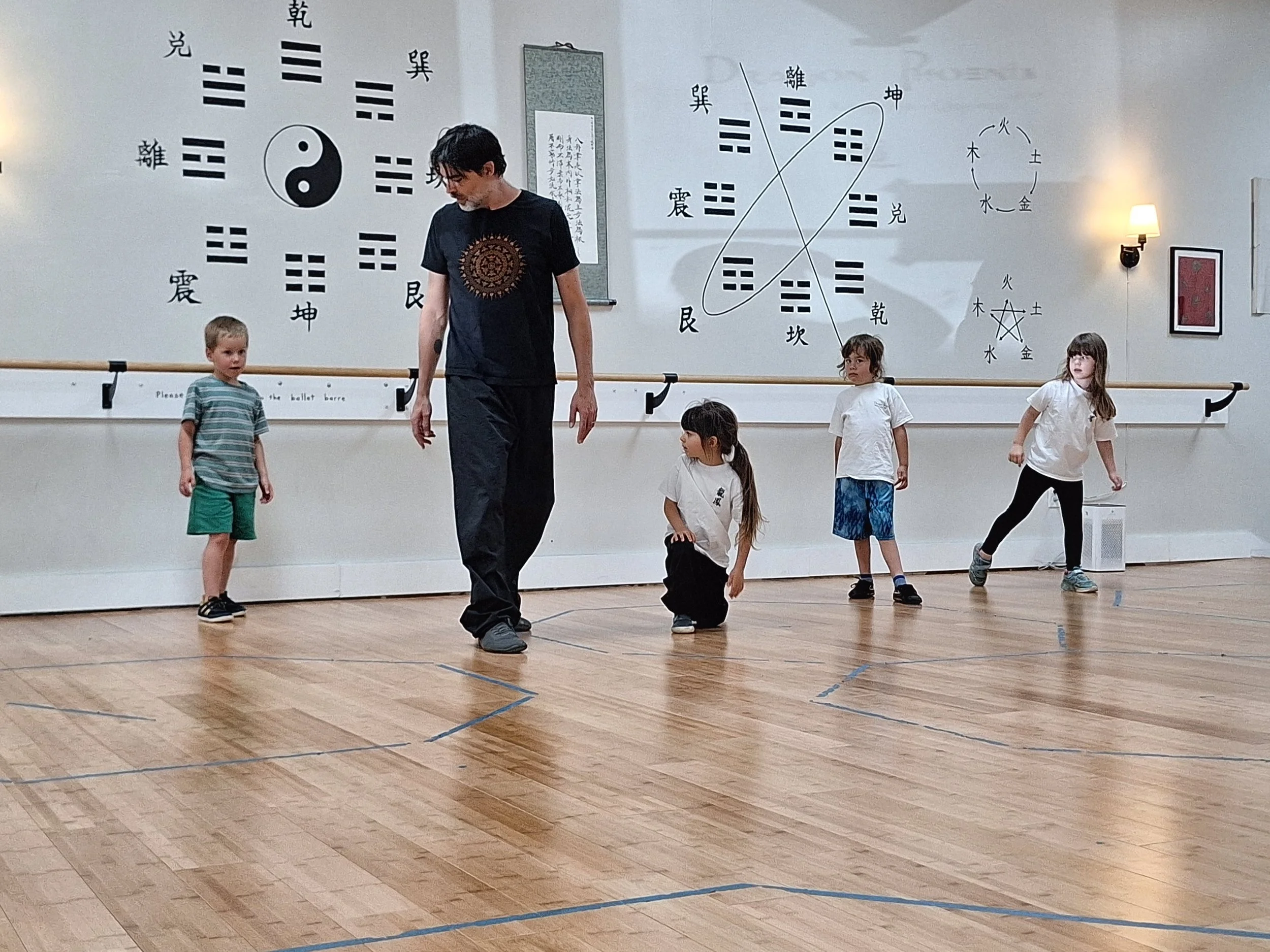
3. Build Strong Kung Fu Stances
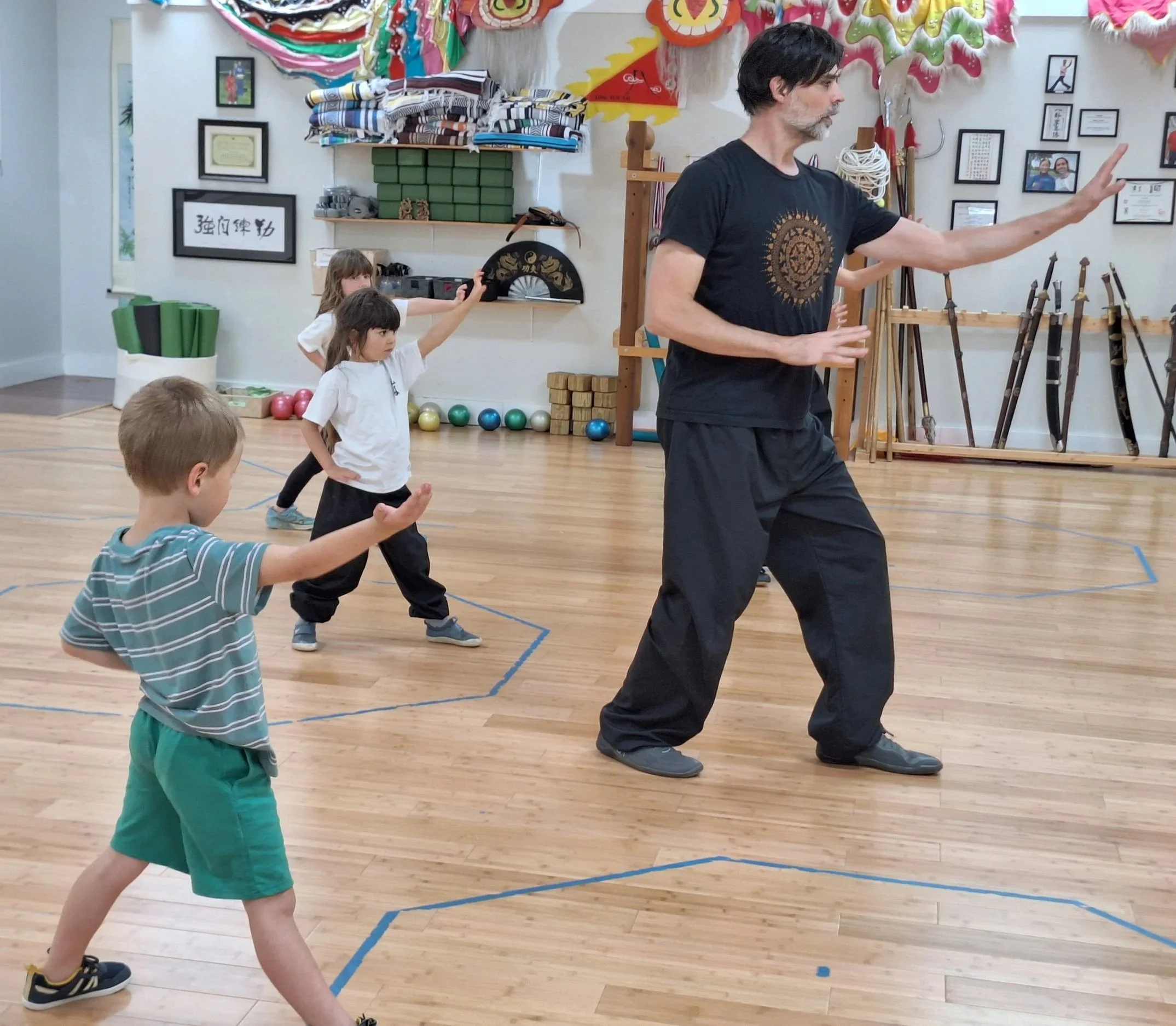
Children practice foundational positions such as:
Ma Bu
Gong Bu
Pu Bu
San Ti
Crouching stance
They may hold each stance while counting to ten in Mandarin. Rooster Stepping then gives them an opportunity to explore balance, controlled stepping, and coordination.
6. Practice Striking with Control
Children may strike the wooden man three times, learning to direct their movement toward a clear target.
The emphasis is not on aggression. It is on accuracy, appropriate effort, control, and stopping when the exercise is complete.
On some days, children may also have an opportunity to break a board under close supervision. Board breaking is an occasional activity rather than part of every class.
8. Become Still Again
Class concludes with sitting meditation.
After moving, balancing, striking, imagining, and playing, children finish by returning to stillness. This quiet ending helps bring the energy of the class back into balance.
Familiar Structure with Room to Adapt
Most of these activities appear regularly, helping children recognize the rhythm of class and become increasingly comfortable with it.
At the same time, every group is different. The instructors may adjust the lesson, spend more time on an activity that is working well, or change direction when the children need something different that day.
The structure supports the children—the children are not forced to fit the structure.
AUTHENTIC FOUNDATIONS. AGE-APPROPRIATE TEACHING.
Playful Learning Rooted in Real Kung Fu
This class is designed to be fun, but the movements are not arbitrary.
Children are introduced to genuine kung fu foundations through short exercises, imaginative explanations, and achievable challenges suited to ages 5–7.
The goal is not to rush young students through an adult curriculum. It is to help them become comfortable with the movements, ideas, and learning habits from which deeper practice can eventually grow.
An Introduction to Xing Yi Quan
Much of the class draws from Xing Yi Quan, a traditional Chinese martial art known for its direct movements, coordinated whole-body action, and Five Element Fists.
Young children encounter these ideas in a simplified and engaging form. They begin learning how to stand with structure, step with intention, coordinate their hands and feet, and direct movement toward a clear purpose.
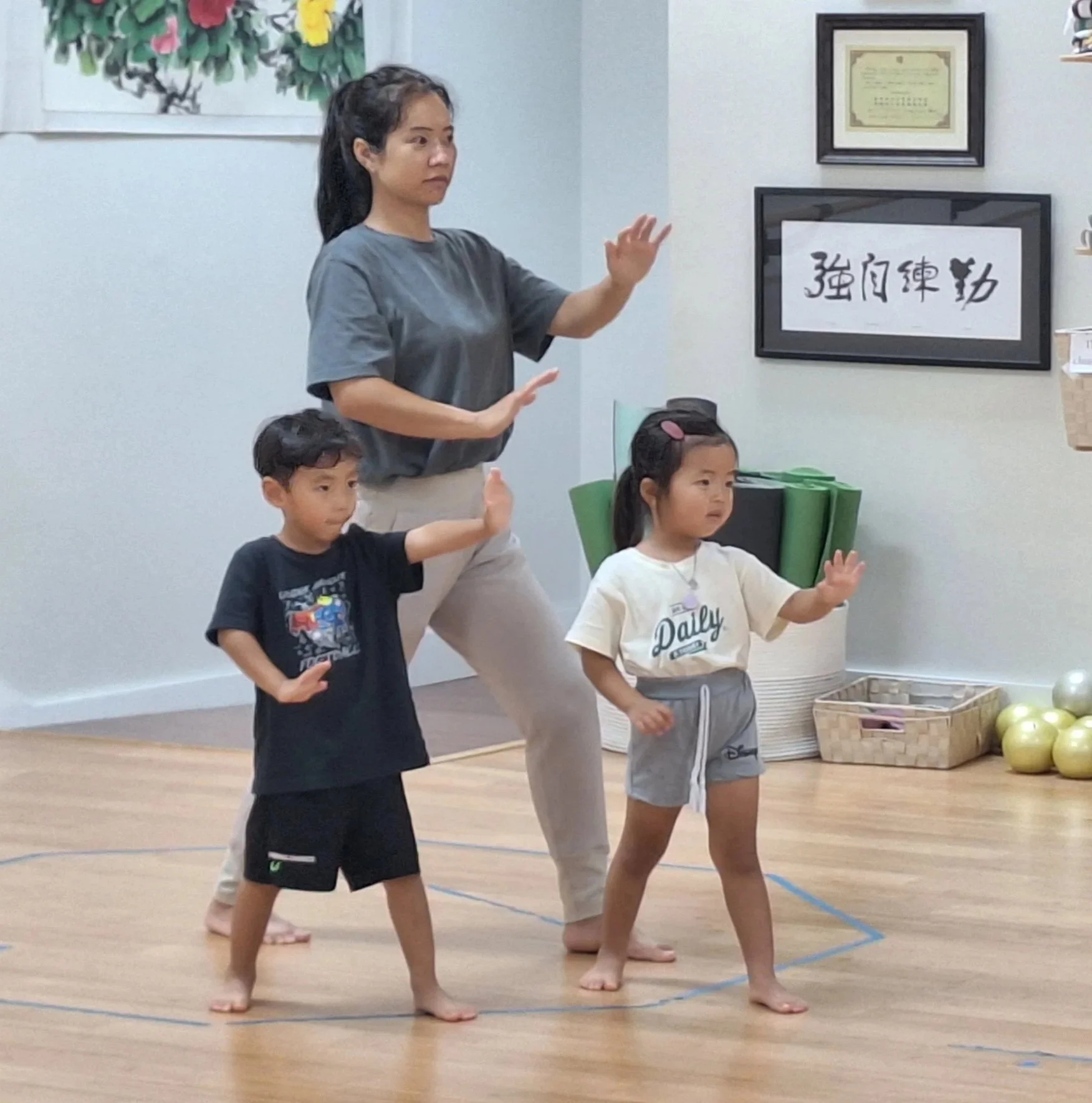
San Ti: Learning How to Stand
San Ti is one of Xing Yi Quan’s foundational postures.
For young students, practicing San Ti provides an opportunity to explore balance, posture, attention, and the relationship between the front and back legs. They are not expected to reproduce every technical detail immediately.
By returning to the stance over time, children gradually develop greater familiarity and control.
The Five Element Fists
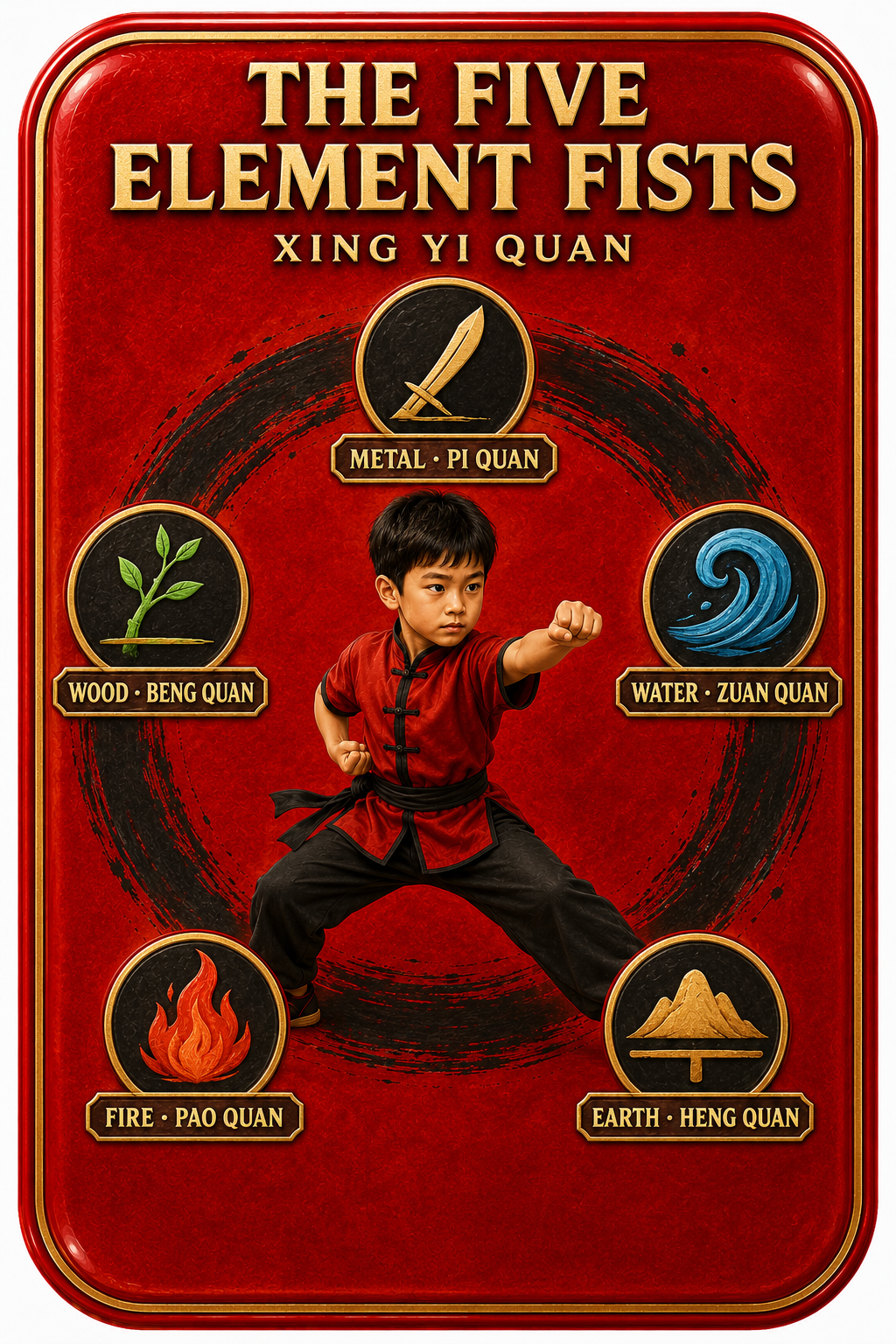
Each month, the class explores one of Xing Yi Quan’s Five Element Fists:
Pi Quan — Splitting
Zuan Quan — Drilling
Beng Quan — Crushing
Pao Quan — Pounding
Heng Quan — Crossing
The children practice the movement while considering a simple question:
How can this element help—and how can it harm?
This invites them to think about more than physical technique. Strength, speed, and determination can be useful, but children also begin learning that every ability should be guided by awareness and self-control.
Animal Hands and Martial Imagination
Crane, phoenix eye, mantis, tiger, eagle, snake, and monkey hand positions give children memorable ways to explore different shapes and intentions.
These exercises allow imagination to support learning while introducing hand formations drawn from Chinese martial arts. The animal names help young students remember what they are doing and bring greater expression to the movement.
Striking with Purpose and Control
Practice on the wooden man gives children a safe, clearly defined target.
They learn to strike with intention, complete the requested number of repetitions, and stop when the exercise is finished. The emphasis is on accuracy, appropriate effort, and control—not hitting as hard or as many times as possible.
Occasional supervised board breaking offers another way to practice commitment and discover what focused effort can accomplish.
Building a Foundation Without Rushing
In Chinese culture, kung fu refers to skill developed through patient effort and practice.
At this age, progress is not measured by how many techniques a child can memorize or how quickly they can move into advanced material. It appears in smaller changes: a steadier stance, a more coordinated step, a controlled strike, greater attention, or a willingness to try again.
The children are practicing real kung fu in the way most appropriate for them—one small, meaningful experience at a time.
PARTICIPATE. OBSERVE. GROW COMFORTABLE.
Every Child Can Find Their Way into Class
Young children do not all enter a new environment in the same way.
Some are eager to participate immediately. Others prefer to watch, remain near a familiar adult, or try one activity before deciding whether to join the next.
All of these can be reasonable ways to begin.
Children May Warm Up at Their Own Pace
A child does not need to participate perfectly—or participate in every activity—to have a successful first class.
The instructors encourage children to try while paying attention to what helps each child feel comfortable and engaged. They may adapt an exercise, offer a simpler way to join, or allow a child time to observe before participating.
Over several visits, familiar instructors, classmates, activities, and routines often make it easier for children to take another small step.
Shared Practice Can Become Family Time
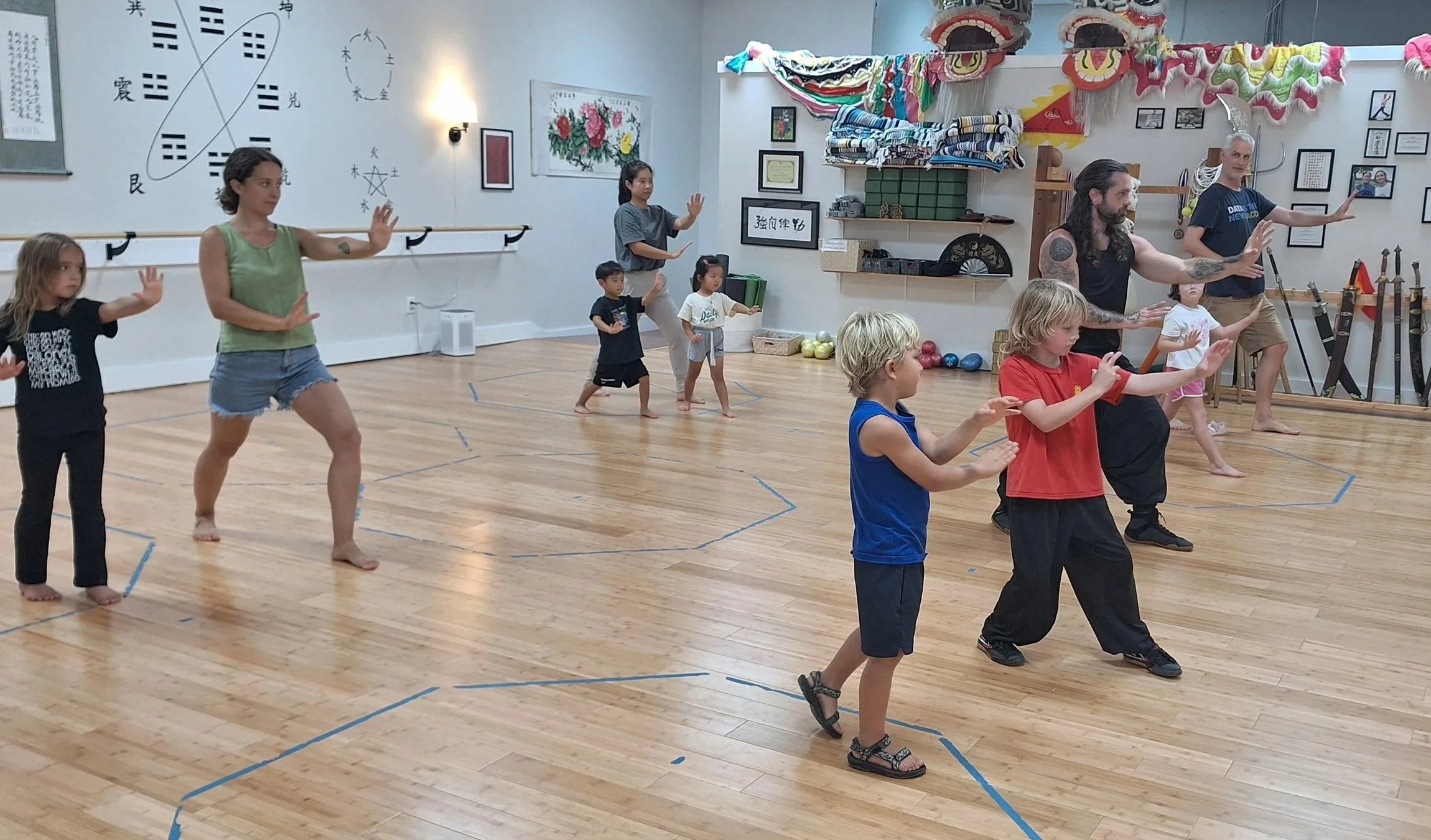
Joining your child can make the experience feel more familiar while giving you an opportunity to move, play, and learn together.
You might hold a stance beside your child, practice an animal movement, work with a ball, or become “invisible” during standing meditation.
Participating also gives adults a firsthand understanding of what the children are learning, making it easier to encourage practice and celebrate progress at home.
Effort Matters More Than Perfection
The class mission is:
“I will work hard and do my very best.”
Doing one’s best will not look identical for every child or on every day.
Success may mean trying a new stance, listening through a demonstration, waiting for a turn, returning after becoming distracted, or joining an activity that felt unfamiliar before.
Children are encouraged to notice their own progress rather than compare themselves with someone else.
Caregivers Are Welcome to Join—Free
Any parent or caregiver may participate in class with their child at no additional charge.
You may:
Join the entire class
Participate in selected activities
Help your child become comfortable and then step back
Observe without participating
Drop your child off and leave during class
Caregiver participation is an invitation, not a requirement. Choose the level of involvement that works best for your child and family.
Support Without Pressure
Whether your child enters the room ready to move or needs time to watch, the first goal is to help class become a place they recognize and feel increasingly comfortable exploring.
The instructors provide structure, encouragement, and clear expectations while leaving room for individual children and families to find the way of participating that works best for them.
PATIENT GUIDANCE FROM TEACHERS WHO UNDERSTAND CHILDREN
Meet Your Child’s Kung Fu Instructors
Little Kids Kung Fu is taught by Mr. Justin and Mr. Sevn, with coaching and curriculum guidance from Shifu Aaron Dison.
Together, they create a class that balances clear expectations with imagination, encouragement, and the flexibility young children sometimes need.

Mr. Sevn
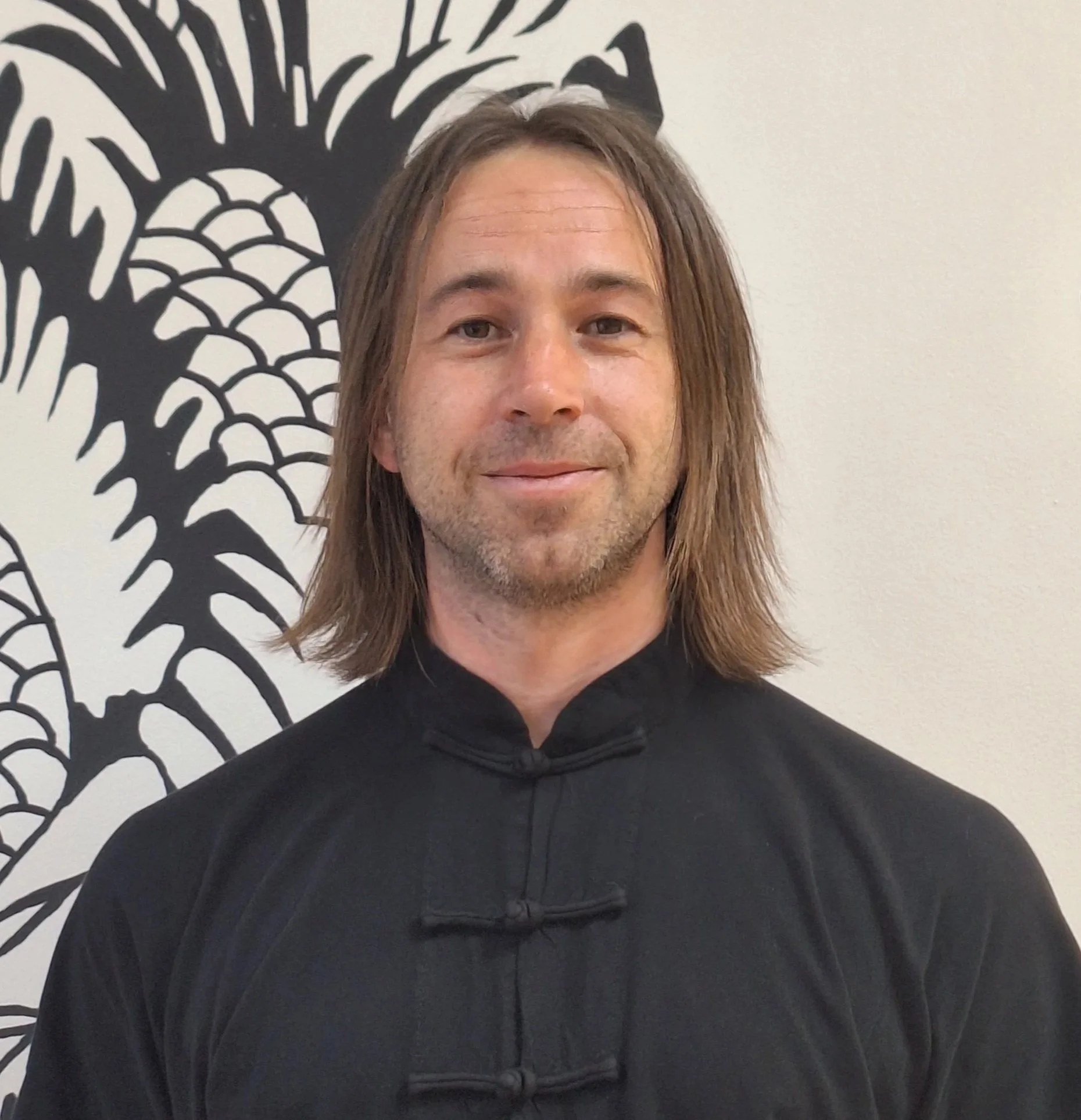
Mr. Sevn is also a Dragon Phoenix student and a parent of children in the Kids Kung Fu program.
He brings his own experience as a martial arts student into the classroom while helping children practice effort, listening, controlled movement, and the confidence to try something new.
Alongside Mr. Justin, he adjusts activities when needed so the lesson can remain productive, engaging, and appropriate for the children present.
Mr. Justin
Mr. Justin is a Dragon Phoenix student and a parent of children enrolled in the Kids Kung Fu program.
His experience on both sides of the training floor helps him understand what young students are learning as well as the questions and concerns parents may have when their child begins martial arts.
He helps guide children through the class’s stances, stepping, animal movements, coordination exercises, and games with patience and positive encouragement.
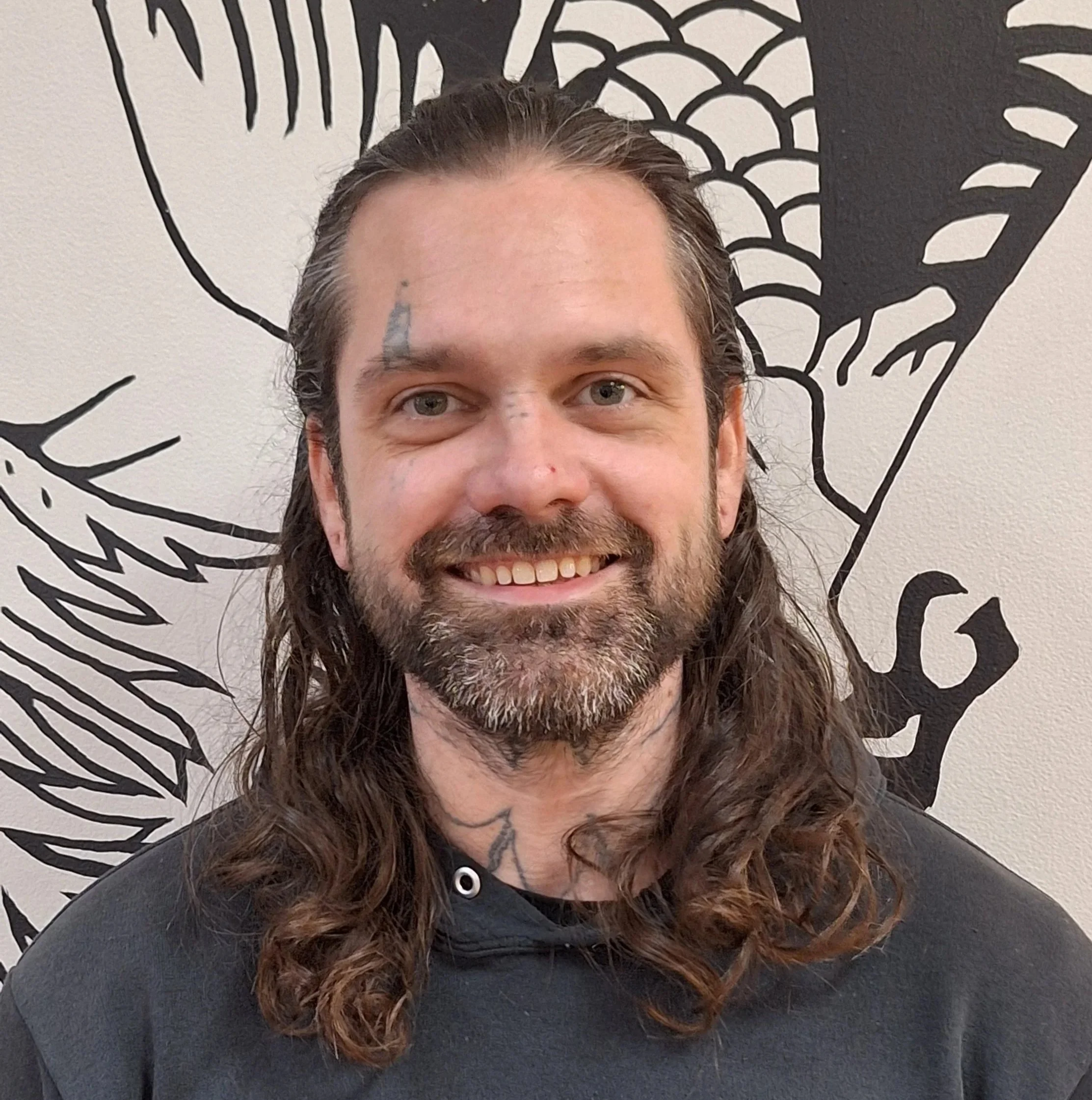
Shifu Aaron Dison
Curriculum Guidance and Instructor Coaching
Shifu Aaron guides the class curriculum and coaches Mr. Justin and Mr. Sevn.
Before opening Dragon Phoenix, he worked as an elementary school teacher for six and a half years. His approach to martial arts instruction continues to reflect his goal as an educator:
“Helping students to make wise decisions and to grow into kind people who have a passion for learning and growing.”
Shifu Aaron developed the class to introduce genuine Xing Yi Quan foundations through teaching methods suited to children ages 5–7. He helps ensure that its playful activities remain connected to purposeful martial arts training and prepare children for continued growth.
Teachers and Parents Working Together
The instructors welcome communication about what helps your child feel comfortable, participate successfully, and enjoy learning.
Caregivers may join the class, observe from nearby, or speak with the instructors about anything that may help them support an individual child.
More Than Teaching Techniques
The purpose of the class is not simply to teach children how to hold a stance, form an animal hand, or strike a target.
The instructors want children to experience what it means to make an effort, listen with attention, move with control, treat others kindly, and continue learning when something does not happen perfectly the first time.
Every class returns to the same simple commitment:
“I will work hard and do my very best.”
GROWING FROM PLAYFUL EXPLORATION INTO STRUCTURED STUDY
When Your Child Is Ready for Kids Kung Fu Level 1
Children may transition into the Kids Kung Fu Level 1 program when they turn seven.
The ages 5–7 class is not a prerequisite, and children do not need to master a list of skills before moving forward. Its purpose is to give young students a welcoming place to develop foundations that can make the older program feel more familiar when the time comes.
Familiar Movements
Both classes draw from Xing Yi Quan foundations.
Children who have attended Little Kids Kung Fu may already recognize:
San Ti and other foundational stances
Rooster Stepping
The Five Element Fists
Animal hand positions
Coordinated stepping and striking
Standing and sitting meditation
Level 1 returns to these ideas through a more structured and progressive curriculum. Familiarity can help children approach the material with greater comfort, even as they begin exploring it in more detail.
A More Structured Curriculum
Little Kids Kung Fu remains flexible and activity-based. Level 1 introduces a more consistent curriculum with skills that build upon one another over time.
Students begin working more deeply with Xing Yi Quan, including the Five Element Fists and connected practices, while developing the focus and perseverance needed for continued martial arts study.
Regular attendance becomes especially important because each lesson contributes to what comes next.
Familiar Class Customs
The transition involves more than recognizing movements.
Children have already practiced bowing in, listening to demonstrations, following directions, taking turns, respecting the training space, and completing activities with control.
They also know the class mission:
“I will work hard and do my very best.”
These routines and expectations can help the older class feel less like an entirely new environment.
Growing Independence
Caregivers are welcome to participate in the ages 5–7 class, but the Level 1 program gradually asks children to take greater responsibility for their own learning.
Experience in the younger class can provide a gentle bridge toward:
Participating without a caregiver beside them
Following longer periods of instruction
Remembering movements between classes
Practicing skills through greater repetition
Working steadily toward long-term goals
Children do not need to reach these milestones on an identical schedule. Independence grows gradually through experience and encouragement.
The Transition Does Not Need to Happen Overnight
Turning seven makes a child eligible for Level 1, but age alone does not determine how comfortable the transition will feel.
Parents and instructors can discuss the child’s interest, readiness, schedule, and experience before choosing the right time to begin. In some cases, visiting or trying the older class can help everyone understand what the next step will involve.
A Familiar Beginning to a New Chapter
When a child moves into Kids Kung Fu Level 1, they are not expected to arrive knowing everything.
They may simply arrive with something equally valuable: familiarity with the training space, confidence in the instructors, experience trying unfamiliar movements, and an understanding that kung fu develops through patient effort.
The younger class plants those seeds. Level 1 gives them room to grow.
FLEXIBLE ENROLLMENT WITH ROOM TO BUILD A ROUTINE
Choose the Option That Works for Your Family
Little Kids Kung Fu is part of the Dragon Phoenix Drop-In Program. Your child may attend without an ongoing membership or long-term commitment.
Class Schedule
Wednesdays · 3:00–3:45 PM
Ages 5–7 · Beginners welcome
The class has space for approximately 12 children. Participating caregivers do not count toward that limit.
Advance booking is strongly encouraged so the instructors know whom to expect and can prepare for the children attending.
Book a Single Class
$20 per child
A single class is an easy way for your child to experience the program before you decide how often you would like to attend.
Choose the class date through the live schedule and complete the reservation directly through Gymdesk.
You do not need to purchase a membership or visitor pass first. The booking system will charge the regular $20 class rate when you reserve your child’s place.
Please do not purchase a separate visitor pass before booking. Doing so may result in an unnecessary duplicate charge.
Flexible Does Not Have to Mean Infrequent
The drop-in structure gives families room for travel, changing schedules, and the natural variability that comes with this age.
Even so, weekly attendance is encouraged whenever possible.
Returning regularly helps children:
Become familiar with the instructors and classmates
Recognize the rhythm and expectations of class
Remember movements from one week to the next
Feel increasingly comfortable participating
Develop coordination and confidence through repetition
Missing an occasional week is not a problem. Consistency simply gives the class more opportunity to become familiar and the skills more time to grow.
Choose the Flexible 10-Class Pass
$180 for 10 classes · $18 per class
The ten-class pass provides flexibility while saving $20 compared with purchasing ten individual classes.
The pass:
Does not expire
May be used for participating Dragon Phoenix drop-in classes
May be shared with family members on the same Gymdesk family account
Allows your family to attend without committing to a recurring membership
Purchase the pass through Gymdesk, then use the live schedule to reserve each class your child plans to attend.

Caregivers May Join at No Additional Charge
Any parent or caregiver may participate with their child for free.
Caregivers may join the entire class, take part in selected activities, observe, or drop the child off and leave during class.
Advance registration for participating caregivers is not required, but it is strongly encouraged. When possible, register the caregiver through the same Gymdesk booking process so the instructors can plan for everyone attending.
Begin with One Class
You do not need to know whether this will become a long-term activity before your child walks through the door.
Reserve one class, meet the instructors, and give your child an opportunity to move, imagine, and experience kung fu in a setting created especially for ages 5–7.
QUESTIONS BEFORE YOUR CHILD’S FIRST CLASS
Little Kids Kung Fu Frequently Asked Questions
Does my child need previous martial arts experience?
No. The class is designed for beginners ages 5–7.
Movements and activities are introduced through short demonstrations, repetition, imagination, and play. Your child does not need prior experience, strong coordination, or knowledge of kung fu before attending.
What if my child is shy or hesitant to participate?
That is perfectly acceptable.
Some children participate immediately, while others need time to observe, remain close to a caregiver, or try activities one at a time. The instructors will encourage your child without expecting every child to enter the class in the same way.
Becoming comfortable with the room, teachers, routine, and other children is meaningful progress.
May I participate with my child?
Yes. Any parent or caregiver may join at no additional charge.
You may participate in the entire class, join selected activities, help your child become comfortable and then step back, or simply observe.
Caregiver participation is welcome but never required.
Do I need to remain on-site during class?
No. You may drop your child off and leave during class.
You are equally welcome to remain and observe or participate. Choose the option that works best for your child and family.
What happens when my child turns seven?
At age seven, your child becomes eligible to transition into Kids Kung Fu Level 1 for ages 7–14.
The younger class is not a prerequisite, and children are not required to master particular skills before moving forward. However, familiarity with the movements, instructors, training space, and class customs may make the transition feel more comfortable.
Parents and instructors can discuss the child’s interest and readiness before choosing when to make the change.
Does a participating caregiver need to register?
Advance registration is not required for participating caregiver.
Participating caregivers attend free and do not count toward the approximate limit of 12 children.
What should my child wear?
Your child should wear comfortable clothing that allows unrestricted stepping, stretching, crouching, and arm movement.
A uniform is not required for this drop-in class. Choose secure, comfortable footwear appropriate for active indoor movement.
Does my child need to bring any equipment?
No special equipment is required for the first class.
Dragon Phoenix provides the training items used during class, including balls, the wooden man, and any boards used for supervised breaking activities.
Will my child break a board?
Board breaking is an occasional supervised activity, not something included in every class.
When offered, it gives children a memorable opportunity to practice commitment, focused effort, and confidence. Children will not be pressured to break a board before they are comfortable participating.
Is this real kung fu or primarily a movement class?
The class is playful and developmentally appropriate, but it is rooted in genuine Chinese martial arts.
Children practice foundational stances, Rooster Stepping, animal hand positions, controlled striking, meditation, and simplified Five Element Fists from Xing Yi Quan.
The material is presented at the right pace for young children rather than expecting them to follow an adult or older-child curriculum.
How do I reserve the first class?
Choose an available Wednesday class through the live Gymdesk schedule and register your child directly.
If a caregiver plans to participate, register that adult through Gymdesk whenever possible. Then come ready to move, explore, and discover how your child responds to the class.
Does my child need to attend every week?
No. The drop-in structure gives families flexibility, and missing an occasional class is not a problem.
Weekly attendance is encouraged whenever possible because consistency helps children become familiar with the instructors, classmates, class routine, and movements. Repetition also gives coordination, focus, and confidence more time to develop.
Is this a formal ranked martial arts program?
Little Kids Kung Fu is a flexible, activity-based introduction rather than a ranked curriculum with tests or advancement requirements.
Children become eligible to enter the more structured Kids Kung Fu Level 1 program when they turn seven.
How much does the class cost?
A single class costs $20 per child.
Families who plan to attend regularly may purchase a $180 flexible ten-class pass, reducing the cost to $18 per class. The pass does not expire and may be shared with family members on the same Gymdesk family account for participating Dragon Phoenix drop-in classes.
Caregivers participate free.
Do I need to purchase a membership or visitor pass?
No ongoing membership is required.
For a single visit, book the class directly through the live Gymdesk schedule. The system will charge the regular $20 class rate during the reservation.
Do not purchase a separate visitor pass before booking, as this may result in an unnecessary duplicate charge.
How large is the class?
The approximate capacity is 12 children.
Participating caregivers do not count toward that limit. Advance reservations are strongly encouraged because the live schedule reflects current availability.
ONE CLASS CAN BE THE BEGINNING OF SOMETHING MEANINGFUL
Give Your Child a Chance to Experience Kung Fu
Your child does not need to arrive coordinated, confident, focused, or ready to participate in every activity.
They only need an opportunity to begin.
During their first class, they can meet the instructors, explore the training space, try age-appropriate kung fu activities, and discover what captures their interest.
They may hold a stance, move like an animal, practice with a ball, strike the wooden man, or become “invisible” during standing meditation. They may jump into everything—or begin by watching and join when they feel ready.
Both are welcome.
Experience It Together
You are invited to participate alongside your child at no additional charge.
Join the movements, help your child become comfortable, observe from nearby, or leave them to experience class independently. There is no single correct way for a family to begin.
Start with One Flexible Visit
Wednesdays · 3:00–3:45 PM
Ages 5–7 · $20 per child
No ongoing membership or long-term commitment is required.
Book one class and give your child the opportunity to move, imagine, learn, and do their very best.